
The Israeli military announced on March 16 that it had commenced “limited and targeted ground operations” against Hezbollah strongholds in southern Lebanon, marking an escalation of the conflict now into its third week. The announcement came as US President Donald Trump intensified diplomatic pressure on global powers to help reopen the Strait of Hormuz, which has been effectively choked off by Iranian attacks that have sent global oil prices surging 40 to 50 percent. The ground operation represents a significant expansion of Israeli military activity beyond air strikes to include infantry operations aimed at dismantling Hezbollah terrorist infrastructure near the Israeli border. Simultaneously, the International Energy Agency announced coordinated release of 400 million barrels from member reserves to address the global energy crisis triggered by Strait of Hormuz disruption. The convergence of expanding Israeli ground operations, intensifying diplomatic efforts to restore maritime commerce, and mobilization of strategic petroleum reserves demonstrates the conflict’s rapid transformation from regional military engagement into a crisis affecting global energy security and international relations.
Israeli Military Announces Limited Ground Operations
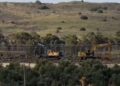
The Israeli Defense Force announced on March 16 that it had begun “limited and targeted ground operations” against key Hezbollah strongholds in southern Lebanon, conducted by the 91st division. The military characterized the operations as part of “broader defensive efforts to establish and strengthen a forward defensive posture, which includes the dismantling of terrorist infrastructure and the elimination of terrorists operating in the area, in order to remove threats and create an additional layer of security for residents of northern Israel.”
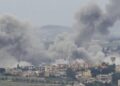
The announcement explicitly acknowledged that prior to troop entry into operational areas, the Israeli military had conducted extensive strikes using artillery and air force assets against numerous targets to mitigate threats in the operational environment. The military spokesman, Lieutenant Colonel Nadav Shoshani, stated that Hezbollah had recently expanded its operational activities in southern Lebanon, firing hundreds of rockets daily toward Israel and deploying hundreds of Radwan Force elite unit terrorists to the south.
Shoshani characterized the ground operations as “limited in target against locations what we understand Hezbollah is posing a threat towards our civilians,” emphasizing that “those are new locations that our troops were not operating in yesterday.” The language reflected Israeli efforts to characterize operations as precisely targeted defensive responses rather than broad offensive campaigns.
Context of Previous Lebanon Conflicts
The announcement echoed similar statements issued during previous Israeli military campaigns, including the 2024 war with Hezbollah and the 2023 Gaza ground assault following Hamas’s October 7 attacks. Lebanon was drawn into the broader Middle East war on March 2 when Iran-backed Hezbollah attacked Israel in response to the killing of Iranian supreme leader Ayatollah Ali Khamenei in US-Israeli strikes. Israel subsequently launched air raids on neighboring Lebanon and conducted troop incursions into border areas.
During the previous 2024 war with Hezbollah, Israel had evacuated tens of thousands of residents from northern communities as it fought until a ceasefire was struck in November 2024. However, the military had stated it would not conduct similar large-scale civilian evacuations this time, despite having conducted near-daily air strikes on Hezbollah targets within Lebanon throughout the supposed ceasefire period.
Hezbollah Expansion and Threat Assessment
Military spokesman Shoshani provided operational assessment of Hezbollah’s recent activities, stating that the organization had “intending to expand their operations and firing hundreds of rockets a day toward Israel.” The assessment indicated that Hezbollah had deployed specialized assault units to southern Lebanon, threatening Israeli civilian communities in the north.
The characterization of limited operations stood in contrast to the scale of previous military campaigns and reflected Israeli strategy to minimize description of operational scope while maintaining operational flexibility to expand activities as circumstances dictated. The emphasis on “limited and targeted” operations appeared designed to manage international criticism while preserving military options.
Trump’s Diplomatic Pressure on Strait of Hormuz
US President Donald Trump intensified diplomatic pressure on global powers over the weekend to contribute military assets to reopening the Strait of Hormuz, which has been effectively choked off by Iranian attacks on shipping. Trump called specifically for China, France, Japan, South Korea, and Britain to send warships to escort tankers through the strategic waterway, only 33 kilometers wide at its narrowest point.
The US president threatened that it would be “very bad for the future of NATO” if allied nations refused to participate in the maritime security operation. Trump also threatened to delay a planned summit with Chinese leader Xi Jinping in response to Chinese reluctance to participate. Both Japan and Australia had already announced they were not planning military deployments to the region.
Trump characterized the situation as requiring coordinated international action, stating that countries dependent on Hormuz shipping had responsibility to assist in maintaining freedom of navigation. The diplomatic push reflected American assessment that Strait of Hormuz closure represented an unprecedented global challenge requiring unified international response.
Global Oil Prices and Energy Crisis
Global crude oil prices had surged 40 to 50 percent in the two weeks since the US-Israeli war against Iran commenced on February 28. The dramatic price increase reflected genuine supply constraints from Iranian facility strikes, Gulf infrastructure attacks, and the virtual closure of the Strait of Hormuz to normal commercial traffic, through which normally passes one-fifth of global oil supplies.
Iran’s Revolutionary Guards reported that approximately 700 missiles and 3,600 drones had been fired at US and Israeli targets since the conflict’s commencement, demonstrating sustained Iranian operational capability despite initial assessments that the nation’s military had been devastated by US and Israeli bombardments.
International Energy Agency Coordinates Reserve Release
The International Energy Agency announced that member nations would begin releasing 400 million barrels of oil from strategic reserves in coordinated response to the Strait of Hormuz disruption. The release represented the largest coordinated strategic reserve deployment in IEA history and reflected assessment that the energy crisis required immediate mitigation beyond normal market mechanisms.
The release schedule indicated that Asia-Oceania nations would make stocks available immediately, with Europe and the Americas following in the weeks to come. Japan, which depends on the Middle East for 95 percent of its oil imports, lowered official reserve levels on Monday, compelling managers to release stockpiled crude. Australian officials urged the public against price-gouging and panic buying as prices soared. Indian restaurants were forced to adapt menus to conserve cooking gas.
Regional Escalation Across Multiple Countries
The war had engulfed much of the region with Iran responding to Israeli and US strikes through attacks against at least 10 countries hosting US forces. Iran’s Foreign Minister Abbas Araghchi called on other nations to “refrain from any action that could lead to escalation and expansion of the conflict” and urged neighbors to “expel foreign aggressors.”
The United Arab Emirates had taken the brunt of Iranian attacks with approximately 1,800 missiles and drones, upending travel and commerce despite air defenses intercepting almost all projectiles. Dubai’s airport, usually the busiest in the world for international flights, was gradually resuming activity after a drone strike sparked a fuel tank fire. Saudi Arabia intercepted more than 60 drones since midnight according to defense ministry statements. Rockets wounded five people at Baghdad’s airport, which houses US diplomatic facilities.
Lebanese Casualty Toll and Displacement Crisis
Lebanese authorities reported that the death toll from Israeli attacks had risen to 850, while more than 830,000 people had registered as displaced, including approximately 130,000 staying in collective shelters. The displacement figures reflected the scale of Israeli air strikes on Beirut’s southern suburbs and south Lebanon evacuation orders covering hundreds of square kilometers.
Israel announced that no direct talks were planned with Lebanon to end the war with Hezbollah, despite a Lebanese official having stated that Beirut was preparing a delegation to negotiate with Israel.
Iranian Defiance and Leadership Transition
Despite the killing of supreme leader Ali Khamenei on the conflict’s opening day, Iran’s rulers appeared determined to maintain defiance. The new ayatollah, Mojtaba Khamenei, had not been seen in public since the war’s start and was reportedly injured in the strike that killed his father. The Iranian health ministry reported more than 1,200 people killed by US and Israeli strikes, figures that could not be independently verified.
The UN refugee agency reported that up to 3.2 million people had been displaced in Iran, with internet blackout imposed by authorities now entering its 17th day according to communications monitor Netblocks. Despite the violence, some Iranians sought to restore normalcy, with traffic busier over the weekend and some cafes and restaurants reopening.
Conclusion:
The Israeli announcement on March 16 of limited ground operations against Hezbollah in southern Lebanon represents a significant escalation of the conflict beyond air strikes to include ground military operations. The announcement coincides with Trump’s intensified diplomatic pressure on global powers to help reopen the Strait of Hormuz and the International Energy Agency’s coordinated release of 400 million barrels of strategic oil reserves. The convergence of expanding Israeli ground operations, diplomatic efforts to restore maritime commerce, and global energy crisis mitigation demonstrates the conflict’s rapid transformation from regional military engagement into a crisis affecting global energy security and international economic stability. The ground operations, combined with Iran’s continued attacks across the region despite military devastation and leadership loss, suggest the conflict will continue to intensify absent diplomatic intervention.