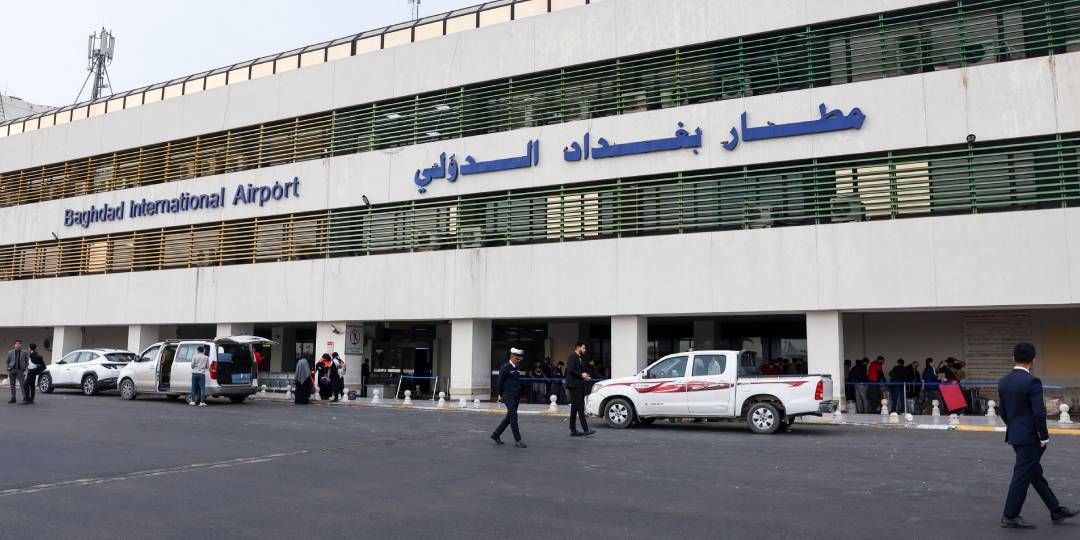

A rocket attack on Baghdad International Airport Sunday wounded five people including airport employees and security personnel, according to Iraqi authorities. The attack targeted the facility that houses a US diplomatic mission, striking the airport, a water desalination plant, and nearby infrastructure including a prison and Iraqi military airbase positioned adjacent to American diplomatic facilities.
The incident represents continued Iranian targeting of infrastructure hosting US personnel and facilities, compounding regional instability and humanitarian costs as maritime incidents simultaneously escalated across the Strait of Hormuz with commercial vessels struck and crews stranded.
Multiple Rockets Strike Baghdad Airport Complex
Iraq’s security media cell stated that five rockets targeted Baghdad International Airport and surrounding areas, injuring four airport employees and security personnel plus an engineer. The rockets struck multiple facilities within the airport complex, including the main airport infrastructure and a water desalination plant crucial to local water supply systems.
The targeting pattern indicated deliberate focus on critical infrastructure supporting both civilian operations and US diplomatic presence. The attack on the water desalination plant created secondary humanitarian impacts through disruption of water supply systems serving Baghdad’s civilian population.
Secondary Targeting of Nearby Infrastructure
Additional rockets struck near a prison housing Islamic State group detainees and an Iraqi military airbase adjacent to the US diplomatic facility. The pattern of strikes across multiple targets surrounding the airport suggests coordinated campaign rather than single-strike incident, indicating planning to maximize disruption across multiple critical infrastructure categories.
The targeting of detention facilities holding IS detainees reflects either deliberate effort to disrupt detention operations or incidental damage from strikes aimed at nearby military infrastructure.
Escalation of Attacks on US Facilities in Iraq
The attack on Baghdad airport represents continued Iranian campaign targeting US facilities and assets across Iraq. Previous reporting indicated attacks on Iraqi military bases hosting US forces, with Iraqi and international media reporting casualties among US military personnel and allied Iraqi forces.
The expansion of targeting to civilian infrastructure near US diplomatic facilities broadens the impact zone and increases civilian exposure to conflict, creating humanitarian consequences extending beyond military personnel.
Vulnerability of Civilian Infrastructure
The targeting of water desalination plants, airports, and other civilian infrastructure demonstrates vulnerability of essential services to military attack. The disruption of water supply systems creates immediate humanitarian crisis affecting civilian populations dependent on centralized water distribution systems.
Thai Sailors Rescued from Attacked Vessel
Twenty Thai crew members arrived in Thailand Monday after being rescued from a cargo ship attacked in the Strait of Hormuz by Iranian forces. The Thai-registered Mayuree Naree was struck by two projectiles Wednesday while transiting the Gulf, with three crew members remaining aboard the vessel in damaged condition.
The crew reported that three colleagues were “believed to be trapped in the engine room” following the attack, according to vessel owner Precious Shipping. The company committed to locating the three missing crew and providing “welfare support for the crew, including medical examinations and mental health assessments.”
Crew Trauma and Displacement
Family members of rescued crew reported anxiety about vessel crew assignments and inadequate corporate communication about missing crew members. The wife of one returned sailor stated: “We are all afraid, but they are employees — if they refuse to go (out to sea), they won’t get paid.”
The reluctance of crew members to return to maritime assignments reflects legitimate safety concerns about continued transits through the Strait of Hormuz under Iranian military threat. The economic pressure forcing crew to accept dangerous assignments highlights exploitation of maritime workers within conflict zones.
Oman Provides Maritime Rescue
The Omani navy rescued the 20 Thai sailors Wednesday, according to Thai navy reports. The rescue operation extracted crew members from the damaged vessel in the Strait of Hormuz, representing international maritime assistance during conflict conditions.
Thailand is seeking assistance from two other nations to locate and rescue the three remaining crew members still aboard the vessel. The diplomatic effort indicates broader regional response to maritime incidents affecting commercial shipping.
International Coordination for Maritime Safety
The involvement of multiple nations in rescue efforts demonstrates recognition that maritime incidents in shared waters require coordinated international response. The Omani navy intervention represents regional power providing humanitarian assistance despite regional tensions.
Dubai Airport Suspends Flights After Drone Attack
Dubai International Airport suspended flights temporarily Monday following a drone-related incident that sparked a fire at a nearby fuel tank. The Dubai Civil Aviation Authority announced the suspension “as a precautionary measure to ensure the safety of all passengers and staff.”
Authorities extinguished the blaze with no injuries reported initially. The incident impacted fuel tank facilities supporting airport operations, creating secondary disruption beyond the direct strike damage.
Targeting of Critical Aviation Infrastructure
The attack on fuel storage facilities supporting airport operations demonstrates Iranian targeting strategy focused on economic disruption through infrastructure destruction. Fuel tanks represent critical bottleneck infrastructure where destruction creates cascading disruptions affecting multiple dependent systems.
Pattern of Iranian Attacks on UAE Infrastructure
Iran has fired over 1,800 missiles and drones at the United Arab Emirates since the conflict began, more than targeting any other country in the regional war. The intensity of Iranian attacks on UAE infrastructure reflects targeting of Gulf state financial and logistical hubs perceived as supporting US and Israeli military operations.
The UAE’s air defense systems have intercepted the vast majority of projectiles, though continued attacks overwhelm defensive capacity periodically, allowing strikes on fuel infrastructure and other targets to reach their objectives.
Defensive Limitations and Saturation
The persistence of successful strikes despite extensive air defense deployment indicates saturation of defensive systems through volume of attacking projectiles. The ability of Iranian forces to achieve periodic penetrations of UAE air defenses through coordinated missile and drone barrages demonstrates vulnerability of even advanced defensive systems to sustained attack waves.
Humanitarian and Economic Costs
The UAE’s defense ministry reported six deaths since the war began, including four civilians and two military personnel from a helicopter crash. The targeting of civilian infrastructure including airports, ports, fuel facilities, and landmarks creates economic disruption extending far beyond immediate military effects.
The suspension of Dubai airport operations disrupts international aviation, global trade transiting through the UAE’s maritime and aviation infrastructure, and tourism-dependent economies relying on Dubai’s position as regional hub.
Broader Conflict Implications
The simultaneous incidents across Baghdad, the Strait of Hormuz, and Dubai demonstrate the geographic spread of conflict effects across the entire Middle Eastern region. The targeting of diplomatic facilities, commercial shipping, and civilian infrastructure creates systemic disruption to regional commerce and international supply chains.
The continuation of attacks despite international diplomatic efforts and casualty accumulation indicates both sides’ commitment to sustained military operations, with no clear mechanism for de-escalation emerging from diplomatic channels or international institution intervention.
Key Regional Incidents:
Five rockets strike Baghdad International Airport, wounding five
Rocket strikes target US diplomatic facility complex
Water desalination plant damaged in attack
Thai cargo ship struck by two projectiles in Strait of Hormuz
Twenty Thai sailors rescued, three remain missing
Crew trapped in damaged engine room
Dubai airport suspends flights after drone strike on fuel tank
Iran has fired 1,800+ missiles and drones at UAE
UAE reports six deaths from Iranian attacks
Civilian infrastructure targeted across region