
Iran and Israel exchanged strikes on Monday morning, as U.S. President Donald Trump said he expects a deal to be reached soon with Iran’s new leadership, despite growing speculation about a potential U.S. ground offensive.
There are still no clear signs of de-escalation in the war, which erupted on February 28 following a joint U.S.-Israeli attack.
Despite indirect talks between the United States and Iran via Pakistan, and Washington’s statements suggesting the war may soon end, developments on the ground have pointed to further escalation. Iran-backed Houthi rebels in Yemen launched an attack on Israel late last week, while Tehran has continued targeting economic infrastructure in the Gulf. Meanwhile, Israel has announced the expansion of its “security zone” in southern Lebanon.
On Monday morning, the Israeli military said it was intercepting a missile attack originating from Iran, shortly after announcing strikes on military sites in Tehran.
Overnight Sunday, Iran’s Energy Ministry reported power outages in Tehran and surrounding areas following attacks on electricity facilities. Iranian media later said power had been restored by Monday morning.
“Different People”
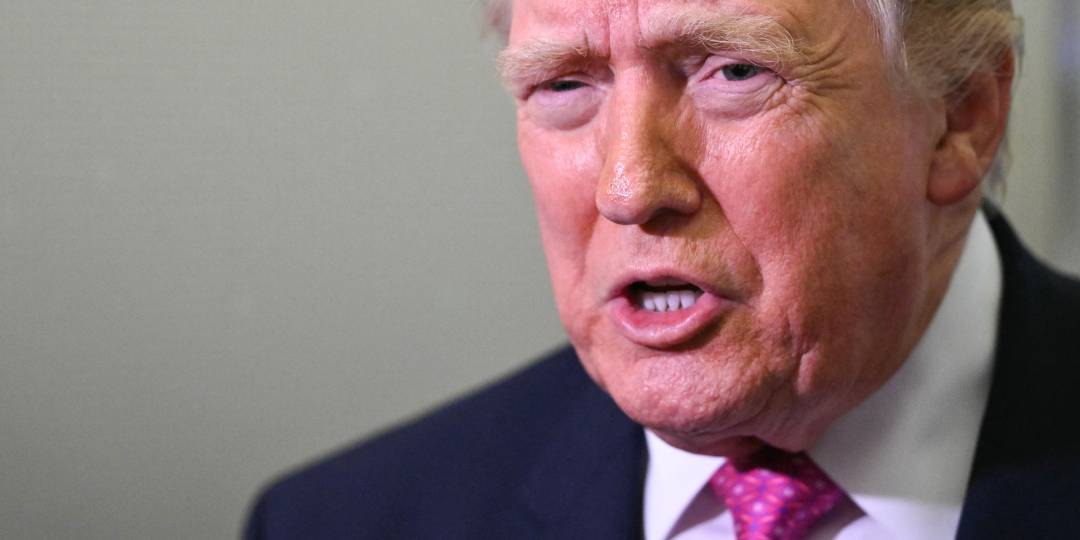
President Trump said the war had brought about a change in Iran’s ruling system after the deaths of several top officials, including Supreme Leader Ali Khamenei. “We are dealing with different people—people no one has dealt with before. It’s a completely different group… and more rational,” he said.
Trump added that he sees “a deal on the horizon,” noting that Iran, “out of respect,” would allow twenty oil tankers to pass through the Strait of Hormuz in the coming days—a key route through which one-fifth of global fuel and liquefied gas production passes.
Iran’s closure of the strait had caused a sharp rise in prices. On Monday morning, Brent crude was trading around $115 per barrel, while West Texas Intermediate climbed back above $100.
Ground Operation?
Trump has kept ambiguity over the possibility of deploying U.S. ground forces in Iran.
An American amphibious assault ship carrying 3,500 troops arrived in the region on Friday.
Commenting on the uncertainty surrounding U.S. intentions, Iranian Parliament Speaker Mohammad Bagher Ghalibaf said: “The enemy openly sends messages of negotiation and dialogue, while secretly planning a ground attack.”
“Our forces are waiting for U.S. troops to arrive on the ground to burn them and punish their allies in the region once and for all,” he added.
Attention is particularly focused on Kharg Island in the northern Gulf, which was struck by Washington two weeks ago. The island hosts Iran’s largest oil terminal, handling about 90% of the country’s crude exports, according to JPMorgan.
In an interview with the Financial Times published Sunday evening, Trump warned that the U.S. military could “very easily” seize the island.
He also said he was considering “taking” Iran’s oil.
In this context, France is set to host a G7 meeting on Monday bringing together finance and energy ministers and central bank governors.
New Attacks in the Gulf
Meanwhile, Israel approved a new budget overnight that includes a significant increase in defense spending. The budget adds nearly €9 billion, bringing the total to around €40 billion—more than double the 2023 figure—as Israel fights wars on multiple fronts.
Iran has continued carrying out strikes against U.S. and economic interests in the Gulf in response to American and Israeli airstrikes on its territory.
In Kuwait, the Ministry of Electricity announced Monday that an Iranian strike targeted a power generation station, killing an Indian worker and causing material damage. Saudi Arabia said it intercepted five missiles heading toward its territory.
At the same time, diplomatic efforts are intensifying to end the war, now entering its second month.
A virtual meeting is scheduled for Monday involving representatives from Gulf countries, Russia, and Jordan to discuss the “repercussions of Iranian attacks,” according to Kuwait News Agency.
Pakistan on Sunday reaffirmed its readiness to mediate between the United States and Iran and to host “meaningful talks” aimed at ending the war, noting growing international support for its peace efforts, including from the United Nations and China.
In Lebanon, the war’s second main front, an explosion from an unidentified projectile in the south killed an Indonesian UN peacekeeper.
An airstrike also targeted Beirut’s southern suburbs on Monday morning—a Hezbollah stronghold—according to AFP live footage, following an Israeli warning to residents of seven key neighborhoods