
An Iraqi military officer was killed Saturday, March 21, in a drone attack targeting the headquarters of Iraq’s National Intelligence Service in a residential area of central Baghdad, according to Iraqi authorities. The attack, which also wounded another officer, occurred as Iraq increasingly becomes a secondary theater of the broader US-Israeli war against Iran that began February 28, 2026.
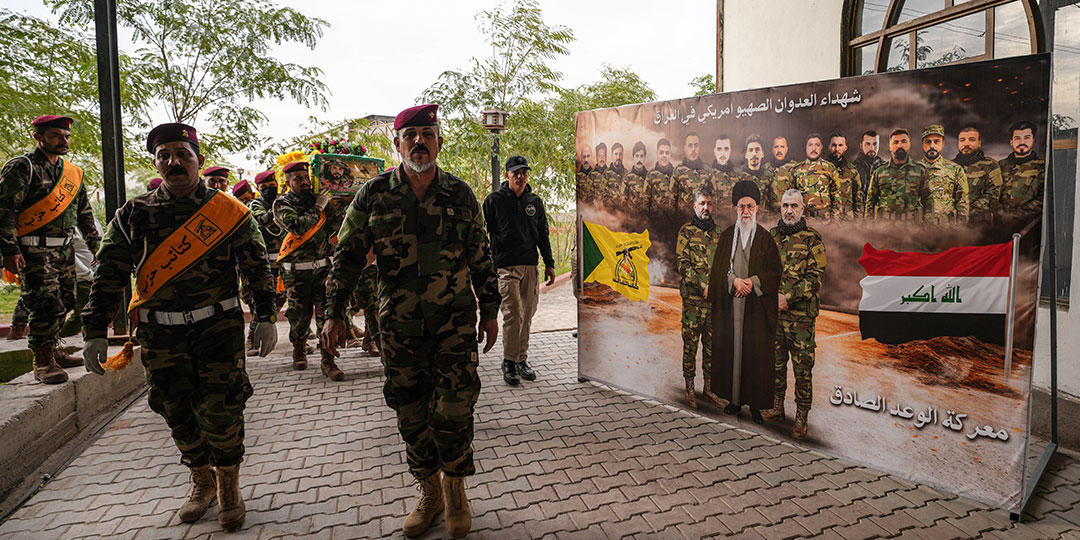
The National Intelligence Service issued an official statement saying: “At 10:00 AM today, the headquarters of the National Intelligence Service in Baghdad came under terrorist attack carried out by forces outside the law, resulting in the death of an officer.” No organization immediately claimed responsibility, though patterns suggest involvement of Iran-backed Iraqi militia factions. The attack comes hours after Kata’ib Hezbollah, an Iraqi faction loyal to Iran, announced a conditional five-day pause in attacks on the American embassy, reflecting the complex dynamics of threats and negotiations unfolding in Baghdad amid the broader regional conflict.
Attack Details: Multiple Drone Operations Targeting Security and US Infrastructure
First Attack: Intelligence Headquarters Strike
According to an Iraqi security official who spoke with AFP, there were two separate drone incidents:
First Incident: A surveillance drone crashed at a hunting club, an upscale social establishment in the Mansour district of central Baghdad. The crash may reflect either operational failure or successful defensive fire.
Second Incident: A second drone executed an attack on a communications building belonging to the intelligence service. This strike resulted in the death of the officer.
Strategic Importance of the Targeted Building
Security sources clarified that the attacked communications building housed the “Information Processing Unit” of the intelligence service—a sensitive facility “responsible for monitoring and tracking targeting operations affecting Baghdad areas” since the war began.
Selection of this specific headquarters demonstrates sophisticated intelligence about Iraqi security structures. Such precision targeting would be impossible for ordinary Iraqi factions without advanced external support and intelligence sharing.
Simultaneous Attacks on American Facilities
While the intelligence headquarters came under fire, at least three drones attacked the US embassy’s Logistics Support Center located within Baghdad International Airport’s complex Friday night into Saturday. Security sources reported a fire erupted near the center following the attack.
This facility has previously experienced multiple drone and missile attacks since the war began, with air defenses intercepting most projectiles. The dual targeting reflects a deliberate strategy: strike Iraqi government facilities cooperating with Americans while simultaneously attacking US interests directly.
Broader Context: Iraq as Proxy War Theater
Iraq’s Transformation Into Secondary Battlefield
Since the US-Israeli military operation against Iran commenced February 28, 2026, Iraq has gradually transformed into a secondary conflict zone. The country now experiences:
Raids on Iran-backed Militia Facilities: American and Israeli forces conduct strikes against positions of armed factions loyal to Tehran.
Attacks on American Interests: Iranian-aligned Iraqi factions conduct daily attacks using drones and rockets against “enemy bases.”
Iranian Operations: Tehran conducts strikes against opposition Kurdish groups in northern Iraq.
The “Islamic Resistance in Iraq” Faction Claims
Armed factions aligned with Iran, grouped under the banner of the “Islamic Resistance in Iraq,” claim responsibility for daily attacks using drones and rockets. However, these organizations typically provide minimal details about targets, enabling plausible denial while establishing narrative control.
Practically speaking, these factions appear to receive instructions and coordination from Iran or Iran-aligned forces, despite claims of autonomy. The level of operational sophistication—precise targeting of sensitive installations, coordinated multi-drone operations—indicates external direction and intelligence support.
US Military Acknowledgment of Direct Operations
For the first time, the Pentagon acknowledged Thursday that American attack helicopters have conducted strikes against armed groups loyal to Iran operating in Iraq. This acknowledgment, following weeks of official silence or deflection, signals:
Scale of Operations: Too extensive to deny publicly any longer
Declared American Involvement: Washington intends to signal direct participation
Policy Shift: Moving from covert to acknowledged operations
Kata’ib Hezbollah’s Conditional Truce: Leverage and Threats
The Five-Day Pause and Stated Conditions
Kata’ib Hezbollah, an Iraqi militia faction loyal to Iran, announced Thursday morning a conditional five-day pause in attacks on the American embassy, contingent on specific demands:
Demanded Conditions from the American and Israeli Side:
“Israeli cessation of displacement and bombing of the southern suburb (Beirut)”
“Commitment to not bombing civilian areas in Baghdad and Iraqi provinces”
“Withdrawal of CIA personnel from their stations and confinement within the embassy”
These conditions reveal explicit linkages between Baghdad developments and the broader Middle Eastern war. Negotiations are not conducted on purely local grounds but rather on comprehensive regional geopolitical bases. The factions frame their demands not as Iraqi security issues but as components of the Iran-Israel-US conflict.
Explicit Threats of Escalation
The militia stated: “In case the enemy fails to comply, the response will be direct and concentrated, with escalated attacks following the end of this period.”
This represents an unambiguous threat: the truce is temporary and conditional. If demands remain unmet, the factions promise an expanded military campaign. The five-day window functions as an ultimatum with specific consequences for non-compliance.
Observed Compliance Regarding Embassy
Notably, AFP reported no drone or rocket attacks on the American embassy in Baghdad since early Thursday morning—suggesting the factions have partially honored the truce by suspending embassy-specific operations while continuing attacks on other security facilities and infrastructure. This selective compliance demonstrates tactical sophistication and negotiating intent, though not complete adherence to original demands.
The Popular Mobilization Forces (PMF) and Northern Iraq Operations
Deaths in Northern Iraq Military Strike
The Popular Mobilization Forces (Hashd al-Sha’abi) announced Saturday morning that one of its members was killed and others wounded in a strike targeting a military base in northern Iraq. The PMF directly blamed the United States and Israel for the attack.
The organization provided no details regarding the base’s exact location, operational nature, or the striking force’s identity, though the language used suggested direct military operations rather than covert activities. The vagueness may reflect security concerns or deliberate information control.
The PMF’s Complex Structure and Allegiances
The Popular Mobilization Forces represent a coalition of factions established in 2014 to combat ISIS (Islamic State). The PMF subsequently became formally integrated into Iraq’s military structure and security apparatus, technically subordinate to the armed forces. However, the PMF simultaneously incorporates brigades belonging to armed factions loyal to Iran that operate with semi-autonomous authority.
This structural complexity means the PMF represents not purely Iraqi state interests but also Iranian regional strategic objectives. Attacks claimed by “the PMF” may actually reflect operations by specific factions serving Tehran’s interests rather than Baghdad’s governmental agenda.
Iranian Gas Supply and Economic Dimensions of Conflict
Gas Cutoff and Immediate Effects on Power Generation
Coinciding with military operations, Iraq announced Wednesday March 19 a complete halt of Iranian gas flows following Israeli strikes on Iran’s primary gas field in the South Pars economic zone on Iran’s southern Gulf coast. The cutoff occurred hours after Iran said the field had come under bombardment, with fires resulting.
The connection between military strikes and economic impact is direct: bombing a gas production facility impairs Iran’s export capacity, immediately affecting economies dependent on those exports—including Iraq. Economic warfare becomes inseparable from kinetic operations.
Partial Resumption of Gas Supplies
Iraq’s Electricity Ministry spokesperson Ahmad Musa announced Saturday the resumption of Iranian gas pumping “at 5 million cubic meters daily.”
Prior to the war, Iraq received approximately 5-6 million cubic meters daily from an agreed 25 million cubic meters during winter months. Current supplies represent below-expected levels, though partial restoration of flows. The gap suggests Iranian production constraints or deliberate supply management.
Iran-Dependent Iraqi Energy Infrastructure
Iranian gas constitutes approximately one-third of Iraq’s energy requirements. Despite possessing massive oil and gas reserves, Iraq remains unable to:
Extract and productively utilize domestic reserves
Achieve energy self-sufficiency
Provide adequate electricity for 46+ million residents
This dependency reflects systemic failures:
Infrastructure Deterioration: Decades of warfare damaged critical infrastructure
Endemic Corruption: The energy sector suffers widespread institutional corruption
Insufficient Investment: Inadequate funding for infrastructure development and modernization
Restored Stability With Caveats
The electricity ministry reported that resumed Iranian gas supplies stabilized power output at “14,000 megawatts.” While this figure represents stability compared to crisis conditions, Iraq remains far from meeting full demand. Additional gas supply disruptions remain probable should further strikes target Iranian production facilities or if Iranian domestic consumption increases during seasonal demand peaks.
Humanitarian Impact on Iraqi Civilians
Chronic Electricity Shortages Intensifying
Iraq has historically suffered endemic electricity shortages. The new regional war introduces additional destabilization. When Iranian gas flows cease, substantial portions of Iraq’s electrical generation immediately cease.
This directly affects:
Hospitals: Medical equipment becomes inoperative, threatening patient survival
Residential Areas: Loss of cooling, heating, and lighting during extreme weather periods
Economic Activity: Business operations halt, further damaging GDP and employment
Deteriorating Humanitarian Conditions
As warfare continues and strikes target essential infrastructure, Iraqi civilian humanitarian conditions deteriorate. Populations face:
Repeated electricity blackouts
Potable water scarcity
Compromised healthcare delivery
Military operation dangers
Future Trajectories and Escalation Scenarios
Will the Truce Hold?
Kata’ib Hezbollah’s conditional five-day pause concludes imminently (or has already expired). The critical question concerns whether factions will execute promised escalation threats.
Should factions escalate, Iraq might witness:
Intensified attacks on intelligence facilities and American assets
Strikes targeting critical infrastructure
Expanded regional conflict spillover into Iraqi territory
Potential American Escalatory Response
Should factions intensify operations, the United States might respond through:
Broader military operations
Targeted leadership strikes
Political pressure on the Iraqi government
The Paralyzed Iraqi Government
Iraq’s government appears institutionally paralyzed when confronting this crisis. Unable to:
Maintain complete control over Iran-aligned factions
Firmly oppose American military operations
Protect civilians from escalating violence
Economic Vulnerability and Strategic Exposure
Energy Dependency as Strategic Liability
Iran’s gas supplies represent a strategic vulnerability for Iraq. Dependency on external energy sources during wartime exposes the country to:
Supply disruption through direct targeting of gas fields
Price manipulation leveraging scarcity
Political coercion through supply control
Limited Alternatives and Long-Term Solutions
Iraq lacks viable alternatives to Iranian gas in the medium term:
Domestic reserves require development time and substantial capital
Alternative suppliers (Turkmenistan via pipeline, liquified natural gas) require infrastructure not yet constructed
The war environment prevents capital investment and infrastructure development
Conclusion:
The drone attack on Iraq’s intelligence headquarters reflects a harsh reality: Iraq has ceased functioning as an independent nation-state and instead operates as a proxy warfare theater where Iran, the United States, and Israel compete for influence at civilian expense.
The death of the Iraqi officer symbolizes genuine loss: young Iraqi citizens dying in geopolitical conflicts they neither created nor control. Iran-backed factions use Iraq as a pressure point against Washington. Washington uses Iraq as a military theater against Iran. Iraqi civilians suffer consequences.
Iraqi populations face:
Escalating violence and insecurity
Electricity deprivation and infrastructure collapse
Political paralysis and governance failure
Loss of loved ones to external conflicts
The resumed Iranian gas supply offers temporary stabilization, yet strikes on essential infrastructure threaten renewed disruption. The fundamental question persists: how long can Iraq sustain this status as a secondary conflict zone without complete state collapse?
The answer increasingly appears to be: not much longer. State institutions show stress fractures. Civilian populations express exhaustion. Economic systems deteriorate. Without fundamental changes to regional dynamics or external commitments to Iraqi sovereignty, Iraq faces structural state failure within the coming months.