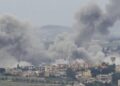


The Israeli military announced Saturday, March 21, that it conducted extensive overnight strikes against Tehran targeting “ballistic missile production sites belonging to Iran’s Islamic Revolutionary Guard Corps” on the twenty-second day of the Middle East conflict. The raids represent a sustained escalation of the comprehensive military campaign to systematically destroy Iranian military capabilities.
In an official statement, the Israeli military said that “the air force conducted a wide-ranging wave of strikes overnight targeting dozens of targets belonging to the Iranian terror regime.” The statement specified that the strikes focused on “locations used for producing vital components for developing ballistic missiles belonging to various security agencies within the Iranian terror regime.” Simultaneously, the US military announced additional successes against Iran, including the bombing of an underground facility storing cruise missiles and confirmation of reduced Iranian capabilities to threaten the strategically vital Strait of Hormuz.
Israel’s Strike Campaign: Comprehensive Targeting of Missile Production Infrastructure
Targeted Facilities and Strategic Objectives
The Israeli statement enumerated targeted locations:
Central Revolutionary Guard Complex: A centralized facility belonging to the Islamic Revolutionary Guard Corps specializing in ballistic missile component production. This complex represents a critical node in Iran’s military manufacturing chain.
Missile Component Storage Site: A facility storing components used in ballistic missile manufacturing. Targeting storage locations disrupts supply chains and impairs rapid production and deployment capabilities.
Specialized Fuel Production Complex: A facility under the Defense Ministry responsible for producing specialized missile propellant. Without proper fuel formulations, even advanced missiles become non-operational.
Israeli Assessment of Damage
The Israeli military asserted that “targeting these locations inflicts severe damage on the regime’s ability to continue producing vital ballistic missile components in these facilities.”
This assessment reflects Israeli understanding that damage is not temporary but strategically significant long-term. Rebuilding production facilities requires:
Extended timeframes (months to years for reconstruction)
Substantial financial investments exceeding billions of dollars
Advanced engineering and technical expertise
Availability of raw materials and specialized electronic components
Context of Broader Air Campaign
These strikes represent components of a wider Israeli air campaign beginning February 28. The declared objective involves systematically destroying Iran’s military infrastructure and reducing Iranian capacity to threaten Israel and regional interests.
US Military Operations: Underground Facility Strikes and Naval Assessments
American Bombing of Underground Facilities
Simultaneously, the US Central Command announced strikes against an underground facility on Iran’s coastline. American forces employed specialized bunker-busting bombs exceeding two tons in weight, specifically designed to penetrate underground targets.
This strike, announced Tuesday but fully detailed Saturday, represents technological sophistication in targeting concealed military infrastructure. The precision required to strike underground facilities demands:
Advanced satellite reconnaissance
Real-time intelligence from multiple sources
Precise targeting calculations
Weapons specifically engineered for penetration
Contents of Underground Storage Facility
Admiral Brad Cooper, commander of US Central Command Middle East operations, explained the dangerous materials stored in the facility:
Anti-Ship Cruise Missiles: The facility contained advanced cruise missiles specifically designed to threaten commercial shipping and military vessels operating in the region. Such weapons represent existential threats to maritime commerce.
Mobile Missile Launchers: Transportable launch platforms capable of rapid deployment and firing from multiple locations, complicating detection and elimination.
Critical Support Equipment: Radar systems for missile guidance, communications platforms, command and control equipment.
Admiral Cooper’s Assessment of Results
Admiral Cooper stated in a video released on social media platform X (formerly Twitter): “We didn’t just destroy the facility itself, but also eliminated intelligence support sites and radar systems used to track ship movements that posed grave dangers to international navigation.”
This reflects comprehensive American strategy: not merely destroying weapons themselves but degrading capacity to deploy them effectively.
Strait of Hormuz: Strategic Leverage and Degraded Iranian Capabilities
Critical Global Importance of the Strait
The Strait of Hormuz represents one of the world’s most strategically vital maritime passages. Through it flows:
Approximately one-fifth (20%) of global crude oil supplies
Massive quantities of liquefied natural gas
Millions of tons of additional commercial cargo
During peacetime, thousands of merchant vessels transit the strait daily. Threats to navigation in this chokepoint directly impact global economic stability.
Iranian Threats to Maritime Passage
Since war’s initiation, Iran has employed maritime and coastal capabilities to threaten navigation:
Anti-Ship Cruise Missiles: Deployable from coastal bases or vessels, capable of overwhelming commercial tankers and cargo ships.
Naval Mines: Laid by Iranian naval forces, directly threatening maritime passage.
Naval Combat Forces: Swift attack craft and warships conducting attacks against merchant vessels.
American Assessment of Degraded Iranian Capabilities
Admiral Cooper stated: “Iran’s ability to threaten freedom of navigation in and around the Strait of Hormuz has been reduced as a result of this strike, and we will not stop pursuing these targets.”
This declaration reflects American confidence in achieving tangible operational results from the military campaign. However, the statement “we will not stop” indicates operations will continue.
American Military Scorecard: Massive Scale of Campaign
Eight Thousand Iranian Targets Destroyed
In his video statement released after three weeks of war, Admiral Cooper referenced staggering military results:
“The US military has struck eight thousand Iranian targets including 130 Iranian vessels, constituting the largest attack on a naval force since World War II.”
These figures prove remarkable:
8,000 targets: Reflects extent of Iranian military infrastructure
130 vessels: Approximately half of Iran’s total naval fleet (numbering roughly 280 ships)
Largest naval attack since World War II: Extraordinary historical comparison
Implications of These Figures
If accurate, these numbers suggest:
Extensive Destruction: Nearly 46% of Iran’s naval fleet destroyed in merely three weeks
Systematic Campaign: Not random strikes but organized targeting of specific capabilities
Military Superiority: American and Israeli air and naval capabilities dramatically exceed Iranian capabilities
Economic Impact: Energy Prices and Global Trade Disruption
Effective Closure of the Strait
“Iran’s effective closure of the Strait of Hormuz”—this phrasing reflects a straightforward reality: without direct blockade, but through reduced maritime traffic due to escalating risks.
Shipping companies now avoid the strait because of:
Threats from missiles and naval mines
Dangers of maritime attack
Increased insurance costs
Shipping delays and additional expenses
Serious Crisis for International Trade
This situation has created “serious crisis for international trade, particularly energy trade.”
Global economic consequences include:
Rising Oil Prices: From $80-90 per barrel to over $110-120
Natural Gas Price Increases: Proportional to oil price movements
Affected Import Economies: Europe, Asia, even America experience pressure
Economic Stability Threats: Increased inflation and recessionary pressures
Global Economic Ripple Effects
Elevated energy prices affect everything:
Food Prices: Rise due to transportation and production costs
Commodity Costs: Clothing, electronics, furniture, all increase
General Inflation: Accelerates across all economies
Employment: May increase unemployment through slowed economic growth
Trump’s Position: Shift From Military to Diplomatic Calculations?
Studying “Gradual” Reduction of Operations
President Donald Trump announced Friday, March 20, that Washington is studying a “gradual reduction” of military operations in the Middle East “against the Iranian terror regime.”
This announcement follows:
Previous declarations of American unwillingness to “occupy” Iran
Admissions that war affects American economy (elevated energy prices)
Domestic pressure on Trump ahead of elections
Direct Negotiations Explicitly Rejected
However, Trump explicitly ruled out “reaching a ceasefire with the Islamic Republic” in the near term.
This means:
No Direct Negotiations: At least not immediately
No Immediate Military Halt: Conflict will continue for some time
“Gradual Reduction”: May mean decreasing intensity progressively, not immediate cessation
American Political Calculations
Trump’s announcement reflects political calculation:
Midterm Elections in November: Trump wants to demonstrate military success then reduce losses
War Costs: Conflict is expensive in human and financial terms, economically damaging
Public Opinion: Portions of Americans oppose extended Middle East conflicts
Broader Context: Full-Scale War at Critical Phase
Four Weeks Into Comprehensive Warfare
The conflict beginning February 28 has entered its fourth week. In three weeks alone:
Dozens of Air Raids: Across Iran, Iraq, Syria, and Gulf states
Thousands of Military Targets Destroyed: According to American claims
Hundreds of Civilian Casualties: Across multiple nations
Economic Damage: Particularly affecting Gulf states and global economies
Unclear Exit Paths
The fundamental question remains unanswered: how does this war end?
If it continues: Could trigger global economic collapse
If it stops now: Iran may seek revenge operations
If it concludes via settlement: Who emerges as actual victor?
Strategic Assessment: Military Dominance and Economic Vulnerability
Demonstrated Military Superiority
The numbers demonstrate overwhelming military capability on the American-Israeli side:
Advanced air power with precision targeting
Sophisticated intelligence collection and analysis
Sustained operational tempo across weeks
Capacity to strike multiple target categories (air, naval, ground-based)
Economic Vulnerability of Both Sides
Yet both sides face economic vulnerability:
American Side: Elevated energy prices threaten domestic economy, pressuring Trump politically
Iranian Side: Infrastructure destruction impairs economic functioning and military capability
Sustainability Questions
The critical question involves sustainability:
Can America sustain operations at this intensity indefinitely?
Can Iran absorb damage at current rates without regime collapse?
What threshold triggers negotiated settlement?
Conclusion:
Israel’s announced strikes on Tehran and concurrent American military operations reflect a clear strategy: systematic destruction of Iranian military capabilities. The figures cited by Admiral Cooper—eight thousand targets and 130 vessels—indicate unprecedented recent military campaign scale.
Yet escalating economic and humanitarian costs mount. Energy prices rise globally. Millions suffer electricity deprivation. Economic systems experience stress.
Trump’s announcement regarding “gradual reduction” may reflect recognition that sustaining war at current intensity proves economically unsustainable. However, rejection of negotiations means conflict continues indefinitely.
The fundamental unanswered question persists: what constitutes the endgame? What do America and Israel ultimately seek? Regime change in Iran? Behavioral modification? Destruction of military capabilities?
Without clear answers, warfare continues destroying economies and lives without achieving genuine peace. The world watches, uncertain whether this represents the opening phase of regional transformation or merely an escalating cycle toward broader conflict and economic catastrophe.
The twenty-two days of war have proven that military superiority does not translate into political victory, economic benefit, or regional stability. The next phase will determine whether this trajectory continues toward even greater destruction or whether diplomatic reality reasserts itself.