
Hezbollah announced Saturday, March 21, that its fighters are engaged in direct combat operations with Israeli forces in two strategic southern Lebanese border towns—one coastal, one inland—in an escalation of the conflict that began three weeks ago. The announcement came after weeks of intensifying confrontations in the south amid devastating Israeli airstrikes targeting Beirut and southern regions.
In an official statement, Hezbollah said its fighters have been “engaged for the past four hours in direct clashes with Israeli military forces in the city of Khiyam using light, medium, and rocket weapons.” The organization also reported fighting in the coastal town of Naqoura, where “an Israeli force attempted to advance toward the municipality building” but Hezbollah fighters “achieved direct hits” against the advancing troops.
The announcement coincides with new Israeli airstrikes on Beirut that killed dozens of additional civilians. The overall death toll has exceeded 1,000 since fighting began three weeks ago, including at least 118 children. Dr. Ghasan Abu Sitta, a Palestinian-British physician working without rest at a Beirut hospital, continues efforts to save children whose small bodies have been torn apart by Israeli airstrikes.
The Battlegrounds: Khiyam and Naqoura at the Heart of Conflict
Khiyam Battles: A Pivotal Strategic Position
Hezbollah announced ongoing clashes in Khiyam, a strategic border town located just kilometers from the Israeli frontier. Khiyam represents a “strategic point” due to its geographical position overlooking vast areas north of the Litani River. It has been one of the first towns where Israeli forces have attempted to advance since fighting with Hezbollah commenced.
Israel has targeted Khiyam with intensive airstrikes and artillery bombardment. Hezbollah has repeatedly announced in recent days that it is targeting Israeli forces and military vehicles in the town and engaging in direct combat operations there.
The town now resembles a principal battleground. Continuous fighting reflects its strategic significance. Control of Khiyam determines movement of forces and supply lines to other southern areas. The intensity of reported clashes suggests serious ground combat rather than isolated skirmishes.
Naqoura Coastal Clashes: Israeli Advancement Attempts
Hezbollah reported fighting in the coastal town of Naqoura located in Lebanon’s southernmost point, approximately 50 kilometers south of Khiyam. The organization stated that “an Israeli force attempted to advance Saturday morning toward Naqoura municipality building” but Hezbollah fighters “engaged them with light and medium weapons and achieved direct hits.”
Naqoura hosts the main headquarters of the United Nations Interim Force in Lebanon (UNIFIL), a multinational peacekeeping force. This gives the town additional international significance. During the previous conflict with Hezbollah in 2024, Israel maintained forces in the village of Al-Labouneh less than 3 kilometers southeast of Naqoura.
The presence of UN peacekeeping forces in Naqoura adds complexity to military operations. Yet fighting continues in and near the town, raising questions about the role and effectiveness of international peacekeeping mechanisms in preventing escalation.
Multiple Theaters of War: From South Lebanon to Beirut Suburbs
Airstrikes on Beirut Southern Suburbs: Hezbollah’s Stronghold
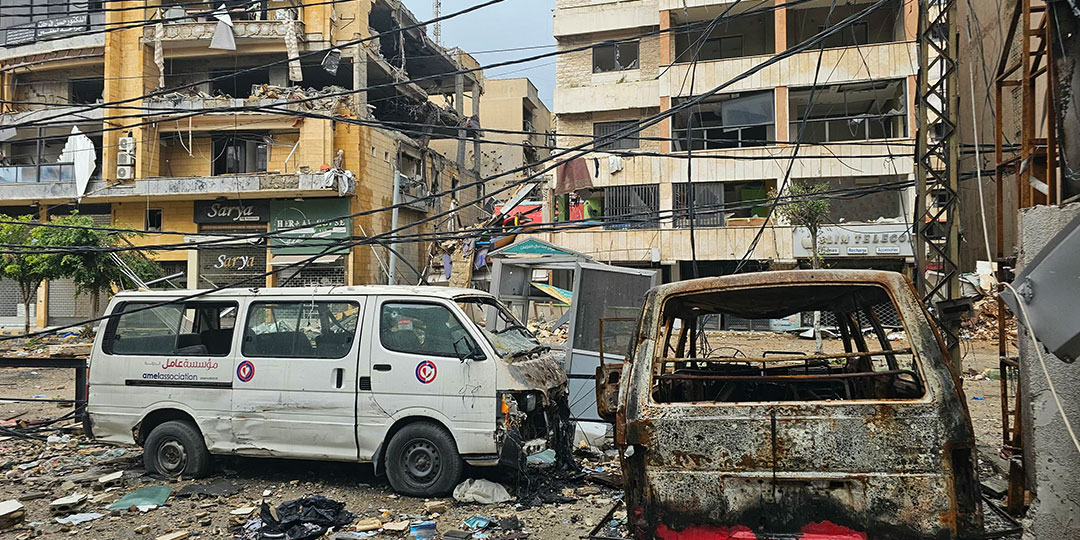
Israel conducted two dawn airstrikes Saturday on Beirut’s southern suburbs, also known as Dahiyeh, after evacuating civilians with advance warnings. The strikes occurred hours before Shia communities in Lebanon began celebrating Eid al-Fitr.
An AFP photographer documented a four-story building in the Haret Hreik neighborhood where large portions of the upper floors sustained significant damage from the strike. Following the warning, residents who had returned to their homes attempted to evacuate the area again amid heavy gunfire.
The Israeli military stated it had struck “Hezbollah headquarters” near Beirut, signaling deliberate targeting of the organization’s facilities. However, the strikes affect civilians living in the same neighborhoods, creating humanitarian consequences alongside military targeting.
Ground Operations in South Lebanon: Reported Hezbollah Casualties
The Israeli military announced that it conducted “limited ground activity” during the night in south Lebanon. An Israeli spokesperson stated that forces “killed one terrorist in ground combat.”
Israeli aircraft additionally targeted “another” Hezbollah fighter “who fired toward Israeli forces,” followed by “tank fire” that resulted in “killing three additional Hezbollah elements.”
This casualty accounting reflects the scale of ongoing ground combat. Both parties announce enemy losses, indicating intensive ground warfare rather than distant bombing operations alone. Direct engagement suggests serious military confrontation with artillery, tank, and small arms fire.
Human Cost: Thousands Dead and Wounded
Mounting Death Toll
The overall death toll since fighting began three weeks ago has exceeded 1,000 according to Lebanese authorities. Among the dead are at least 118 children. Another 370 children sustained injuries, according to the latest statistics from the Lebanese Ministry of Health.
These figures reflect:
Scope of destruction: Approximately 1,000 people killed in just three weeks
Civilian targeting: 118 children killed, 370 more injured
Rapid escalation rates: Numbers increase daily
H3: Healthcare Sector Losses
The Lebanese Health Ministry documented the deaths of 40 healthcare workers and injuries to 119 others. The war has also resulted in:
Five hospital closures: Depriving the population of critical medical resources
Four hospital losses in Beirut’s southern suburbs: Including a major pediatric intensive care unit
Ambulance targeting: Making patient transport dangerous
Dr. Ghasan Abu Sitta: Journey From Gaza to Beirut in Service to the Wounded
Professional Life: Dedication to Treating War Victims
Dr. Ghasan Abu Sitta, a 57-year-old Palestinian-British physician, has never stopped treating war casualties since beginning his medical career. His first experience came in 1991 when he witnessed the aftermath of the first Gulf War as a medical student.
Born to a Palestinian father who fled Gaza and a Lebanese mother, Abu Sitta feels particular responsibility toward war victims in the region. After completing his medical training in Britain, he has worked in:
Gaza during the First Intifada (1987-1993)
South Lebanon following the 1996 Israeli bombardment
Iraq and Yemen during subsequent conflicts
Gaza Strip after each military confrontation with Hamas
In 2023, Abu Sitta miraculously survived an Israeli attack on a hospital in Gaza. He spent 43 days there following Israeli retaliatory attacks that succeeded the October 7 Hamas attack.
Daily Work: Repairing Children’s Damaged Bodies
At the American University of Beirut Medical Center, Abu Sitta works without stopping. The pediatric intensive care unit receives critical injuries from throughout the country. Desperate fathers and mothers stand outside operating rooms, pleading for their children’s lives.
Abu Sitta describes some cases he treats:
An 11-year-old girl: Hit by shrapnel in the abdomen with partial amputation of her foot, now stabilized
Three sisters: Arriving two weeks ago with extremely critical injuries requiring repeated operations every 48 hours
A four-year-old boy: Orphaned when his parents and three siblings were killed, with amputated leg and head injuries
Abu Sitta observes: “The injuries I see daily: torn limbs, head injuries, shrapnel in eyes and faces, scattered fractures, damaged tissue. One child might have all of this.”
Psychological and Humanitarian Challenge
Abu Sitta raises the deeper challenge: “You can never adjust to children’s suffering. A child should never become an unidentified number in casualty statistics.”
The physician compares Lebanon’s current situation to Gaza: “Lebanon now is a miniature version of Gaza.” Although death tolls are currently lower, the patterns are strikingly similar.
Long-Term Support: “The Ghasan Abu Sitta Children’s Fund”
New Humanitarian Initiative
In 2024, the Beirut-based physician launched “The Ghasan Abu Sitta Children’s Fund.” The fund aims to:
Provide medical care for children from Gaza and Lebanon
Continue care after hospital discharge
Offer psychological and social support for surviving children and families
Post-Hospital Challenges
Abu Sitta raises a critical question: “Who will care for them after returning home?”
He emphasizes that “many come from poor communities lacking the means to manage such situations.”
Children require:
Physical rehabilitation: Exercises and physiotherapy
Psychological support: Managing trauma
Social and economic assistance: For families who lost breadwinners
Destruction of Entire Families
Abu Sitta states: “Not just bodies are destroyed, but entire families.” Cases like the four-year-old who lost both parents and three siblings become orphaned without family support.
This social destruction may prove more devastating than physical injuries. Parentless children need:
Alternative care from relatives or institutions
Intensive psychological support for grief processing
Educational and employment opportunities for stability restoration
Broader Context: Comprehensive War on Multiple Fronts
Origins and Escalation
The current war began March 2, 2026, after Hezbollah fired rockets at Israel in retaliation for the assassination of Iran’s Supreme Leader Ayatollah Ali Khamenei in American-Israeli strikes. Since then, Israel has conducted extensive bombing campaigns against Lebanon and infiltrated forces into the south.
The war has spread across three fronts:
South Lebanon: Ground combat and ongoing clashes
Beirut and suburbs: Airstrikes targeting Hezbollah headquarters and populated areas
Broader Middle East: Strikes against Iran, Iraq, and Syria
Escalating Human Toll
1,000 deaths in three weeks averages approximately 330 daily fatalities. This elevated rate indicates:
Conflict intensity: Intensive combat and violent strikes
Civilian targeting: Direct or indirect impact on non-combatants
Infrastructure collapse: Healthcare, security, and services dysfunction
Children’s Hospital Under Siege: The Personal Stories
A Child’s Perspective: Living Through War
Visiting the pediatric intensive care unit reveals the human dimension of abstract casualty statistics. Children with missing limbs, scarred faces, and psychological trauma represent the true cost of war. Some children, if they survive, face lives fundamentally altered by disability and loss.
The emotional weight becomes apparent when examining individual cases:
Children who watched their parents killed
Siblings separated by hospitalization and displacement
Young minds processing incomprehensible violence
Healthcare Workers’ Breaking Point
Hospital staff describe emotional exhaustion. Operating continuously on child trauma victims, they witness suffering that defies professional detachment. Medical protocols address physical injury but cannot heal psychological devastation.
One nurse stated: “We stabilize their bodies, but we cannot repair their souls.” This stark observation captures the limitations of even excellent medical care in the context of comprehensive trauma.
Conclusion:
Hezbollah’s announcement of direct combat in Khiyam and Naqoura marks a significant escalation in the war. The conflict has evolved from distant airstrikes to direct ground battles.
Human losses accelerate. 1,000 dead in three weeks. 118 children killed. Doctors like Ghasan Abu Sitta labor ceaselessly to repair damaged bodies, yet bodies alone are not the measure of damage.
Families collapse. Children lose parents and siblings. Survivors emerge from strikes but orphaned—without family structure.
The fundamental question persists: How long will this war continue? What human cost will the region ultimately pay?
Reality suggests this conflict, barely three weeks old, may extend far longer. Victims—particularly children—will bear the highest price measured not merely in casualty counts but in shattered lives, broken families, and lost futures.