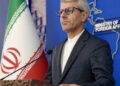
Iran self-defence warning dominated political discussions on Sunday as Foreign Minister Abbas Araghchi reaffirmed that Tehran would respond to any US attack while still hoping for progress in the ongoing nuclear negotiations.
The remarks came as Iranian universities witnessed a second day of tense student rallies, reflecting growing public anxiety over the possibility of renewed conflict with the United States.
Iran reiterates right to respond to any US aggression
Speaking to CBS, Araghchi said Iran would consider any US military strike an act of aggression and would target American bases in the region in response. He added that Tehran could not reach US soil militarily which meant any retaliation would focus on American regional assets.
According to AFP, Araghchi defended Iran’s uranium enrichment program and insisted it was a sovereign right for civilian purposes despite US opposition.
Geneva talks expected to resume
Araghchi said there was still a strong likelihood of a diplomatic breakthrough in upcoming talks in Geneva which could take place Thursday. Iran is preparing a draft agreement that negotiators hope could accelerate progress toward a deal.
He said: “We are working on elements of a deal and a draft text. If we meet again this Thursday, I believe we can move fast toward an agreement.”
Student rallies highlight internal tensions
Universities in Tehran saw renewed pro-government and anti-government gatherings. The protests commemorated those killed in the December unrest which began over economic hardship and turned into widespread demonstrations against the authorities.
Videos published by Fars News showed students waving Iranian flags and holding photographs of those killed. Tensions were reported at three campuses where groups exchanged slogans as security forces kept them apart.
Conflicting narratives over death toll
Authorities acknowledge more than 3,000 people were killed including security forces and bystanders describing the violence as “terrorist acts” backed by foreign adversaries.
However HRANA, a US-based rights group, reports more than 7,000 killings mostly among protesters although the real number could be higher.
Nuclear negotiations overshadowed by military escalation
Oman-mediated talks between the US and Iran resumed recently in Geneva. Axios reported that Washington expects Iran to submit its proposal within 48 hours which could lead to follow-up negotiations on Friday.
Meanwhile the United States has deployed two aircraft carriers and reinforced its regional air defenses aiming to intensify pressure on Tehran to accept a deal.
Public fears of war rising
Memories of last year’s 12-day conflict triggered by Israeli strikes on Iranian targets continue to fuel public anxiety. Despite ongoing diplomacy residents told AFP they fear a new confrontation involving the US and Israel.
Foreign governments including Sweden Serbia Poland and Australia have advised their citizens to leave Iran citing concerns that available flights could become limited.
Conclusion:
As Iran outlines its position on self-defense and nuclear rights the combination of domestic unrest and external military pressures continues to heighten uncertainty. Geneva talks may offer a path forward yet fears of a larger regional conflict persist.