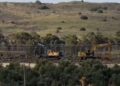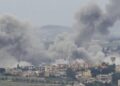
Iran missiles were launched early Wednesday toward US and Israeli targets as Tehran intensified Operation True Promise 4 on the fifth day of the ongoing Middle East conflict. The Revolutionary Guards said more than 40 missiles were fired in the latest wave.
The attack triggered air raid sirens across large parts of Israel, including Jerusalem and Tel Aviv, and sent residents into shelters. Israeli authorities reported debris falling in several locations, with minor injuries in at least one case.
The latest escalation comes only hours after Iran had launched another salvo of missiles and drones toward what it described as the heart of the occupied territories.
No immediate casualties were confirmed by Israeli emergency services.
Iran announces 17th attack wave targeting US and Israel
Iran’s Islamic Revolutionary Guard Corps said it launched around 40 missiles at American and Israeli positions in what it called the seventeenth wave of Operation Honest Promise 4.
State television carried the IRGC statement saying the aerospace forces carried out the strikes several hours earlier. The statement did not specify the exact locations of the targeted sites.
Iran has been conducting successive attacks as part of its declared retaliation campaign during the ongoing regional conflict that began five days ago.
Local media aligned with the Guards later added that earlier waves also included drones, describing the attacks as aimed at strategic sites inside the occupied Palestinian territories.
Previous salvo launched hours earlier
Hours before the 40-missile barrage, Iranian media reported that the sixteenth wave of Operation True Promise 4 targeted Israeli territory with a large number of missiles and drones.
The Fars news agency quoted the Guards as saying the strikes were directed at what Tehran described as the heart of the occupied territories.
This earlier wave was part of a pattern of near-continuous fire overnight as Iran signaled it was not slowing its response.
Sirens across Israel as missiles detected
Israel’s military said it was intercepting incoming threats after detecting missiles launched from Iran early Wednesday.
Air raid sirens sounded across Jerusalem, Tel Aviv and numerous central regions, prompting residents to rush into shelters.
Authorities said the alert was lifted after several minutes, with no immediate reports of direct impacts.
Magen David Adom, Israel’s emergency medical service, said it received no reports of casualties from the second wave of alarms.
Debris and minor injuries in Tel Aviv area
Israeli police said munition debris fell in the Tel Aviv District late Tuesday following the earlier missile waves. A woman suffered light shrapnel injuries.
Police units and bomb disposal experts cordoned off affected areas and searched for impact sites involving debris from interceptors or incoming munitions.
AFP correspondents reported hearing explosions following Iran’s missile launches.
Why the escalation matters for Iraq
Iraq remains geographically and politically exposed to regional conflict dynamics due to its proximity to both Iran and US military sites.
Escalating exchanges between Iran and Israel increase the risk of spillover effects on Iraqi airspace, trade routes and diplomatic tensions.
Iraq has repeatedly called for de-escalation and urged all sides to prevent actions that could widen the conflict further.
What analysts are watching
Analysts are monitoring several key developments:
• Whether the United States will respond militarily to Iran’s inclusion of American targets.
• The extent of Israel’s retaliation after consecutive large-scale Iranian salvos.
• Potential impacts on regional oil markets and commercial flights.
• Any signs of renewed militia activity in Iraq or Syria in response to the wider confrontation.
Conclusion:
The latest Iranian missile waves mark a significant escalation in a rapidly widening regional conflict. Both Iran and Israel appear prepared for continued exchanges as international actors call for restraint.