Iran launched a new wave of coordinated attacks against Gulf energy infrastructure Thursday, striking fuel facilities, targeting oil tankers, and threatening commercial shipping through the Strait of Hormuz. The attacks sent crude oil prices soaring past $100 per barrel despite the International Energy Agency authorizing a record release of 400 million barrels from global strategic reserves.
The coordinated Iranian campaign reflects a deliberate strategy to inflict maximum economic damage through energy supply disruption. The attacks followed Iranian threats to wage prolonged economic warfare that would “destroy” the world economy, even as US President Trump insisted Iran faced imminent military defeat. The contradiction between Trump’s military assessment and Iran’s demonstrated military capability underscores divergent perceptions of the conflict’s trajectory and likely duration.
Iran Launches Coordinated Attacks on Energy Infrastructure
On Thursday morning, Bahrain ordered residents to stay indoors and close windows following an Iranian attack on fuel storage tanks. Saudi Arabia reported intercepting drones heading toward the Shaybah oil field and the embassy district, though damage assessments were not immediately disclosed.
Drones struck fuel storage facilities at Oman’s Salalah port, forcing suspension of port operations. The targeting of port facilities represents expansion beyond pipeline and refinery infrastructure to encompass storage and distribution capabilities essential to energy exports.
The coordinated nature of attacks across multiple countries and facility types demonstrates systematic targeting of energy infrastructure rather than isolated opportunistic strikes. Each attack on fuel storage, refinery operations, or port facilities degrades the collective regional capacity to produce, store, and export energy products.
Strategic Focus on Fuel Storage and Distribution
The deliberate targeting of fuel storage tanks and port operations indicates Iranian strategy focused on degrading export capacity rather than production capacity alone. While refineries can eventually resume operations after strikes, destruction of fuel storage infrastructure and port facilities creates lasting constraints on export capability even if production facilities remain intact.
This strategic approach reflects understanding that preventing exports creates more severe economic impacts than temporary production disruptions alone.
Commercial Shipping Under Sustained Attack
A container ship near the United Arab Emirates was struck by an unknown projectile causing a small fire aboard, with all crew reported safe according to UK Maritime Trade Operations (UKMTO) agency. The incident represented one of multiple maritime attacks reported in Thursday operations.
Two oil tankers came under attack near Iraq, with authorities reporting at least one crew member killed and 38 others rescued. A search for additional crew members was ongoing, with potential missing persons believed to be trapped in engine compartments.
A Thai bulk carrier was hit by two projectiles on Wednesday, with three crew members reported missing and “believed to be trapped in the engine room.” The frequency of maritime attacks combined with crew casualties creates escalating security concerns affecting maritime insurance rates and vessel routing decisions.
Casualty Toll in Maritime Attacks
The reported crew deaths and missing persons from maritime attacks indicate that Iranian targeting extends beyond economic infrastructure to encompassing lethal threats to maritime personnel. Each maritime casualty increases costs and risks for commercial shipping operators, accelerating diversion of vessels away from Gulf routes entirely.
Strait of Hormuz Remains Effectively Closed
Despite Trump’s earlier comments suggesting reopening of the Strait of Hormuz through US Navy escort operations, the waterway remains effectively closed to normal commercial traffic. Iran has explicitly vowed that not a single liter of oil will be exported from the Gulf while US and Israeli attacks continue.
In the preceding 24 hours alone, at least four significant incidents involving vessels in the region have been reported, creating an operational environment where commercial shipping operators assess continued transit as unacceptably risky regardless of military escort availability.
The effective closure of the Strait of Hormuz, which normally carries approximately 20 percent of global crude oil supplies, represents the single most significant constraint on global energy markets. No substitute transportation routes exist that could functionally replace the strait’s capacity, making the region’s energy exports unavailable to global markets regardless of production levels.
Economic Leverage Through Chokepoint Control
Iran’s ability to threaten the Strait of Hormuz provides unprecedented economic leverage disproportionate to military power comparison. Control of a critical chokepoint carrying 20 percent of global oil supplies allows Iran to impose costs on the global economy vastly exceeding the direct cost of military operations.
This asymmetric advantage explains Iran’s focus on maritime targeting and chokepoint threats rather than conventional military engagements with superior US and Israeli military capabilities.
Record Strategic Reserve Release Fails to Stabilize Prices
The International Energy Agency announced Wednesday that member countries had agreed to unlock 400 million barrels from strategic reserves, the largest coordinated release in the agency’s history. The US Department of Energy authorized release of 172 million barrels beginning the following week, with delivery spanning approximately 120 days at planned discharge rates.
Despite this unprecedented reserve mobilization, oil prices continued rising. Brent crude jumped 7.2 percent to $98.60 per barrel in Asian trading Thursday morning, while West Texas Intermediate rose 6.5 percent to $92.96. Prices had earlier surged past $100 per barrel during the day, with intraday volatility reflecting market uncertainty about supply sustainability.
Structural Supply Deficit Beyond Reserve Capacity
Market analysts noted that strategic reserve releases totaling approximately 1.75 million barrels per day remain insufficient to compensate for lost Gulf production. Estimated supply disruption approaches 11 million barrels per day of crude production plus approximately 4 million barrels daily of refined oil products.
This structural supply deficit of approximately 13.25 million barrels daily cannot be compensated by reserve releases of 1.75 million daily, leaving approximately 11.5 million barrels daily of uncompensated supply loss. This mathematical reality explains the failure of massive reserve releases to prevent price increases.
Global Equity Markets Decline as Energy Concerns Dominate
Wall Street indices finished mostly lower Wednesday, with the S&P 500 down 0.1 percent and the Dow down 0.6 percent. European markets closed in negative territory, with Frankfurt’s DAX down 1.4 percent. Asian markets showed mixed performance, with Tokyo’s Nikkei up 1.4 percent and Seoul’s Kospi flat.
The inability of equity markets to sustain gains despite record reserve announcements reflects deep investor concerns about energy supply sustainability and conflict duration. Market participants appear to be pricing in expectations of prolonged supply constraints regardless of governmental emergency responses.
Risk Appetite Deterioration
The mixed equity performance despite coordinated governmental crisis response indicates deteriorating investor risk appetite. Firms in Dubai and other Gulf financial centers evacuated personnel Wednesday following Iranian threats against “economic centres and banks” linked to US and Israeli interests.
The flight of international firms from the region’s financial hub represents tangible evidence of market recognition of escalating risks in the Gulf region extending beyond energy markets to financial services and commercial operations.
Contradictory Signals on Conflict Duration
Trump’s assertion that Iran faced imminent defeat contrasts sharply with continued Iranian military operations at demonstrated intensity. His statement that the war would not end “immediately” contradicts earlier suggestions of rapid resolution, creating market confusion about actual operational status and strategic objectives.
The deleted Department of Energy post incorrectly claiming successful Strait of Hormuz tanker escorts further undermined market confidence in official US position communications regarding operational status and capabilities. The rapid deletion and subsequent denial of the escort claim damaged credibility on official assessments of military effectiveness and Strait of Hormuz security.
Information Reliability and Market Confidence
The retraction of statements on Strait of Hormuz operations by US officials raises questions about the reliability of official assessments of military progress and operational capabilities. Markets appear to be discounting optimistic official statements in favor of observed operational realities showing continued Iranian military capability and supply disruptions.
Lebanese Humanitarian Crisis Deepens
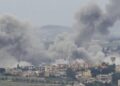
The expansion of Israeli strikes on Lebanon continued Thursday, with attacks in central Beirut killing at least seven people in the morning hours. An earlier strike on a residential building in a central neighborhood caused fires and destruction affecting multiple apartment floors.
Lebanese authorities reported cumulative death toll exceeding 630 people, while more than 800,000 people have registered as displaced. Approximately 126,000 displaced persons remain in formal collective shelters, while others sleep in open areas including along Beirut’s seafront where maritime strikes have created additional dangers.
Residents described the psychological trauma of repeated strikes and the necessity of constant vigilance. One bakery owner described running “from room to room” pulling his wife and daughter to safety before additional strikes impacted the structure. These accounts underscore the intensity and proximity of military operations in civilian areas.
Civilian Casualty Accumulation
The reported deaths of at least seven residents in a single Beirut neighborhood strike, combined with cumulative tallies exceeding 630 deaths over ten days of conflict, demonstrates the human cost of the expanding military campaign. The rate of civilian deaths suggests military operations affecting civilian concentrations with significant regularity.
Economic Costs and Strategic Assessments
Pentagon officials briefed US lawmakers that military operations had cost the United States more than $11.3 billion in the first six days of conflict, according to reporting on classified briefing information. This expenditure rate of approximately $1.9 billion daily suggests both massive material consumption and extended operational commitment.
Iran’s health ministry claimed more than 1,200 deaths from US and Israeli strikes, though AFP could not independently verify these figures. The cumulative casualty toll across all parties exceeds 1,700 deaths within the initial 12 days of conflict, a rate suggesting neither side is pursuing rapid resolution despite public statements suggesting imminent victory or willingness to negotiate.
Key Energy and Economic Impacts:
- Iran launches attacks on fuel storage facilities across Gulf states
- Oil tankers attacked near Iraq, crew member killed, 38 rescued
- Container ship struck near UAE, crew safe
- Thai bulk carrier hit with three crew missing
- Brent crude surges 7.2 percent to $98.60, breaks $100 intraday
- WTI crude rises 6.5 percent to $92.96
- IEA releases record 400 million barrels, fails to prevent rises
- US authorizes 172 million barrel release over 120 days
- Strategic reserves compensate only 1.75M of 13.25M bpd loss
- International firms evacuate Dubai, closing offices
- Lebanon death toll exceeds 630, displacement exceeds 800,000
- Pentagon spending exceeds $11.3 billion in first six days