
Iran continued systematic attacks on regional military and energy infrastructure on Saturday, striking Baghdad airport’s US military base complex, launching missile salvos at Saudi Arabia’s Al-Kharj air facility, and targeting UAE energy installations at Fujairah with drone strikes. The coordinated assault demonstrates Iranian capacity to sustain multi-vector operations despite claims of military decimation, while simultaneously testing international resolve as Switzerland formally invoked its neutrality to refuse US military overflight requests.
The escalating conflict creates unprecedented policy challenges for the US Federal Reserve, which faces contradictory pressures from wartime inflation spikes and weakening employment data. The surge in AI-generated disinformation on social media platforms adds information warfare dimensions to the military conflict, with deepfakes depicting fabricated combat scenarios circulating faster than fact-checkers can debunk them.
Coordinated Iranian Strikes Target Military and Energy Infrastructure
Iran’s Revolutionary Guards claimed responsibility for late Saturday missile attacks on Prince Sultan Air Base at Al-Kharj in Saudi Arabia, describing the facility as being “used to equip F-35 and F-16 fighter jets and is the storage place for fuel tankers.” The claim marks direct attribution of strikes on a major US military installation, though Saudi Arabia’s defense ministry had previously announced interception of six ballistic missiles headed toward the base without confirming successful impact.
Simultaneously, drone strikes targeted Baghdad airport’s military base complex, which houses US diplomatic facilities and previously stationed anti-jihadist coalition forces. Security sources told AFP that drones targeting the military base were brought down just outside the complex, though one source reported a crashed drone sparked a huge fire outside the installation.
Fujairah Energy Facility Burning After Iranian Drone Strike
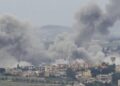
Smoke rose from Fujairah’s major port and energy facilities on Saturday, with local authorities reporting a fire from debris falling after successful drone interception. Fujairah hosts critical oil storage, trading hubs, and key export terminals central to UAE energy operations. The incident marked repeated Iranian targeting of the facility, with earlier strikes in March already damaging oil infrastructure.
A Jordanian national was injured in the Fujairah incident, according to authorities still battling the fire late Saturday. The targeting reflects Iran’s methodical strategy to strike Gulf energy sites from Kuwait to Oman, including direct hits on massive Ras Tanura refinery in Saudi Arabia, Ras Laffan gas processing base in Qatar, and UAE’s Ruwais refinery complex.
Switzerland Invokes Neutrality; Refuses US Military Overflights
Switzerland announced Saturday it had rejected two US requests for military reconnaissance overflights linked to Middle East war operations, citing its legally-mandated neutrality status recognized internationally since 1815. The government stated that “the law of neutrality prohibits overflights by parties to a conflict for military purposes related to that conflict.”
The refusals concerned reconnaissance flights requested on March 15, with Switzerland approving maintenance flights and non-military transport aircraft operations. Humanitarian and medical flights, including transport of wounded personnel, remained permitted under Swiss neutrality law.
US Frustration with Allied Restrictions
Switzerland’s overflight refusals parallel earlier tensions with other NATO allies. President Trump fiercely criticized Britain at the war’s outset for hesitating to permit US forces to use its bases, and later threatened Spain with trade measures for refusing to grant similar access.
The pattern indicates widening gaps between US military operational requirements and Allied willingness to provide logistical support, suggesting potential friction between Washington and traditional partners over war conduct and management.
AI-Generated Deepfakes Flood Social Media Despite Crackdown Attempt
AI-created videos depicting fabricated war scenarios circulated rapidly on X despite platform policy announcements aimed at curbing wartime disinformation. The deepfakes depict American soldiers captured by Iran, Israeli cities in ruins, US embassies ablaze, and destroyed US naval fleets, creating visual content that researchers say often leaves social media users unable to distinguish fabrication from reality.
X announced last week it would suspend creators from revenue-sharing programs for 90 days if posting AI-generated war videos without disclosure, with permanent suspension threatened for subsequent violations. However, researchers report the policy has proven largely ineffective, with feeds “still flooded with AI-generated content about the war.”
Monetization Incentives Drive AI Deepfake Production
X’s revenue-sharing model providing payouts to premium “blue checkmark” accounts based on engagement has “turbocharged the financial incentive to peddle false or sensational content,” according to disinformation researchers. AFP’s global fact-checking network identified numerous AI fakes from premium accounts, including videos of tearful American soldiers, captured US troops, and destroyed military equipment.
One premium account posted an AI video of Dubai’s Burj Khalifa engulfed in flames and ignored X’s Nikita Bier’s direct request to label content as AI-generated. The post remained online accumulating more than two million views, suggesting enforcement of the 90-day suspension policy remains inconsistent.
X’s AI Chatbot Exacerbates Misinformation Problem
X’s own AI chatbot Grok reportedly made the disinformation problem worse by incorrectly telling users seeking fact-checks that numerous AI visuals from the war were authentic. The tool’s errors undermine the platform’s fact-checking efforts and expose users to false information masquerading as verified content.
Iranian State Propaganda Accounts Exploit Platform
A Tech Transparency Project report documented X appearing to profit from more than two dozen premium accounts belonging to Iranian government officials and state-controlled news outlets pushing propaganda, potentially violating US sanctions. X subsequently removed blue checkmarks from some accounts, though the underlying issue of state-sponsored disinformation remains unresolved.
Federal Reserve Faces Contradictory Pressures on Interest Rate Policy
The US Federal Reserve confronts unprecedented policy dilemmas heading into next week’s meeting, with wartime inflation from spiking oil prices conflicting against weakening employment data. The Fed faces dual mandate pressures: maintaining inflation near 2 percent target while ensuring maximum employment, objectives now in direct tension.
War-induced oil price spikes threaten to reignite inflation, which though decreased from pandemic peak of 9.1 percent, remains well above the Fed’s 2 percent target. Simultaneously, the United States unexpectedly lost 92,000 jobs in February with unemployment rising to 4.4 percent, suggesting labor market softening.
War Creates Supply Shock vs. Demand Shock Dilemma
“This is certainly a bind for the Fed, because supply shocks are extremely hard to deal with in that they lift inflation and they curb output,” said Gregory Daco, EY-Parthenon chief economist. Supply shocks from Strait of Hormuz closure and oil facility damage constrain both inflation control and employment maintenance simultaneously.
KPMG chief economist Diane Swonk warned that depending on war duration, inflation could exceed 4 percent, with disinformation and uncertainty themselves acting “as their own tax on the economy,” curbing business hiring and investment.
Political Pressure and Rate Cut Expectations Shifting
President Trump, who has repeatedly demanded Federal Reserve rate cuts while threatening Fed Chair Jerome Powell with criminal indictment, complicates normal policymaking processes. Consumer affordability remains Trump’s political priority, yet oil prices surge threatens to increase inflation contrary to his political messaging.
Traders have begun reducing rate cut expectations, with some analysts suggesting hikes could enter the policy menu. The Fed’s expected rate hold next week reflects recognition that immediate moves remain inappropriate given conflicting pressures.
Labor Market Fragility Masks Structural Weakness
Analysis reveals that despite relatively steady unemployment rates, underlying labor demand has weakened significantly. Hiring rates stand at “decade lows,” wage growth is slowing, and business leaders cite labor replacement through AI as strategic priority.
Immigration restrictions under Trump administration compound supply-side labor constraints even as demand falls, creating artificial unemployment stability masking deteriorating labor market conditions. War-induced uncertainty further suppresses employer hiring and investment decisions.
Conclusion:
Iran’s continued coordinated attacks on Baghdad airport, Saudi military facilities, and UAE energy infrastructure demonstrate sustained Iranian operational capability despite US claims of military destruction. Switzerland’s invocation of neutrality to refuse US military overflights highlights widening friction between Washington and traditional allies over war support. Meanwhile, AI deepfakes circulating on X at unprecedented scale introduce information warfare dimensions to military conflict, overwhelming fact-checking capacity. The Federal Reserve’s expected rate hold reflects recognition of impossible policy tradeoffs created by simultaneous inflation and employment pressures, with wartime supply shocks and political pressure creating unprecedented central bank challenges heading into economically volatile period.