Hezbollah announced late Saturday that it was engaged in “direct clashes” with Israeli forces in the southern Lebanese town of Khiam, involving light and medium weapons and rocket-propelled projectiles in what the group characterized as ongoing combat. The military engagement represents the continuation of ground conflict between Israeli forces and the Iran-backed militant group that has killed nearly 900 Lebanese civilians over two weeks of fighting.
Simultaneously, UN Secretary-General Antonio Guterres visited Beirut to urge diplomatic resolution, declaring that “there is no military solution, only diplomacy” and emphasizing that “diplomatic avenues are available” to end the Lebanon conflict. Lebanon’s government announced preparations to form a delegation to negotiate with Israel, though no Israeli commitment to talks has been confirmed and disputed reports suggest France has drafted a peace proposal requiring Lebanese recognition of Israel. The juxtaposition of intensifying military operations and nascent diplomatic initiatives reflects the conflict’s critical inflection point between continued warfare and potential negotiated resolution.
Hezbollah Confirms Direct Combat in Khiam
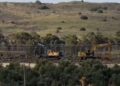
Hezbollah announced that it was engaged in “direct clashes” with Israeli forces in the southern Lebanese town of Khiam late Saturday, with combat commencing at 9:20 pm (1920 GMT). The group characterized the clashes as “ongoing” and reported that fighting involved “light and medium weapons as well as rocket-propelled projectiles,” indicating substantial ground engagement rather than limited tactical skirmishes.
Hezbollah also reported targeting Israeli forces in three border villages, expanding the geographic scope of combat operations beyond Khiam to multiple locations along the Lebanese-Israeli border. The pattern of attacks across dispersed locations suggests that Hezbollah maintains organizational capacity to conduct military operations across the southern border region despite intensive Israeli air strikes and ground operations that have killed hundreds of civilians.
Context of Khiam Fighting
Khiam has been a focal point of Israeli-Hezbollah conflict throughout the war, with Israeli forces conducting ground operations in the town and surrounding areas since the conflict escalated on February 28. The town’s location on the Israeli-Lebanese border makes it strategically significant for both Israeli offensive operations northward into Lebanese territory and Hezbollah defensive operations protecting populated areas from Israeli incursion.
The reported involvement of “light and medium weapons as well as rocket-propelled projectiles” indicates that Hezbollah fighters are equipped with infantry weapons and anti-tank capabilities, suggesting the group maintains combat capability despite losses from Israeli air strikes. The ability to conduct sustained ground combat indicates that Israeli air operations, while causing significant casualties and destruction, have not eliminated Hezbollah’s capacity to field organized military units for ground warfare.
UN Secretary-General Visits Lebanon; Urges Diplomatic Solution
UN Secretary-General Antonio Guterres visited Beirut on Friday for what he described as a “solidarity” visit and used the platform to advocate strongly for diplomatic resolution to the Lebanon conflict. Guterres declared: “There is no military solution, only diplomacy, dialogue and full implementation of the UN Charter and Security Council resolutions.”
Emphasizing the availability of diplomatic channels, Guterres stated: “The diplomatic avenues are available, including through my special coordinator for Lebanon… and through key member states.” His visit specifically aimed to encourage international support for Lebanon’s government and to pressure both Israel and Hezbollah toward negotiation rather than continued military escalation.
Guterres announced a $325 million humanitarian appeal to support Lebanon’s response to the displacement crisis, acknowledging the massive humanitarian toll of the conflict. With over 800,000 Lebanese displaced and 826 confirmed dead, the humanitarian component has become as critical as military operations in determining the conflict’s trajectory.
UN Criticism of Israeli Military Operations
Guterres directly criticized Israeli military operations, specifically addressing evacuation orders covering 14 percent of Lebanese territory. He stated: “Evacuation orders in a situation where so many vulnerable populations exist in the areas that are asked to be evacuated does not create enough security for civilians, and whatever does not create enough security for civilians inevitably becomes in violation of international humanitarian law.”
The criticism reflects the UN assessment that Israeli evacuation orders, while ostensibly designed to minimize civilian casualties, may actually constitute violations of international humanitarian law when implemented in areas with vulnerable populations lacking transportation and resources to comply with evacuation demands.
Attacks on UN Peacekeepers
Guterres emphasized that attacks against UN peacekeepers and UNIFIL positions are “completely unacceptable and they must stop. They are in breach of international law and may constitute war crimes.” Three Ghanaian peacekeepers were wounded earlier in March in south Lebanon, indicating that peacekeepers have become targets in the conflict despite their supposed neutral status.
The peacekeeper attacks underscore the deterioration of security conditions even for international forces supposed to maintain neutrality between combatants. If Israeli or Hezbollah operations continue targeting peacekeepers, it may force withdrawal of UNIFIL contingents, removing a stabilizing international presence.
Lebanon Prepares Delegation for Israeli Negotiations
A Lebanese official told AFP that Lebanon is preparing to form a delegation to negotiate with Israel in an effort to end the war with Hezbollah. The official acknowledged that “negotiations are on the table and preparations are underway to form a delegation, but… neither the timing nor the location has been determined, with Paris and Cyprus being considered.”
The Lebanese official emphasized that “we also need an Israeli commitment to a truce,” indicating that Lebanon views any negotiations as conditional on Israeli agreement to halt military operations. Without Israeli commitment to ceasefire, Lebanese officials assess that negotiations would lack credibility with populations experiencing ongoing bombardment.
Disputed French Peace Proposal
Axios reported on Saturday that the French government had drafted a proposal to end the Lebanon war that would require the Lebanese government to officially recognize Israel. France’s foreign ministry subsequently denied the existence of a French peace plan, stating: “France has supported the Lebanese authorities’ openness to direct talks with Israel and has offered to facilitate them. But it is for the parties, and only the parties, to set the agenda for these talks.”
The divergence between Axios reporting and French official denial creates ambiguity about the actual status of French diplomatic initiatives. Lebanese officials may be concerned that French proposals that require formal recognition of Israel could face domestic political opposition in Lebanon, where Hezbollah maintains significant political influence despite military focus.
Potential Negotiation Venues
Lebanese officials mentioned Paris and Cyprus as potential negotiation locations, reflecting consideration of venues outside both Lebanese and Israeli territory where neutral ground might facilitate talks. Paris’s role reflects France’s historical diplomatic engagement in Lebanon and Middle Eastern conflicts, while Cyprus’s geographic proximity and neutral status make it a practical alternative venue.
The selection of neutral ground suggests that Lebanese officials recognize the sensitivity of direct Israeli-Lebanese negotiations and the need for international mediation to facilitate dialogue between parties actively engaged in warfare.
International Pressure for De-escalation
Guterres called on the international community to “step up your engagement, empower the Lebanese state and support the Lebanese Armed Forces to secure the capabilities and resources they need.” The appeal reflects the UN’s assessment that international pressure and support for Lebanese governance structures offer the best pathway to conflict resolution short of continued military escalation.
The UN’s emphasis on supporting Lebanese state authority carries implicit criticism of both Israeli military operations that undermine state control of territory and Hezbollah’s military actions that operate independently of Lebanese government direction. Strengthening the Lebanese state potentially creates an alternative political structure capable of managing the Hezbollah question through governance rather than military means.
Broader Context of Conflict Evolution
The simultaneity of Hezbollah military operations in Khiam and Lebanese diplomatic preparations for negotiations with Israel reflects the conflict’s transition from initial escalation phase toward stabilization or resolution phase. The presence of a UN Secretary-General in Beirut advocating for diplomacy, combined with Lebanese government diplomatic initiatives, suggests that both international actors and Lebanese officials recognize the unsustainability of the current military trajectory.
However, the continuation of ground combat operations in Khiam, combined with reported Israeli air strikes and Hezbollah attacks, indicates that significant military operations continue even as diplomatic channels open. This pattern suggests the conflict may face a period of military-diplomatic competition where military pressure and negotiation efforts proceed simultaneously.
Risks of Collapsed Negotiations
If Lebanese-Israeli negotiations fail to produce agreement on ceasefire terms, the conflict risks returning to full-scale military escalation with potential for expanded geographic scope. Israeli threats to target Lebanese government infrastructure, combined with Hezbollah’s demonstrated willingness to conduct ground operations, create conditions where conflict could intensify rather than resolve if diplomatic initiatives falter.
The displacement of 800,000 Lebanese and destruction of critical infrastructure create humanitarian pressure for rapid resolution, but also reduce flexibility in negotiations if populations cannot be returned and reconstruction cannot begin. The humanitarian crisis may actually incentivize continued warfare if parties assess that military pressure can produce more favorable negotiation outcomes than immediate ceasefire.
Conclusion:
Hezbollah’s reported direct clashes with Israeli forces in Khiam, combined with Lebanese government preparations for delegation-based negotiations with Israel and UN Secretary-General advocacy for diplomatic solution, indicate the Lebanon conflict is entering a critical phase where military operations and diplomatic initiatives proceed simultaneously. The availability of potential negotiation venues in Paris and Cyprus, combined with Guterres’s emphasis on diplomatic avenues, suggests international community recognition that military solutions have reached sustainable limits. However, the continuation of ground combat in Khiam and Israeli military operations across Lebanese territory indicates significant obstacles to rapid diplomatic breakthrough. The outcome will likely depend on whether military pressure produces negotiation breakthroughs or whether continued fighting undermines diplomatic credibility and produces escalation toward broader regional conflict involving additional parties.