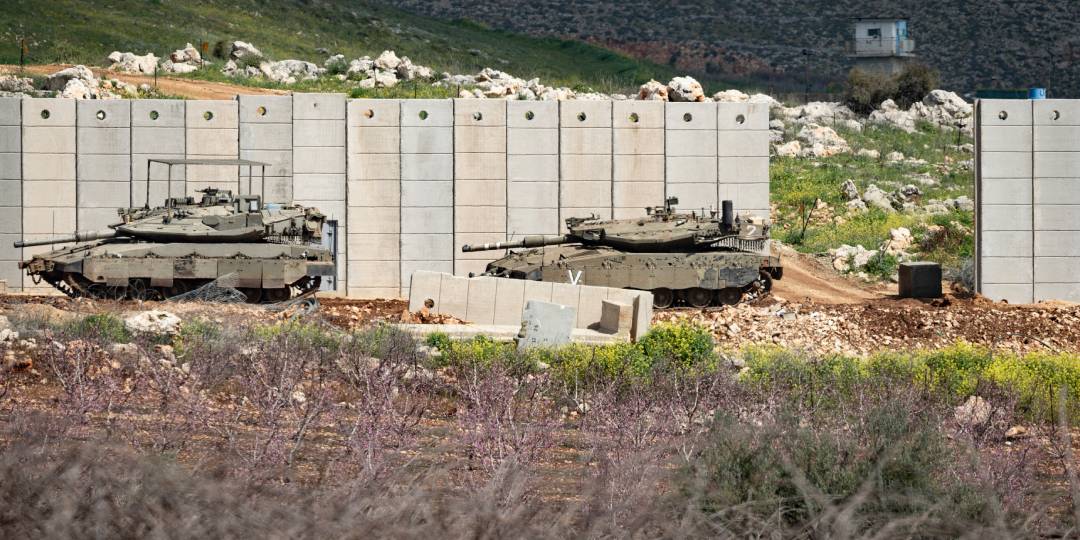

Hezbollah announced Thursday its resistance to Israeli ground forces attempting to advance into southern Lebanon, claiming to have set up an ambush in the border village of Tayyiba and striking forces with guided missiles. The group stated that its fighters destroyed six Israeli Merkava tanks during ongoing clashes in the area.
The announcement comes amid intensifying battles that have lasted for days across multiple border towns, particularly Tayyiba and Khiyam. The Lebanese National News Agency reported repeated airstrikes and heavy artillery bombardment that continued into early morning hours in these locations.
This development marks a significant escalation in the conflict, shifting from weeks of intensive airstrikes to sustained ground combat operations. Israeli forces are advancing slowly but methodically, destroying villages in their path as they push deeper into Lebanese territory.
Ground Combat and Intense Battle Conditions
The border village of Tayyiba has witnessed intense fighting following Israeli attempts to advance through the settlement. Hezbollah said it established a “well-coordinated ambush” targeting Israeli forces and striking them with guided missiles. The group claimed destruction of six Israeli Merkava tanks during the engagement.
The Lebanese National News Agency corroborated reports of multiple airstrikes and sustained heavy artillery bombardment that continued throughout the night in both Tayyiba and Khiyam. These figures indicate coordinated and intensive targeting of areas where Israeli forces seek to establish ground control.
Hezbollah also announced Wednesday that it had repelled an Israeli advance attempt in the village of Khiyam, located approximately six kilometers from the border. Khiyam holds significant strategic importance due to its overlooking position across vast areas of northern Israel and southern Lebanon.
Slow Israeli Advancement and Methodical Destruction
A source close to the United Nations told AFP that Israeli forces “are on the verge of controlling Khiyam,” after being positioned in the town center the previous week. This indicates gradual territorial consolidation by Israeli forces in strategically important locations.
The source clarified that the Israeli military has not launched a full-scale ground offensive, but rather “advances one or two kilometers daily while methodically destroying the villages it enters.” This pattern reflects a measured approach focused on securing territory and clearing areas of resistance fighters.
The source noted that Israeli soldiers “are bulldozing what was not destroyed by airstrikes and artillery fire,” pointing to comprehensive ground-level demolition operations. It added that “ground clashes are ongoing between Israeli forces and Hezbollah, whose fighters operate in small groups.”
Buffer Zone and Israeli Strategic Objectives
The Israeli military has issued orders for the evacuation of extensive areas across southern Lebanon. The evacuation zone extends from the Zahrany River northward to the Litani River, spanning approximately 40 kilometers from the Israeli border.
Israel justifies this measure by claiming it aims to establish a “buffer zone” to protect the security of northern Israel. However, this vast zone encompasses numerous Lebanese towns and cities inhabited by hundreds of thousands of civilians.
Israeli Defense Minister Yisrael Katz stated that displaced persons “will not return to their homes south of the Litani River until the safety of Israel’s northern residents is ensured.” These statements reflect Israeli intentions for long-term control over extensive Lebanese territories.
Impact on Civilian Populations
The war, which erupted on March 2, has triggered a mass displacement crisis. More than one million people have been displaced, creating a severe humanitarian emergency across the country.
Israeli airstrikes and intensive bombardment have resulted in 968 deaths, including 116 children, according to Lebanon’s Health Ministry. These figures do not account for missing persons buried under rubble or subsequent casualties from ongoing operations.
Current ground clashes have accelerated destruction of infrastructure and civilian homes. Israel’s slow, methodical advance through villages suggests deliberate destruction of buildings and civilian facilities along its path of advance.
UN Position and International Condemnation
The UN peacekeeping force in southern Lebanon (UNIFIL) condemned the “violent escalation” between Israel and Hezbollah in border areas on Wednesday. It reported “intensive exchanges of fire and escalating air, sea, and ground activities, along with increased Israeli military presence within Lebanese territory.”
These observations reflect growing international concern over conflict expansion and its transformation into a comprehensive ground war. UNIFIL had previously expressed concerns about the safety of its personnel amid ongoing military operations.
French Diplomatic Efforts
French Foreign Minister Jean-Noel Barrot visited Lebanon on Thursday amid escalating warfare and deepening humanitarian crisis. The French Foreign Ministry announced that “this visit demonstrates France’s support and solidarity with the Lebanese people, who have been dragged into a war they did not choose.”
A diplomatic source indicated that the French foreign minister is scheduled to meet with President Joseph Aoun, Prime Minister Najib Mikati, and Speaker of Parliament Nabih Berri. The visit follows telephone conversations Barrot held with Israeli Foreign Minister Gideon Sa’ar and U.S. Secretary of State Marco Rubio.
Humanitarian Aid and International Support
France sent 60 tons of humanitarian assistance to Lebanon last week. The French Foreign Ministry is expected to announce “a new package of humanitarian aid” during the minister’s visit.
These aid deliveries reflect French attempts to alleviate the intensifying humanitarian emergency. However, such assistance alone cannot resolve the crisis while warfare and destruction continue unabated.
France is also attempting to play a mediating role in de-escalation efforts. The ministry stated that the foreign minister “will consult with Lebanon’s leading political figures on the situation and ways to reduce tensions, following discussions with the president.”
Historical Context of the Conflict
The current war between Israel and Hezbollah erupted on March 2 after the group launched rockets toward Israel in response to the death of Iranian Supreme Leader Ayatollah Ali Khamenei in Israeli-American strikes on Iran on February 28.
The Khiyam area experienced intense fighting during the last major conflict between the parties in 2024. This town occupies a strategically vital position controlling vast areas of the border and adjacent territories.
The current war represents a dangerous escalation that differs from previous clashes in scope, intensity, and declared objectives to impose permanent ground control over extensive Lebanese territories.
Conclusion:
Current ground clashes represent a critical escalation in the Israel-Hezbollah conflict. Israel’s slow, methodical advance suggests preparation for prolonged attrition warfare, while Hezbollah forces resist through small-unit tactics. The deepening humanitarian crisis, with over one million displaced persons, presents enormous challenges. International mediation efforts, including French initiatives, appear limited amid continued military escalation from both sides.