Iranian forces launched coordinated strikes Thursday, March 19, 2026, against critical oil and gas infrastructure across the Persian Gulf, targeting a Saudi refinery at a strategic Red Sea port, two Kuwaiti refineries, and Qatar’s largest liquefied natural gas facility. The attacks sent global energy prices soaring, with crude oil climbing above 10 percent and European natural gas surging 35 percent in response to concerns over supply disruptions. The strikes represent a dramatic escalation in the three-week-old Middle East war that began February 28 following joint US-Israeli military operations.
Saudi Arabia’s Defense Ministry announced that a drone struck the Samref refinery in the industrial city of Yanbu on the Red Sea, stating that work was underway to “assess damage.” The ministry had earlier reported intercepting and destroying a ballistic missile fired toward Yanbu port, a critical export hub for Saudi crude oil given the effective closure of the Strait of Hormuz.
Coordinated Strikes Target Multiple Refineries
Samref refinery, jointly owned by Saudi Arabian Oil Company (Aramco) and ExxonMobil’s Yanbu Refining Company, has production capacity exceeding 400,000 barrels daily of crude oil. The facility represents a major node in Saudi Arabia’s petroleum infrastructure and critical to regional energy supply.
In Kuwait, fires broke out at two national petroleum company refineries following drone attacks. The State Ministry of Information reported that “one of the operational units at Mina Abdulla refinery, operated by the National Petroleum Company, was attacked by a drone causing fire at the site.” A second drone struck Mina Al-Ahmadi refinery, causing a limited fire in one operational unit.
The National Petroleum Company later announced full control of both fires without casualties reported. Combined production capacity of both Kuwaiti refineries totals approximately 800,000 barrels daily.
Qatar’s Ras Laffan Sustains Major Damage
Qatar’s Defense Ministry announced that the country faced “a ballistic missile attack from Iran targeting the Ras Laffan industrial city, resulting in damage.” Iranian state television declared via Telegram that “Ras Laffan refinery in Qatar was struck by a missile again and is burning.”
Qatar Energy, the state-owned company, reported “new fires” and “severe damage” at dawn to this critical liquefied natural gas production facility. The Interior Ministry stated that “civil defense achieved complete control of all fires in the Ras Laffan industrial area without casualties,” noting that “cooling and securing operations continue at sites.”
Global Energy Markets React Sharply
Oil prices climbed dramatically Thursday following Qatar’s damage announcement. Brent crude surged over 10 percent to $119.13 per barrel, while US West Texas Intermediate crude rose 2.6 percent to $98.81 per barrel. European natural gas prices jumped 35 percent in the three weeks since the war began, following Iranian strikes on Qatar’s massive Ras Laffan facility in response to an Israeli strike Wednesday targeting the South Pars gas field.
Energy prices have risen steadily since maritime traffic through the Strait of Hormuz effectively stopped, a passage normally carrying one-fifth of global crude oil and liquefied natural gas supplies, due to Iranian strikes and threats.
World’s Largest LNG Producer Under Fire
Qatar ranks as the world’s second-largest liquefied natural gas exporter after the United States, with Ras Laffan representing the planet’s largest liquefied natural gas production center. Alongside the United States, Australia, and Russia, Qatar counts among the world’s major natural gas producers. Iran has repeatedly targeted Qatar since the war erupted, with the state-owned Qatar Energy declaring Thursday that Iranian strikes caused “fires” and exposed its liquefied natural gas facilities to “severe additional damage.”
Trump’s Warning and Strategic Response
US President Donald Trump stated Thursday that Washington was unaware of the Israeli strike on the South Pars gas field. However, he issued a stark warning that the United States would destroy Iranian oil fields unless Tehran ceased attacking Qatar.
The South Pars field provides approximately 70 percent of Iran’s domestically consumed natural gas. It forms part of the world’s largest gas field, the South Pars/North Dome field, shared between Iran and Qatar.
International Concerns Over Proportionality
Qatar labeled the Israeli airstrike on South Pars as a “dangerous and irresponsible” action, while the United Arab Emirates characterized it as representing “serious escalation.” Qatar’s Foreign Ministry stated that “Iranian aggressive assaults on regional states have crossed all red lines by targeting civilians, civilian objects, and vital infrastructure,” while calling for “de-escalation and preventing unjustified attacks.”
European Warnings and Calls for Dialogue
French President Emmanuel Macron called Thursday for reducing “reckless” escalation, warning that if production “capabilities themselves (in the Middle East) are destroyed, this war will have far longer impact.” Macron urged “direct talks” between Washington and Tehran to address energy security concerns.
Tereza Fallon, director of the Russia-Europe-Asia Studies Center, wrote on X that the attack on Ras Laffan “represents major escalation in the Middle East war,” adding that “the economic ramifications will likely continue for years.”
Strategic Stalemate Amid Military Operations
Israeli security analysts characterized the evolving conflict as transforming into an “attrition war without clear indicators of regime collapse in Iran.” Danny Sitrinovich, a researcher at Israel’s National Security Studies Institute, stated that “the conflict is shifting to attrition warfare with no clear signs of Iranian system collapse,” noting that attacks on gas facilities highlight the gap between Israel and Washington regarding strategic direction.
He argued the operations display “growing randomness, lacking strategic clarity, long-term planning and defined endpoints.”
US Intelligence Assessment
US Director of National Intelligence Tulsi Gabbard told Congress that intelligence agencies “assess the Iranian system is intact but significantly weakened,” a more measured evaluation than Israeli assertions of imminent regime collapse.
Iranian Leadership Vows Retaliation
Israel announced this week the killing of Ali Larijani, Iran’s National Security Council Secretary, and Intelligence Minister Ismail Khatib as part of a campaign targeting Iranian leadership. Acting Supreme Leader Mojtaba Khamenei, designated successor to his father Ayatollah Ali Khamenei killed on the war’s opening day, vowed retaliation in a written message posted Wednesday on Telegram: “Every drop of blood has a price, and the killers of these martyrs will pay the price soon.”
Rising Casualty Estimates
A US-based human rights organization reported that American-Israeli strikes have killed over 3,000 people in Iran, a figure that cannot be independently verified. These estimates differ from official Iranian casualty figures and reflect difficulties obtaining precise information from within Iran during wartime conditions.
Iranian Proposal to Tax Strait Traffic
Iranian lawmakers proposed a plan Thursday to impose fees and taxes on vessels transiting the Strait of Hormuz, according to local media reports. The proposal may represent an attempt by Iran to convert military control of the strategic passage into additional economic gains amid the war.
Three Weeks of Escalating Regional Conflict
The war has expanded dramatically from initial Iranian-Israeli confrontation to encompass multiple Gulf states and international stakeholders. Multiple regional nations reported new attacks and interceptions across Thursday and Friday:
Saudi Arabia intercepted ballistic missiles and drones
Kuwait reported drone strikes on two separate refineries
Qatar announced ballistic missile and additional drone attacks on Ras Laffan
UAE forces continued intercepting incoming missiles and drones
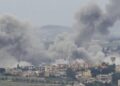
Lebanon faced ongoing Israeli airstrikes affecting civilian population
Conclusion:
Iranian strikes on Gulf oil infrastructure represent a critical escalation transforming the conflict from purely military confrontation into economic warfare targeting global energy supplies. With crude oil climbing 10 percent, European natural gas surging 35 percent, and maritime traffic through the Strait of Hormuz effectively paralyzed, the world faces an emerging energy crisis. European warnings of prolonged economic impact and calls for direct US-Iran dialogue suggest growing international concern that military escalation unchecked threatens global economic stability. The destruction of critical energy infrastructure in the world’s most strategically important oil and gas region poses risks extending far beyond regional borders to affect energy security and pricing worldwide.