
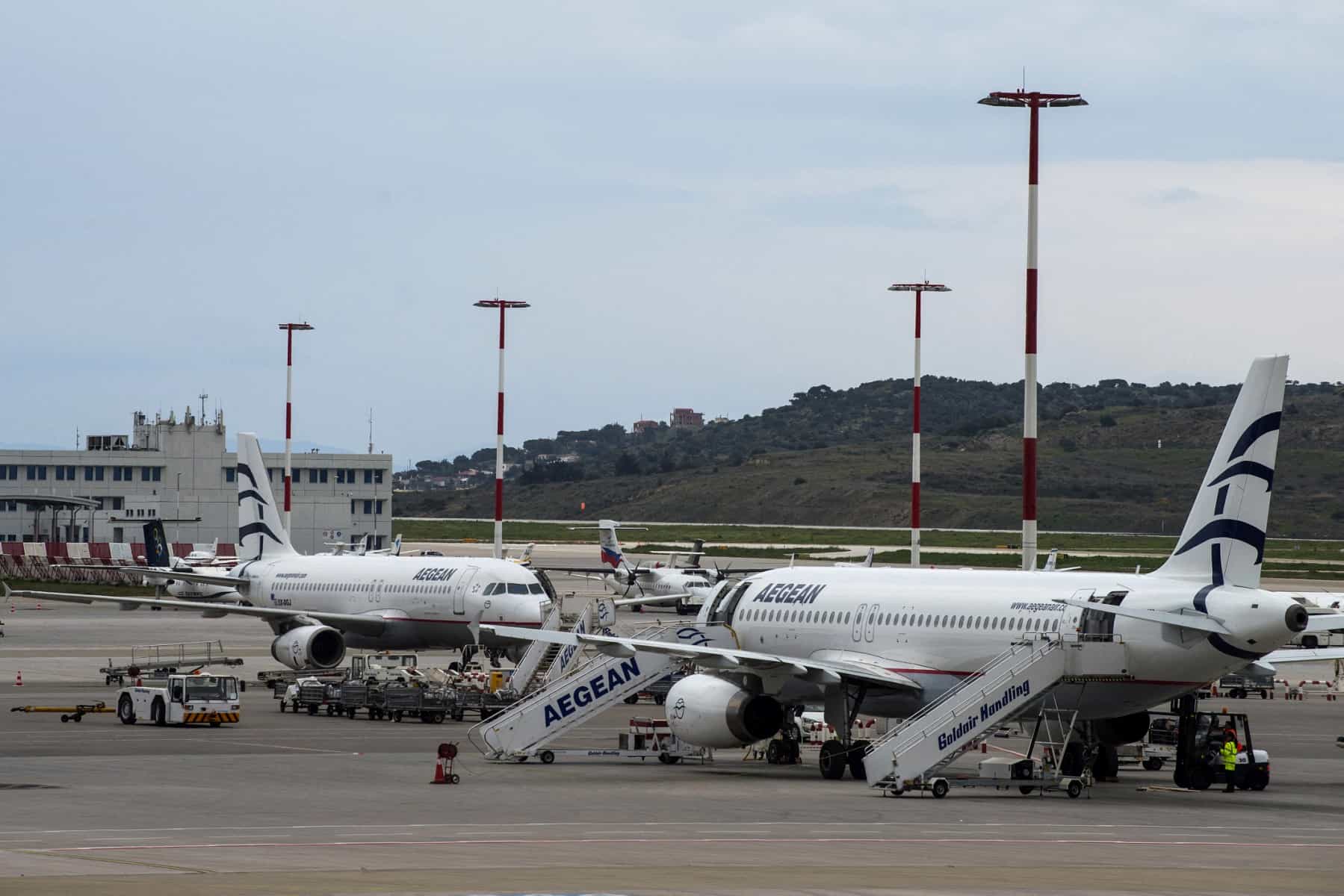

Baghdad International Airport on Tuesday received its first European flight in 35 years, marking a historic return of European air traffic to the Iraqi capital after decades of suspension. The flight, operated by Greece’s national carrier Aegean Airlines, arrived from Athens under a newly launched Baghdad–Athens–Baghdad route, becoming the first European airline service to land in Baghdad since the early 1990s. The development comes after years of security, technical, and regulatory upgrades and reflects growing international confidence in Iraqi aviation infrastructure, with the service scheduled to operate twice weekly and open the door to expanded European air links in the future.
Baghdad–Athens Route Marks Breakthrough After Decades of Suspension
The launch of the Baghdad–Athens–Baghdad route represents the culmination of prolonged negotiations and technical assessments between Iraqi aviation authorities, European regulators, and international carriers following decades of isolation. European airlines halted direct operations to Baghdad in the early 1990s due to security concerns, sanctions, and later instability that followed the 2003 invasion and subsequent years of conflict. In recent years, however, Iraqi authorities have intensified efforts to rehabilitate the country’s civil the Iraqi aviation sector by upgrading airport infrastructure, strengthening security procedures, and aligning operational standards with internationally recognised European requirements.
According to the Ministry of Transport, the agreement with Aegean Airlines was facilitated after Baghdad International Airport demonstrated compliance with key operational, technical, and safety benchmarks applied at European airports. The choice of Athens as the first European gateway reflects both geographic connectivity and Greece’s growing aviation engagement with Iraq, following Aegean’s earlier expansion into Erbil. Officials view the route as a pilot link that could pave the way for additional European destinations, contingent on sustained performance, passenger demand, and continued progress toward lifting remaining European restrictions on Iraqi aviation.
Why Iraq Was Isolated from European Air Routes for Decades
Iraq’s prolonged absence from direct European aviation links stems from a combination of historical, security, regulatory, and infrastructural challenges that developed over many years:
1. Gulf War and International Sanctions
Following Iraq’s invasion of Kuwait in 1990, the United Nations Security Council imposed comprehensive sanctions that affected broad sectors of the economy, including Iraqi aviation. These measures contributed to a sharp reduction in international air services and diminished Iraq’s integration with global commercial networks.
2. Security and Conflict
After the 2003 U.S.-led invasion and the collapse of the central government, Iraq experienced extended periods of insurgency, sectarian violence, and instability. Armed conflict, the rise of extremist groups such as ISIL, and intermittent hostilities in various regions discouraged many foreign carriers from operating direct flights into Iraqi airspace due to elevated risk assessments.
3. Ongoing Safety Concerns
International aviation authorities, including those in Europe, have historically been cautious about Iraq’s airspace and carriers. European regulators have maintained bans or restrictions on Iraqi airlines operating in EU airspace due to concerns about safety oversight and airline compliance with international standards. For example, carriers such as Fly Baghdad have been placed on the EU Air Safety List as recently as late 2023 based on safety evaluations.
4. Infrastructure and Regulatory Gaps
Iraq’s airport infrastructure and civil aviation oversight struggled for years to meet the rigorous technical, operational, and safety certification standards required by European aviation authorities. Deficiencies in airport facilities, outdated systems, inconsistent procedures, and the need for regulatory reform delayed the reopening of direct routes to European hubs.
5. Airspace Risk Assessments
Due to periodic regional tensions and military activities, some international aviation bodies have at times issued warnings or flight restrictions related to Iraqi airspace, further complicating route planning and operational decisions by foreign carriers.
Efforts Behind the Resumption of European Flights to Baghdad
The return of a European airline to Baghdad International Airport followed years of coordinated efforts involving Iraqi authorities, international aviation bodies, and foreign carriers to address longstanding obstacles. Central to these efforts was the Iraqi Ministry of Transport, working through the Civil Aviation Authority and airport management, which focused on upgrading airport infrastructure, modernising navigation and safety systems, and strengthening security protocols in line with international civil aviation requirements.
According to official statements, Iraqi authorities undertook extensive technical and operational assessments to ensure compliance with standards applied at European airports, including runway safety, ground handling procedures, air traffic management, and passenger security measures. These steps were accompanied by regular audits, inspections, and coordination with international aviation organisations to demonstrate readiness and reliability.
The resumption of European air links has also coincided with broader diplomatic and economic engagement with international partners. In recent years, the United States has expanded its diplomatic footprint in Iraq, including the opening of a consulate in Erbil, a move widely viewed as reflecting increased institutional engagement and long-term cooperation. While separate from Iraqi aviation policy, officials note that such developments contribute to an overall environment of sustained international presence and coordination.
On the airline side, Aegean Airlines conducted its own risk, safety, and operational evaluations before launching the Baghdad–Athens route, reflecting a cautious, phased approach to re-entering the Iraqi market. The selection of Athens as a gateway was facilitated by existing regional connectivity and the carrier’s prior experience operating flights to Erbil, which provided a foundation for broader engagement with Iraq.
In parallel, Iraqi Airways has worked to address safety and compliance concerns raised by European regulators, achieving notable progress under the IOSA safety programme by correcting a majority of recorded observations. Officials have stated that these combined efforts — spanning regulatory reform, infrastructure investment, and sustained dialogue with international partners — created the conditions necessary for the resumption of European flights and paved the way for further expansion.
What the Resumption of European Flights Means Going Forward
The return of European commercial flights to Baghdad International Airport is expected to have wider implications for Iraq’s air connectivity and international engagement. Iraqi transport officials have indicated that the Athens route is intended as an initial step, with plans under consideration to expand services to additional European destinations if operational performance and passenger demand remain stable. The ministry has confirmed that discussions are ongoing with other international carriers, including the prospect of European-bound flights operated through Baghdad by airlines such as Oman Air.
Aviation authorities say the renewed links could contribute to increased passenger traffic, improved connectivity for business and diplomatic travel, and gradual reintegration of Iraq into international aviation networks. The developments also align with efforts to enhance Iraqi aviation safety profile and support broader initiatives to lift remaining European restrictions on Iraqi carriers. As reported by Iraq News, officials view the return of scheduled European services as part of a longer-term strategy to position Baghdad International Airport as a viable regional hub and restore confidence in Iraqi aviation sector.
Concrete Developments in Iraq Since 2009 Eventually Leading to this Historical Event
Over the past decade and a half, Iraq has undergone a series of gradual but measurable changes that have reshaped how the country is viewed by international partners and commercial operators. Following years of conflict and isolation, improvements in security conditions, infrastructure rehabilitation, and regulatory engagement have enabled the steady return of diplomatic missions, foreign investment, and international transport links. These developments, while uneven, have created the operational and institutional conditions that made the resumption of European flights to Baghdad possible for the first time in more than three decades.
-
Reopening and Modernisation of Baghdad International Airport
After years of limited operations, Baghdad International Airport underwent phased rehabilitation, including runway resurfacing, upgraded passenger screening systems, and modernised air navigation equipment. In parallel, the Iraqi government approved a public-private partnership project valued at approximately $764 million to rehabilitate, develop, and operate the airport without direct state funding, aimed at aligning facilities with international aviation safety and security standards. Passenger traffic, which fell sharply after 2003, began recovering in the 2010s with the return of Gulf and regional carriers and, in 2025, the arrival of the first European airline in 35 years. -
Restoration of Iraqi Airspace as a Transit Corridor
By the mid-to-late 2010s, Iraq reopened large sections of its airspace for international overflights. According to aviation tracking data cited by industry bodies, Iraqi airspace now handles hundreds of daily overflights connecting Europe with the Gulf and Asia, generating substantial overflight fee revenues for the state. -
Territorial Defeat of ISIS (2017)
In December 2017, Iraq formally declared victory over ISIS as a territorial entity. This milestone marked a turning point in internal security assessments and led to the gradual lifting of travel warnings by several countries, enabling the return of foreign diplomats, airlines, and international organisations. -
Return and Expansion of Foreign Diplomatic Missions
Since 2018, multiple countries have expanded diplomatic operations in Iraq. The United States maintains its embassy in Baghdad and opened or expanded consular operations in Erbil, while several European states restored full diplomatic staffing levels, reflecting improved security conditions. -
Hosting of the Baghdad Conference for Cooperation and Partnership
In 2021 and 2022, Baghdad hosted regional and international summits attended by heads of state, foreign ministers, and senior officials from Europe and the Middle East. These events required extensive security coordination and logistics, demonstrating Iraq’s ability to host high-level international gatherings. -
Progress in Iraqi aviation Safety Compliance
Iraqi Airways entered the IATA Operational Safety Audit (IOSA) programme and, according to official statements, addressed more than 80 percent of identified observations. While the European ban remains in place, regulators have acknowledged measurable progress in safety oversight and compliance mechanisms. -
Expansion of International Flights to Erbil and Basra
Prior to the Baghdad–Athens launch, international airlines including Aegean Airlines, Turkish Airlines, Qatar Airways, and Emirates expanded or maintained regular services to Erbil and Basra, establishing sustained foreign airline presence in Iraq throughout the 2010s and early 2020s. -
Energy Production and Export Growth
Iraq increased crude oil production from around 2.4 million barrels per day in 2009 to more than 4 million barrels per day in recent years, supported by contracts with international energy companies. Oil exports have remained the backbone of state revenue and funded infrastructure investment. -
Rehabilitation of Strategic Transport Routes
Major highways, border crossings, and logistics corridors damaged during years of conflict were gradually restored after 2017, facilitating trade flows with Turkey, Jordan, Kuwait, and Iran. The reopening of key crossings supported both passenger and cargo movement. -
Renewed Engagement with International Financial and Development Institutions
Since the mid-2010s, Iraq has worked with the World Bank, IMF, and other international lenders on reform programmes, reconstruction financing, and infrastructure support, providing external validation of economic stabilisation efforts.