
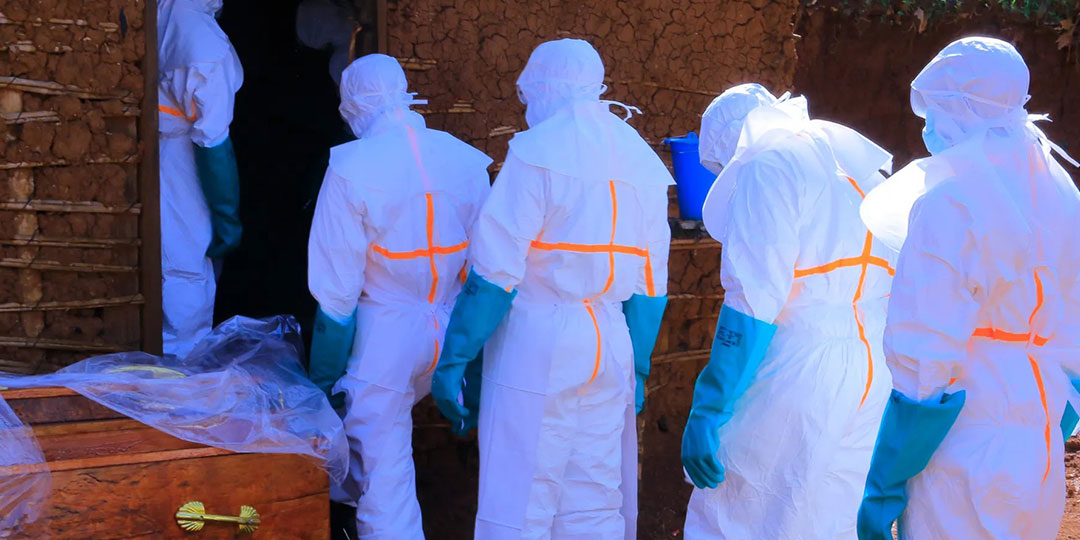

The Ebola outbreak in Central Africa may escalate significantly, with US health authorities warning that infections could surpass 20,000 cases if urgent containment measures are not strengthened.
The warning comes as the Democratic Republic of Congo reported dozens of new confirmed cases within 24 hours, underscoring concerns about the pace of transmission.
US CDC Models Project Thousands of Possible Cases
The US Centers for Disease Control and Prevention said predictive models show multiple possible scenarios for the Ebola outbreak in Central Africa.
According to health experts, projected case numbers range from around 10,000 to more than 20,000, depending on how quickly cases are detected, patients are isolated, and transmission chains are interrupted.
Dr. Satish Pillai, head of the CDC’s Ebola response division, stated that the models indicate a risk of widespread transmission if strong public health interventions are not implemented immediately.
Fears of a Large-Scale Epidemic
Jennifer Nuzzo, director of the Center for Epidemics at Brown University, said current indicators suggest the outbreak could follow a dangerous trajectory if containment and surveillance efforts are not intensified.
In a worst-case scenario, the current outbreak could approach the scale of the 2014–2016 West Africa epidemic, which resulted in more than 28,000 infections and over 11,000 deaths, marking the largest Ebola outbreak on record.
Global health experts continue to monitor the situation closely, calling for accelerated detection, isolation, and medical response efforts in affected areas.
DR Congo Reports 71 New Cases
The Ministry of Health in the Democratic Republic of Congo confirmed 71 new Ebola infections within 24 hours.
This brings the total number of confirmed cases to 452 since authorities declared an outbreak of the rare Bundibugyo strain on May 15. The number of documented fatalities has reached 82.
Health officials in Congo are working to expand testing capacity, strengthen isolation protocols, and enhance community awareness to curb the spread.
Public Health Response Remains Critical
Experts emphasize that containing the Ebola outbreak in Central Africa depends on:
Rapid identification of suspected cases.
Immediate isolation of infected individuals.
Effective contact tracing.
Strengthened medical support in affected regions.
Delays in implementing these measures could allow the virus to spread further within Central Africa and potentially beyond.
Conclusion:
The Ebola outbreak in Central Africa poses a serious public health challenge as case numbers continue to rise in the Democratic Republic of Congo. With projections warning of up to 20,000 potential infections, international health authorities stress that swift and coordinated intervention is essential to prevent a wider epidemic.