
Two unmanned drones struck Iraq’s massive Majnoon oil field in Basra province on Monday evening, March 16, 2026, without causing significant damage, according to Iraqi oil ministry spokesman and security officials. The attack occurred as Iraq becomes an increasingly active theater for regional military operations following the outbreak of war between Iran and the US-Israel coalition on February 28. The Majnoon field had halted production operations since the broader regional conflict began.
Oil Ministry spokesman Sahib Buzoun stated “the Majnoon oil field was targeted by two drones, one struck a communications tower without causing damage.” A security source indicated the second drone targeted an office of an American company operating in the field. The attack reflects continued efforts to pressure American interests in Iraq while avoiding major damage to Iraqi economic infrastructure.
Majnoon: One of Iraq’s Largest and Most Strategic Oil Fields
The Majnoon oil field ranks among Iraq’s largest and most strategically important petroleum resources, located in resource-rich Basra province. Production at the field has been halted since the outbreak of regional hostilities due to security concerns and regional instability.
The production stoppage reflects the direct economic impact of the regional war on Iraq’s economy, which depends heavily on oil revenues for government income. Any significant damage to major oil fields would immediately impact national government revenues and economic stability. Iraq has struggled to maintain oil production levels amid the security deterioration spreading across the country.
American Interests as Specific Targets
The first drone targeted a communications tower while the second targeted an office of an American company operating within the field. This targeting pattern indicates the strike was specifically directed at American interests and presence within the field rather than core petroleum infrastructure. This strategy reflects an effort to exert pressure on the United States without inflicting severe economic damage on Iraq itself.
Prior Attacks on Majnoon Field
Two drones had crashed near the Majnoon field on Friday morning, March 13, without reported material damage. The repetition of attacks suggests the field has become a recurring military objective for various actors in the regional conflict. The frequency of attacks indicates sustained interest in pressuring American companies and military interests present at the facility.
Pattern of Infrastructure Targeting
Continued attacks on Iraqi oil fields reflect part of a broader strategy targeting American interests and Western allies throughout the region. Iraq, which hosts American military bases and Western economic interests, has become a competitive arena for regional and international powers. The targeting pattern suggests coordinated efforts to pressure American positions without destabilizing Iraq’s economy entirely.
Hezbollah Brigades Announce Death of Military Spokesman
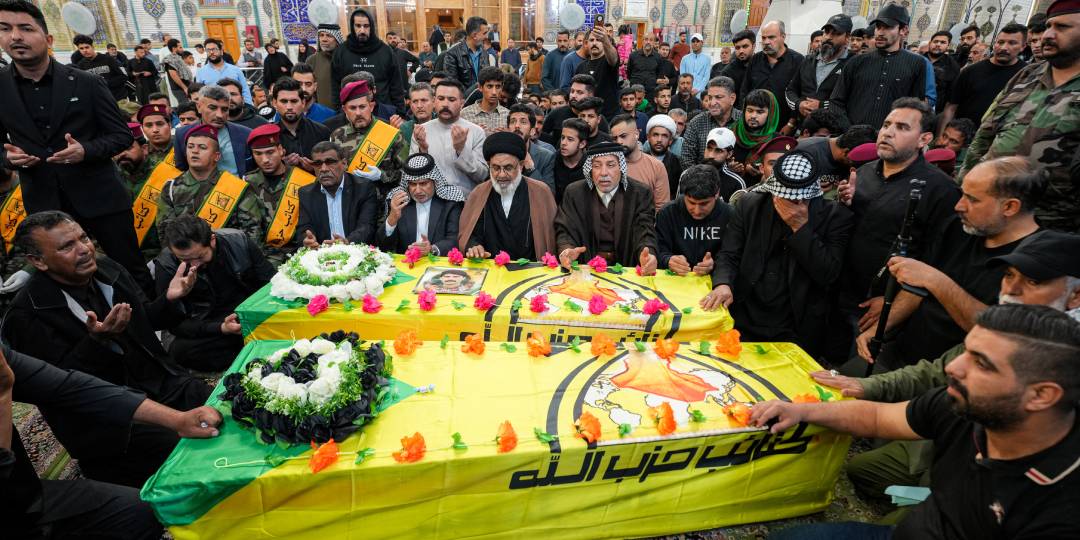
Iran-aligned Hezbollah Brigades announced Monday evening the death of their prominent commander and military spokesman Abu Ali al-Askari, without specifying circumstances of death or precise timing.
Hezbollah Brigades General Secretary Abu Hussein al-Hamidawi stated in an announcement “with pride and acceptance of God’s will, we announce the martyrdom of Hajj Abu Ali al-Askari to the gardens of paradise.” He added that “Hajj Abu Mujahed al-Assaf, the security official of Hezbollah Brigades,” would succeed him as military spokesman.
Identity Clarification and Alleged Assassination
An Iraqi security official told AFP that “Abu Ali al-Askari is the same person as Abu Ali al-Ameri,” referring to the commander killed in a Saturday morning strike on March 15 in the Arasaat district in central Baghdad. The delay in announcing the death suggests Hezbollah Brigades took several days before confirming the casualty officially.
The lack of clarity surrounding death circumstances raises suspicion of foreign involvement in an assassination, potentially by the United States or Israel. The pattern of targeting senior Iranian-aligned commanders in Iraq has become increasingly common.
Six Popular Mobilization Forces Killed in Al-Qa’im Airstrike
Six members of Iraq’s Popular Mobilization Forces (PMF) were killed in an airstrike on the town of Al-Qa’im near the Syrian border in western Iraq, which the PMF attributed Monday to Israel.
The Popular Mobilization Forces stated in an announcement that the “Shahid Haider checkpoint in Al-Qa’im district in Anbar province was subjected to a Zionist airstrike targeting an official security position of the Popular Mobilization Forces, resulting in the martyrdom of six fighters and wounding of four others.”
Checkpoint Composition and Successive Strikes
Two Iraqi security officials indicated the targeted checkpoint contained elements from PMF security, army command, and police forces. One official attributed the strike to the United States, noting that a second strike followed “on the same position where ambulances and civilians had gathered.”
This reflects a known pattern of multiple attacks on a single point to target medical personnel and civilians assembling after the initial strike. Such tactics have been documented in multiple conflict zones and raise concerns about targeting of rescue operations.
Popular Mobilization Forces: Structure and Iranian-Aligned Components
The Popular Mobilization Forces represent a coalition of factions established in 2014 to fight the Islamic State organization, before formally joining Iraq’s military institution and becoming subordinate to the Iraqi Armed Forces. However, the PMF includes brigades belonging to Iranian-aligned militant factions.
Iran-Aligned Factions and “Islamic Resistance” Operations
Iranian-aligned factions operate independently and fall under the umbrella of the “Islamic Resistance in Iraq.” These factions daily conduct drone and rocket attacks against “enemy bases” in Iraq and the region since the war began on February 28. Claims of responsibility for strikes across Iraq, Syria, and other areas suggest coordinated campaigns targeting US military positions.
Retaliatory Strikes Against Iran-Aligned Positions
In response, headquarters of the Popular Mobilization Forces and other Iraqi positions affiliated with Iran-aligned factions designated by Washington as “terrorist” have been targeted. Neither the United States nor Israel has confirmed conducting these strikes, though both are accused of responsibility.
Iraq as Regional Conflict Theater
The recurring pattern of strikes and counter-strikes reflects Iraq’s transformation into a battlefield for regional and international competition. The United States and Israel on one side, and Iran-aligned forces on the other, use Iraq as a theater for strategic competition and military operations.
Broader Context: Regional War and Iraq’s Position
The regional war commenced on February 28, 2026, following a joint US-Israeli military operation resulting in the death of Iranian Supreme Leader Ayatollah Ali Khamenei. Since then, the conflict has expanded to encompass multiple nations, with Iraq becoming an active operational theater.
Impact on Iraqi Internal Stability
Iraq faces multiple war-related challenges: attacks on vital oil fields, assassinations of faction leaders, and strikes on military headquarters. These developments destabilize the country internally and threaten economic security. The government struggles to maintain sovereignty as various armed groups pursue their own military agendas aligned with external powers.
Economic and Strategic Implications
Oil field attacks directly threaten Iraq’s primary source of government revenue and foreign currency earnings. Repeated interruptions of production create economic strain and threaten state capacity to provide services. The targeting of oil infrastructure places Iraq’s economic future at risk as the regional conflict continues.
Conclusion:
Continued drone strikes on Iraqi oil fields and assassinations of Iranian-aligned faction leaders reflect the widening scope of the regional war to include Iraq as an active theater of operations. With persistent attacks and counter-attacks, Iraq faces a genuine dilemma: maintaining internal stability amid escalating regional conflict. Iraq, hosting both American interests and Iranian-aligned forces, finds itself divided between competing international powers seeking influence in the region. The targeting of economic infrastructure alongside military assets suggests a strategy designed to weaken Iran-aligned forces while pressuring both Iraq and American interests economically, potentially forcing a reassessment of strategic commitments in the country.