

Ukrainian President Volodymyr Zelenskyy will visit the United Kingdom on Tuesday, March 18, 2026, and Spain on Wednesday, according to an announcement by British Defence Secretary John Healey on Monday. The visit comes at a sensitive moment as the United States attempts to pressure Kyiv and Moscow toward a peace settlement, while Washington partially lifts sanctions on Russia to contain oil prices spiking due to the Middle East war.
Healey stated “our firm resolve to stand with Ukraine remains steadfast, and we will welcome President Zelenskyy to our country tomorrow.” Healey’s announcement followed hours of remarks by British Prime Minister Keir Starmer that he would meet the Ukrainian leader “soon.” The visit reflects European pressure to maintain support for Ukraine amid competing international priorities.
European Allies Reaffirm Commitment to Continued Support
European allies of Ukraine have pledged to continue supporting Kyiv in its conflict with Russia, following Washington’s partial lifting of sanctions against Moscow to contain oil prices that have spiked sharply due to Middle East war. This European position reflects an independent stance separate from American priorities.
British Warning Against Putin Benefiting from Distraction
Starmer issued a stark warning, stating “we cannot allow the Gulf war to become a win for Putin,” in direct reference to Washington’s easing of sanctions on Moscow. Starmer emphasized the “necessity” to “continue focusing on support for Ukraine” amid the war waged by Russian President Vladimir Putin.
This position reflects British independence from American policy and determination to prevent Ukraine from being abandoned on the battlefield.
Spain Visit: Fourth Since Invasion Began
Zelenskyy’s visit to Spain will be his fourth since the Russian invasion began in February 2022. The visit will include talks with Spanish Prime Minister Pedro Sanchez on Wednesday.
In November, Zelenskyy received a new military aid package worth 615 million euros (706 million dollars) from Spain following his meeting with Sanchez in Madrid. The repetition of visits indicates Spain’s sustained support for Ukraine.
Continuing Military Support
Britain announced in February a new package of sanctions against Russia targeting oil exports and military equipment suppliers, marking the fourth anniversary of the Russian invasion of Ukraine. This action reflects British commitment to supporting Ukraine through multiple means.
Healey’s Defence: Two Conflicts in Two Continents
Healey told parliament “we face two conflicts in two continents, backed by a hostile axis using similar tactics and techniques.” This comment directly links the Ukrainian war with the Middle East conflict, potentially referencing a Russian-Iranian axis.
Competition for American Attention
These visits and statements reflect European concern about shifting American focus away from Ukraine toward the Middle East. In recent weeks, Washington’s attention has centered on Middle East war at the expense of the Ukraine conflict.
Peace Talks and Failed Third Round
The United States seeks to pressure Kyiv and Moscow toward a peace agreement, but the third round of trilateral talks stalled due to the Middle East war. The regional conflict has obstructed American mediation efforts between the parties.
Stalled Diplomatic Efforts
For approximately one year, the United States has intensified diplomatic efforts to push conflict parties to the negotiating table. However, several rounds of American-mediated talks have produced no tangible results. This prolonged period indicates fundamental disagreements between parties over settlement terms.
Three Dead in Russian Strikes on Ukraine
Three people were killed Monday in Ukraine in Russian strikes on Zaporizhzhia to the south and Dnipropetrovsk to the east, with explosions striking Kyiv in a rare daytime attack.
Two people died and seven others were wounded, including three children, in a Russian strike on Dnipropetrovsk region, according to regional military administrator Alexander Ganja. In southern Zaporizhzhia province, one woman was killed and three people wounded, per local military administrator Ivan Fedorov.
Residential Destruction and Housing Damage
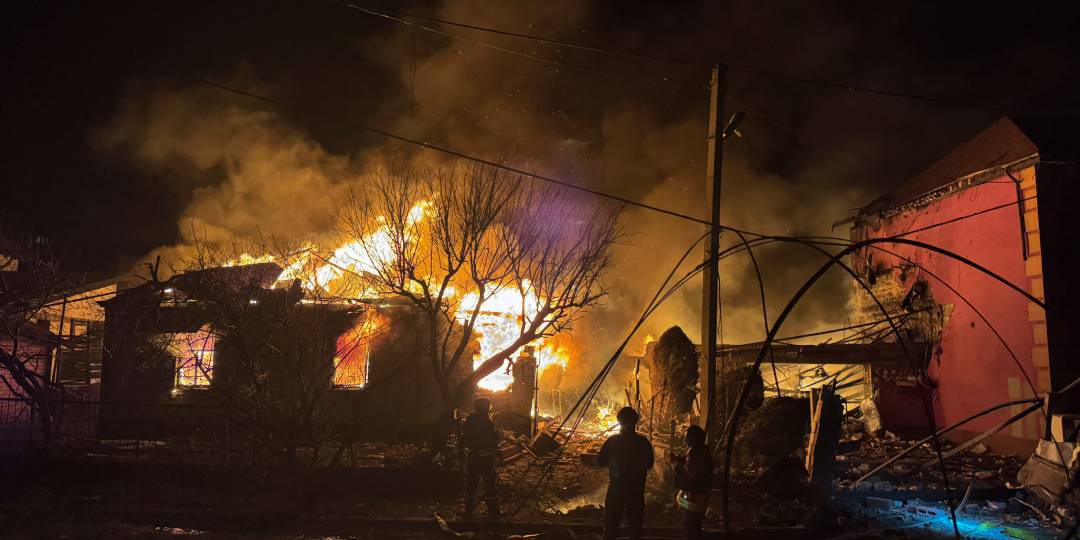
Published photographs showed a completely destroyed house with substantial damage to neighboring homes in Zaporizhzhia. These images reflect destruction inflicted on civilian infrastructure and housing.
Rare Daytime Attack on Kyiv
Drone debris fell in central Kyiv as authorities announced a rare daytime airstrike targeting the Ukrainian capital. Kyiv, a city of approximately three million residents normally targeted repeatedly overnight, rarely experiences daytime attacks.
Kyiv Mayor Vitali Klitschko stated “drone debris fell in the city center, but no casualties were recorded.” AFP journalists witnessed flashes in the capital’s airspace and clouds of smoke.
Details of the Attack and Air Defense Response
Air raid sirens activated in Kyiv around 08:30 local time, coinciding with residents commuting to work, continuing for approximately one and a half hours. AFP correspondents observed Russian drone debris near the Independence Monument in Maidan Square in central Kyiv.
Ukrainian air forces reported detecting multiple groups of combat drones plus at least one missile heading toward Kyiv. According to Telegram channels close to the Ukrainian military, air defenses destroyed two missiles heading toward the capital.
Attack on Kharkiv in Northeastern Region
Kharkiv, Ukraine’s second-largest city located in the northeast approximately thirty kilometers from the Russian border, also came under attack from Russian drones in the morning. At least three people were wounded, according to city mayor Igor Terekhov.
Geographic Expansion of Russian Attacks
Attacks on Kyiv, Kharkiv, and southern regions reflect Russian strategy to pressure multiple points across Ukraine. Focus on energy infrastructure and residential areas suggests Russia aims to undermine Ukraine’s capacity to continue functioning.
Ukrainian Retaliation Against Russian Attacks
The Ukrainian military responds with strikes targeting military facilities or those linked to Russian armed forces. Moscow’s mayor announced destroying approximately 250 Ukrainian drones approaching the Russian capital during the past forty-eight hours.
Escalating Drone Warfare
The numbers of drones employed by both sides reflect escalation in this warfare category. Relatively inexpensive drones have proven effective in Ukraine’s conflict and become central tools in the war.
Broader Context: War Continuing for Four Years
Russia launched a full-scale invasion of neighboring Ukraine in February 2022, the most violent conflict in Europe since World War II, resulting in hundreds of thousands of deaths and millions of Ukrainian refugees.
In recent months, the Russian military has intensified bombardment of Ukraine, particularly Kyiv, typically targeting energy infrastructure. This reflects Russian strategy to pressure civilians.
Conclusion:
Zelenskyy’s visits to Britain and Spain represent European efforts to compensate for diminished American attention to Ukraine as Middle East conflict dominates Washington’s focus. The continuation of Russian attacks against civilian infrastructure and residential areas, including rare daytime strikes on Kyiv, underscores the ongoing brutality of the conflict. European leaders’ reaffirmation of support contrasts with American willingness to ease sanctions on Russia, suggesting persistent transatlantic tensions over Ukraine strategy. As diplomatic efforts stall and military operations intensify on both sides, Ukraine faces prolonged conflict with uncertain prospects for negotiated settlement.