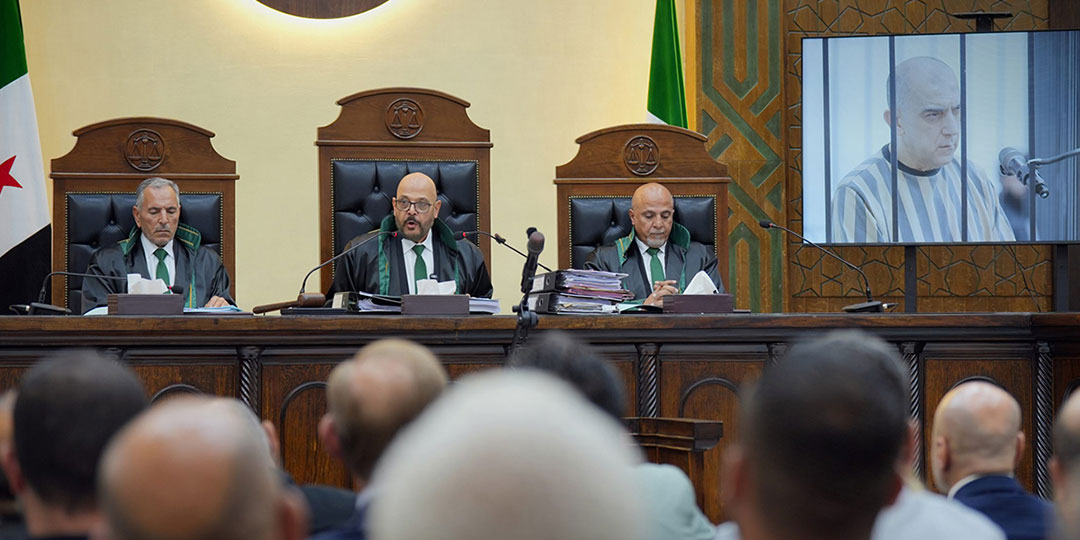

A criminal court in Damascus on Tuesday issued an in absentia death sentence against Bashar al-Assad, the former Syrian president, over charges including deliberate murder, torture and arbitrary detention, as well as participation in the violent suppression of peaceful protests.
The ruling also covered his brother Maher al-Assad, former political security branch chief in Daraa Atif Najib, and a number of former military and security officials, according to local and official media reports.
Charges of murder, torture and crimes against humanity
The court said the sentences were issued after the defendants were convicted of deliberate and intentional murder, torture, arbitrary detention and crimes against humanity.
According to the announcement in court, Bashar al-Assad was sentenced to death after being found guilty of killing several people, including children, as well as torture and unlawful detention.
Maher al-Assad and other officials included
The death sentence also covered Fourth Division commander Maher al-Assad, former defence minister Fahd Jassem al-Freij, and several former military and security officials, including Mohammed Ayman Ayoush, Louay Ali al-Ali, Qusay Ibrahim Mehyoub, Wafiq Saleh Nasser and Talal Fares al-Assimi.
The court said they were convicted of deliberate murder and torture leading to death, in a case tied to the early crackdown on protests in Syria.
Hearing held in Damascus
Damascus Criminal Court No. 4 held its ninth session to deliver the verdict, presided over by Judge Fakhr al-Din al-Arian, in the case filed against the absent defendants.
The rulings were issued in absentia, with the defendants still outside the country or not in custody, according to the court.
Transitional justice response
Abdul Basit Abdul Latif, head of the National Transitional Justice Authority, said the ruling marks an important step toward justice, accountability for victims and the rule of law.
He said the move is part of the broader judicial process linked to violations committed in Syria over the past years, amid ongoing demands for accountability over wartime abuses.
Conclusion:
The death sentence against Bashar al-Assad marks a significant development in Syria’s transitional justice process, particularly as the court extended its findings to include prominent military and security figures from the former regime. The verdict, according to the court, is linked to murder, torture and crimes against humanity committed during the years of protest and conflict.