
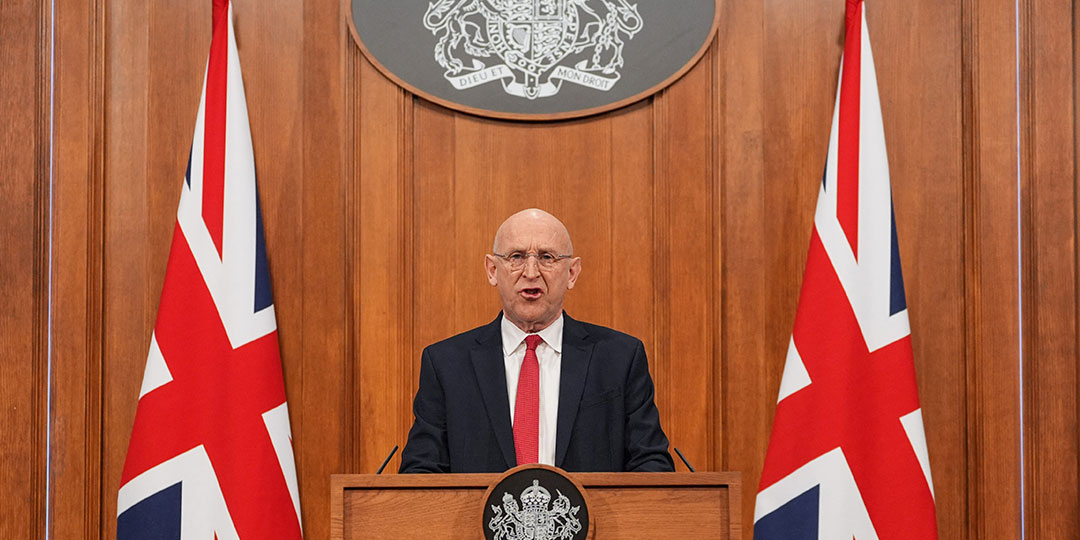

Britain announced on Thursday that its armed forces tracked three Russian submarines conducting espionage operations for one month near critical underwater cables in the North Atlantic. British Defense Secretary John Hayley stated in a press conference that Royal Navy and Royal Air Force personnel, working with Norway and allied partners, successfully “disrupted” the clandestine operations through continuous 24-hour surveillance monitoring.
Simultaneously, the European Commission demanded urgent clarification from Hungary regarding allegations that Foreign Minister Peter Szijarto leaked sensitive EU information to Russia. France accused Hungary of “betrayal” of European solidarity, with evidence suggesting Szijarto provided Moscow with direct access to strategic information on sensitive EU matters including Ukraine’s accession negotiations.
Britain Reveals Coordinated Russian Submarine Operations
British Defense Secretary John Hayley confirmed that armed forces tracked one attack submarine and two intelligence-gathering submarines operating in British territorial waters and adjacent areas. The operations revealed a systematic Russian effort to conduct espionage against critical infrastructure supporting transatlantic communications.
Hayley stated “In recent weeks, while much attention focused on the Middle East, the United Kingdom, working with Norway and other allies, responded to intensified Russian activity in the North Atlantic.” The disclosure now represents a British effort to correct the public record regarding ongoing Russian threats.
Continuous Round-the-Clock Surveillance
Britain deployed a Royal Navy warship and Royal Air Force aircraft, coordinated with allied forces, to monitor the Russian submarines. Hayley explained “We monitored the Russian submarines 24 hours a day, seven days a week.” The defense secretary emphasized that British forces “made clear to them that they were under observation and their attempt to conduct a covert operation was disrupted.”
Britain Issues Direct Warning to Russia
The British Defense Secretary issued an explicit and unambiguous warning to Moscow. Hayley stated “We are monitoring your activities near our cables. Any attempt to cause damage will not be tolerated and will have severe consequences.”
Hayley confirmed that Russian submarines ultimately departed the area, adding “We have no evidence of damage occurring,” though the exposure of operations indicates Russia’s ongoing determination to conduct intelligence gathering against British interests.
No Damage But Clear Deterrent Effect
Hayley noted that operations failed to damage critical British cable infrastructure, but the effective interception of submarines demonstrates Britain’s capacity to detect and monitor Russian threats effectively. The revelation serves notice that such operations face detection and active interdiction.
Russia Adapts Strategy Regarding Shadow Fleet Operations
The Telegraph newspaper reported Thursday that a Russian frigate escorted two sanctioned oil tankers in British waters through the English Channel. This development reflects Russia’s shift toward new strategies protecting its vessels violating international sanctions regimes.
In late March, Downing Street announced that British military forces could now board, search, and detain sanctioned vessels belonging to Russia’s “shadow fleet” if they entered British territorial waters.
British Countermeasures Force Russian Tactical Adaptation
When questioned regarding the Telegraph report, John Hayley affirmed “We have the military means and we are prepared to act to intercept shadow fleet vessels.”
Hayley indicated that British countermeasures “have forced Russia to alter the course of its shadow fleet vessels, or escort them with its own warships.” This tactical adjustment reflects the relative effectiveness of British pressure against Russian maritime activity.
European Commission Opens Investigation into Hungarian Information Breach
The European Commission demanded urgent clarification from Hungary Thursday following investigative media revelations that Foreign Minister Peter Szijarto transmitted classified EU information to Russia. Investigative journalists from a coalition including “The Insider,” “V-Square,” and “Delphi” reported that Szijarto provided Moscow with a “direct line” to access strategic information of critical importance.
European Commission Spokesperson Paula Pinho described these reports as “very concerning,” condemning “the possibility that a member state government coordinated actions with Russia against the security of the European Union and its interests.”
Audio Evidence Documents Systematic Information Transfer
Media outlets published a recorded telephone conversation from July 2024 in which Szijarto confirmed to Russian Foreign Minister Sergei Lavrov that he would send him “immediately” a document relating to Ukraine’s accession negotiations to the European Union. The investigation relied on leaked recordings and transcripts of telephone conversations in which Szijarto allegedly told Lavrov “I am at your service.”
France Accuses Hungary of “Betrayal”
French Foreign Minister Jean-Noel Barrot issued harsh condemnations of Hungary. Barrot stated “This is a betrayal of the solidarity required between European Union member states.”
Barrot emphasized the critical importance of European cohesion, declaring “If we want to be strong in a world where new empires are forming, we must unite and remain solidary.”
Warnings Against Internal Fracture and Subordination
Barrot warned of dangers from European division, stating “We may sometimes disagree among ourselves, including on strategic matters. But unity is what must prevail, otherwise we will become subordinate, a plaything in the hands of empires, something we firmly reject.”
Hungarian Political Context and Russian Pressure
Szijarto denied allegations of “foreign interference” in Hungary’s electoral campaign, yet audio and documentary evidence raises serious questions regarding his credibility. Parliamentary elections in Hungary occur Sunday, with nationalist Prime Minister Viktor Orban facing his most serious electoral challenge in years.
Opposition Candidate Demands Severe Punishment
Peter Magyar, the opposition frontrunner to unseat Orban, proposed a life sentence conviction against Szijarto for “treason,” reflecting deep political polarization regarding the information leak controversy.
Broader Implications for European Operational Integrity
Barrot emphasized that the latest disclosure “casts shadows of doubt on the integrity of our deliberations.” He stated “This means that internal negotiations and discussions may be exposed to Russia.”
Barrot called on Viktor Orban “not only to honor his commitment, but also to uphold the principle of European solidarity.”
Convergent Russian Strategies Targeting European Security
The British submarine disclosures and Hungarian information breach collectively illustrate the multifaceted nature of Russian threats to European security. Operationally, Russia struggles to maintain maritime influence through underwater and espionage operations. Strategically, Russia exploits internal European political fractures to achieve geopolitical gains.
Integrated Threat Assessment
The dual revelations expose how Russia simultaneously pursues military, intelligence, and political strategies to undermine European cohesion. From underwater cable sabotage preparation to infiltration of EU governmental structures, Russian tactics demonstrate comprehensive threat assessment and operational planning.
Conclusion:
British disclosures of Russian submarine espionage and the Hungarian intelligence scandal collectively reveal the multidimensional character of Russian threat to European security. While Britain defends maritime sovereignty and critical underwater infrastructure, Russia simultaneously infiltrates internal European Union structures to undermine European solidarity. European security futures depend on the capacity to address military, intelligence, and political threats simultaneously while maintaining European unity against Russian efforts to divide and weaken Western institutional frameworks.