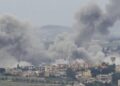

Oil prices soared to their highest levels in nearly two years Friday as the escalating US-Israel war against Iran and retaliatory attacks across the Gulf region virtually paralyzed global shipping routes. Brent crude closed at $92.69 per barrel, up 8.5 percent for the day and nearly 30 percent for the week, while the US benchmark West Texas Intermediate climbed above $90 a barrel with a record weekly surge of over 35 percent. The dramatic price spike reflects mounting fears over supply disruption and signals prolonged energy crisis that threatens economic stability worldwide and specifically impacts oil-dependent nations like Iraq.
The jump in oil prices accelerated after US President Donald Trump declared that only Iran’s “unconditional surrender” would end the regional conflict. Trump’s demand dashed market hopes for a quick resolution and triggered fresh warnings about sustained inflation and its ripple effects across global supply chains.
Strait of Hormuz Blockade Strangles World Oil Trade
Maritime traffic through the Strait of Hormuz has nearly ceased as a result of Iranian actions and military escalation. The strategic waterway, through which one-fifth of the world’s crude oil and liquefied natural gas supplies normally flow, has become commercially unviable for most international shipping companies. Vessels have been deterred by military activities, attacks on shipping, and warnings issued by Iran’s Islamic Revolutionary Guard Corps, causing shipping companies to exercise extreme caution or avoid the region entirely.
The closure of this critical chokepoint has immediate consequences for global energy markets and directly threatens oil-dependent economies. Analysts at JPMorgan Chase noted that while US President Trump pledged to protect ships transiting the strait, such assurances will have “limited impact unless Iran’s extensive disruption capabilities are first neutralized.”
Iraq and Gulf Producers Face Production Shutdowns
Iraq, as one of OPEC’s largest producers, has been forced to implement significant production cuts due to storage capacity constraints. With exports blocked through the Strait of Hormuz, Iraqi crude is unable to reach global markets, forcing the country to reduce output from its southern fields. Reports indicate that major oilfields including Rumaila, West Qurna 2, and Maysan are among those facing cuts totaling potentially 1.5 million barrels per day or more.
The Iraqi Oil Ministry has ordered shutdowns as storage tanks approach capacity. Basrah Oil Company confirmed halting production at the Rumaila field, one of Iraq’s most critical petroleum assets. Similar constraints are affecting neighboring Kuwait, which has begun cutting production due to lack of storage capacity.
Economic experts warn that Iraq faces daily revenue losses of $260 to $280 million as long as exports remain blocked. For a nation heavily dependent on oil revenues for state finances and development, a prolonged disruption could cost billions monthly and threaten government operations and services.
Oil Prices and Global Economic Impact
The surge in crude prices is already affecting inflation expectations and dampening optimism about interest rate cuts. Previously, markets anticipated the US Federal Reserve would resume interest rate reductions in June, but expectations have now shifted to September or later. Higher energy costs threaten to reignite inflation pressures even as economic growth shows signs of weakness.
Analysts warned that sustained high oil prices pose significant risks to global growth. Russ Mould, investment director at AJ Bell, stated: “The longer that key energy infrastructure and shipping routes in the region are affected, the greater the chance of a significant inflationary impact.”
Weak US Jobs Data Compounds Market Concerns
Wall Street stocks tumbled Friday following disappointing employment figures that compounded concerns about the economic impact of soaring energy costs. The US economy unexpectedly shed 92,000 jobs in February, down from revised job growth of 126,000 in January. This reversal far lagged analyst expectations and signaled weakness in the labor market at a time when higher oil prices are already constraining consumer spending.
Key market impacts:
Dow Jones Industrial Average closed down 1.3 percent at 47,501.55
S&P 500 fell 1.3 percent to 6,740.02
Nasdaq Composite dropped 1.6 percent to 22,387.68
Europe’s major markets also fell around 1 percent
Investors expressed concern about how higher energy costs would further weaken spending. Art Hogan, analyst at B. Riley Wealth, noted that higher oil prices “a constraint on spending in an economy even with energy independence. Consumers will have less to spend on other things if they’re spending more on energy products.”
Global Market Volatility Spreads
The combination of supply disruption, inflation fears, and weak employment data triggered a sell-off across most major equity markets:
European markets closed with losses:
London FTSE 100: down 1.2 percent
Paris CAC 40: down 0.7 percent
Frankfurt DAX: down 0.9 percent
Asian markets showed mixed results, with some exchanges recording gains. Hong Kong’s Hang Seng Index rose 1.7 percent and Shanghai’s Composite gained 0.4 percent, though Seoul’s Kospi remained flat. This divergence reflects different regional exposures to oil price risks and economic outlooks.
A notable exception to the sell-off was Boeing, which gained 4.1 percent following reports of an impending major sales agreement with Chinese carriers, suggesting some selective strength in specific sectors.
What’s Next for Oil Markets
The trajectory of oil prices will depend heavily on whether the Middle East conflict escalates further or shows signs of resolution. Current market dynamics suggest oil could remain elevated:
Sustained supply disruption through the Strait of Hormuz
Continued Iranian retaliatory capabilities and US-Israel military operations
Production shutdowns in Iraq, Kuwait, and other Gulf exporters due to storage limitations
Reduced expectations for quick conflict resolution following Trump’s “unconditional surrender” demand
Energy analysts remain vigilant for further price spikes if current blockades persist beyond the coming weeks.
Conclusion:
The surge in Brent oil prices to nearly $93 per barrel reflects a perfect storm of supply disruption, geopolitical escalation, and weak economic data. For Iraq and other oil-dependent Gulf states, the blockade of the Strait of Hormuz represents an economic emergency with immediate consequences for government revenues and citizens dependent on state services. Global markets face sustained inflation risks and dampened growth prospects as energy costs soar and employment weakens, setting the stage for a complex economic period ahead.