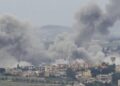

Sarah Saleh fled with her family in pajamas in the early hours of Wednesday dawn after an Israeli warning preceded bombing of a building adjacent to the shelter where they had taken refuge in central Beirut after fleeing southern suburbs. However, other strikes were executed without advance notice, targeting residential buildings in scattered neighborhoods, killing at least 12 people and creating panic among residents who found no safe refuge during night hours.
Saleh, 29, told AFP “it was 4 a.m. and we were sleeping” before awakening to heavy gunfire warning residents of imminent danger. She fled with parents, siblings, and their children to Martyrs’ Square in central Beirut “in our pajamas,” describing the impact sound as “terrifying…very powerful. Beirut shook.” With her wearing a medical mask to protect against dust following the explosion, she noted “children were frightened and cried.”
Escalation of Strikes on Capital Without Warnings
The targeted building stands in Baashura, a densely populated residential area near downtown Beirut’s commercial district containing company offices and government headquarters. The Middle East conflict extended to Lebanon after Hezbollah fired rockets toward Israel in response to Supreme Leader Ayatollah Ali Khamenei’s death in early American-Israeli strikes on the Islamic Republic, prompting Israel to begin intense bombing campaigns across multiple Lebanese regions plus ground penetration into the south.
Israeli airstrikes have killed at least 912 people to date, including 111 children, according to Lebanon’s Health Ministry announcement, with over one million displaced. During the past two weeks, the Israeli military issued evacuation orders for wide areas in southern Lebanon and Beirut’s southern suburbs, yet executed strikes in the capital without advance warnings.
Residents’ Growing Fear of Unannounced Strikes
For Saleh, who relocated to a school in Baashura converted to a shelter and had previously taken refuge there during the 2024 Hezbollah-Israel war, “the frightening aspect is they’ve started bombing without warning.” She notes “here they gave warning,” allowing residents “to take precautions, or escape, or move away from the location.”
Destruction in Zqaq al-Blat Neighborhood
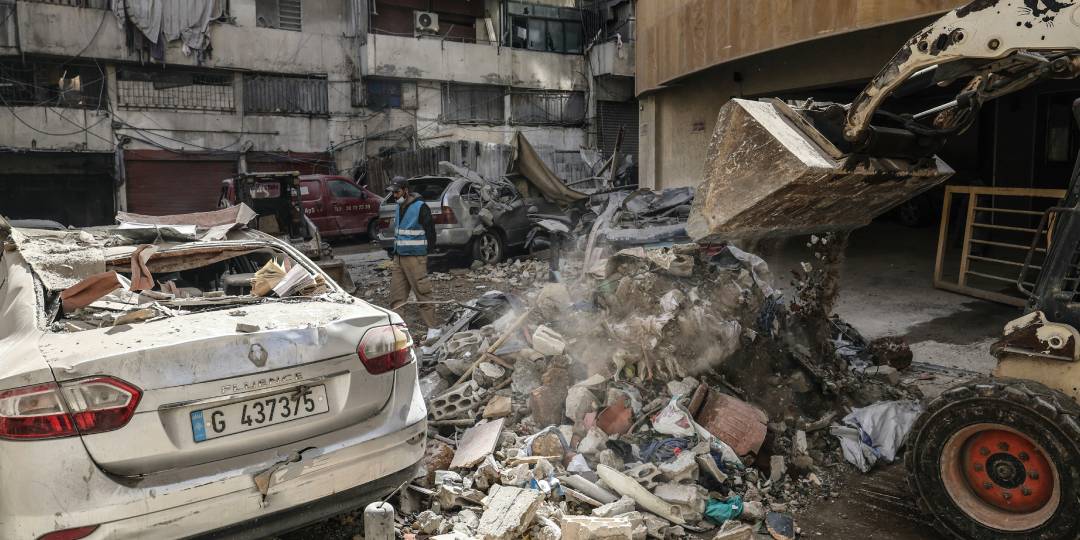
In nearby Zqaq al-Blat district, residents spent their day removing devastation debris and scattered glass following unannounced strikes on residential buildings in an area near government facilities and multiple diplomatic missions.
Residents gathered around bulldozers clearing rubble and reopening roads while store owners stood before shattered shop windows as Israeli drones circled overhead. Haider, 68, a shop owner, said “my family and I felt terror,” adding the situation becomes “extremely dangerous when there’s no warning.”
Following strikes, his wife decided to seek alternative accommodation, like other families AFP reporters witnessed leaving the neighborhood carrying bags while one child held a pink doll and a woman passed by crying. The neighborhood, containing historic buildings in the capital’s center, had experienced strikes last week that the Israeli military said targeted “Al-Qard al-Hassan” financial institution headquarters affiliated with Hezbollah.
According to the Health Ministry, Wednesday strikes on Zqaq al-Blat and adjacent Basta wounded 41 people in addition to fatalities.
Al-Manar Channel Leadership Killed
Hezbollah’s Al-Manar television announced Wednesday the deaths of its political program director Muhammad Shri and his wife in a Zqaq al-Blat strike, with his sons and grandchildren wounded. Zainab, 65, a neighborhood resident said “we woke up like crazy people,” questioning “what can we say? We’re exhausted.”
She added “the bombing was very intense as though above our heads,” noting residents now live in “terror” with strikes every one or two hours on new locations. Asking “where can we go?”
Sidon: Gateway to Southern Lebanon Overwhelmed by Refugees
Along Sidon’s seafront, gateway to southern Lebanon, extends for as far as sight reaches a procession of vehicles carrying residents fleeing daily devastating Israeli bombardment in the border region. Sidon, largest southern Lebanese city, lies approximately ten kilometers from the Zuhrani River now effectively dividing the country into two sections.
Since March 12, Israel fighting Hezbollah since March 2 issued evacuation warnings for all areas south of the Zuhrani River south of Sidon, with Israeli evacuation orders now encompassing 14 percent of Lebanese territory.
After initial hesitation, 55-year-old municipal employee Nidal Ahmad Shaker finalized his decision Tuesday and departed his southern village Jibsheet after intensified bombing. “Bakers were killed while preparing bread” in the village square, and “municipal employees were killed working on bulldozers,” he noted.
Shaker arrived in Sidon at 5 a.m. with a civil defense rescue convoy. In his small bag, he carried only a towel, underwear, pain-relief medication for backache, and sleeping pills.
Shelters at Capacity, Families Sleeping in Cars
The war has displaced over one million Lebanese, with entire families crowding the waterfront or sleeping in cars with infants, elderly, and disabled persons amid absent shelter spaces. NGO manager Jehan Qaysi, directing a school sheltering three times its capacity, says “Sidon is overcrowded.”
She adds sadly, forced to reject housing many: “Imagine these families arriving at night, eyes filled with terror, asking me: can we sleep on the floor to be safe until morning?”
Residents’ Anguish Over Lost Homes
Safaa al-Tabl, 37, arrived three days prior with her husband and five children from southern Khuraibeh village. She recounts “we thought we could endure, but the village experienced continuous attacks. Drones never left the sky. We no longer slept or rested. It became unbearable.”
She adds sorrowfully “they targeted people and homes. Everything happened before our eyes. I saw the dead.” The village is now “nearly empty,” she speaks of her house rooms she loved decorating with tulips: “There my land, country, memories, and childhood. There’s everything for me.”
She is haunted by the desire to return quickly to Khuraibeh but fears bombs will destroy her house permanently or she won’t be able to return if the Israeli military executes its threats of a broad ground invasion. Israel says it currently conducts “limited” ground operations along the border.
Historical Context of Displacement
Many Lebanese displaced from homes after 22 years of Israeli occupation of the south between 1978 and 2000, and violent fighting rounds between Hezbollah and Israel in 2006 then again in 2024, haven’t forgotten. Mustafa Kheyrallah, also displaced in Sidon, states defiantly “in the south, we’re very resilient and accustomed to bombing. I never left my house before now.”
But the elderly man leaning on canes sees this war as more severe, saying as explosions echo around Sidon: “They target civilians increasingly. I had to leave.”
Financial Obstacles to Evacuation
Most residents in the “red zone” requested evacuation by Israel have left, yet some remain, an area with Shia majority also containing Christians and Sunnis. Haider Baitar, 28, a businessman from southern Nabatieh still visiting, says others “have no choice” and remain home.
“People lack money to leave” after years of acute economic crisis. War exacerbated prices: “Renting a house previously cost $100-200, now requires $1,000, paid three months in advance.”
The young man asserts Israel cannot occupy the region facing fierce Hezbollah resistance. Hezbollah announced readiness for “prolonged confrontation” despite massive leadership and arsenal losses. Baitar says “they fight day and night, know where to hide, above and below ground.”
Al-Manar Director’s Death and Hezbollah Media
Al-Manar channel announced Wednesday deaths of political program director Muhammad Shri and his wife in an Israeli Beirut center strike. The channel eulogized its statement: “political program director, colleague Hajj Muhammad Shri and his wife, martyrs of the Zionist strike on Zqaq al-Blat area in Beirut,” adding “their sons and grandchildren children and women were wounded, transferred to hospitals.”
Israeli Wednesday airstrikes, mostly without advance notice, targeted three crowded residential neighborhoods in central Beirut, killing 12 people and wounding 41 per Health Ministry.
Earlier Attacks on Media Facilities
The Middle East conflict reached Lebanon March 2 after Hezbollah attacked Israel with rockets and drones responding to Supreme Leader Khamenei’s death in the conflict’s opening days. Israel responded with intense bombardment of Beirut’s southern suburbs and capital districts plus southern and eastern Lebanon and ground incursions.
Al-Manar stated in its announcement that Shri recently underwent surgery and was recovering when killed in Wednesday’s Israeli strike. He was a political program host and director and board member. On the conflict’s second day, Al-Manar headquarters and al-Nour radio, both in Haret Hreik in south Beirut suburbs, underwent Israeli strikes.
Historical Precedent
During the 2024 Israel-Hezbollah conflict, an Israeli strike on central Beirut killed Hezbollah media relations officer Muhammad Afif. The Israeli military then stated Afif “was directly involved in Hezbollah’s terrorist activity against Israel.”
Conclusion:
The night terror in Beirut reflects a new phase of the conflict with strikes targeting civilian neighborhoods without warning. As over one million Lebanese flee their homes and residents express desperation over lost lives and property, the humanitarian catastrophe deepens. With Sidon overwhelmed by refugees and Al-Manar leadership killed in strikes, the conflict shows no signs of de-escalation.