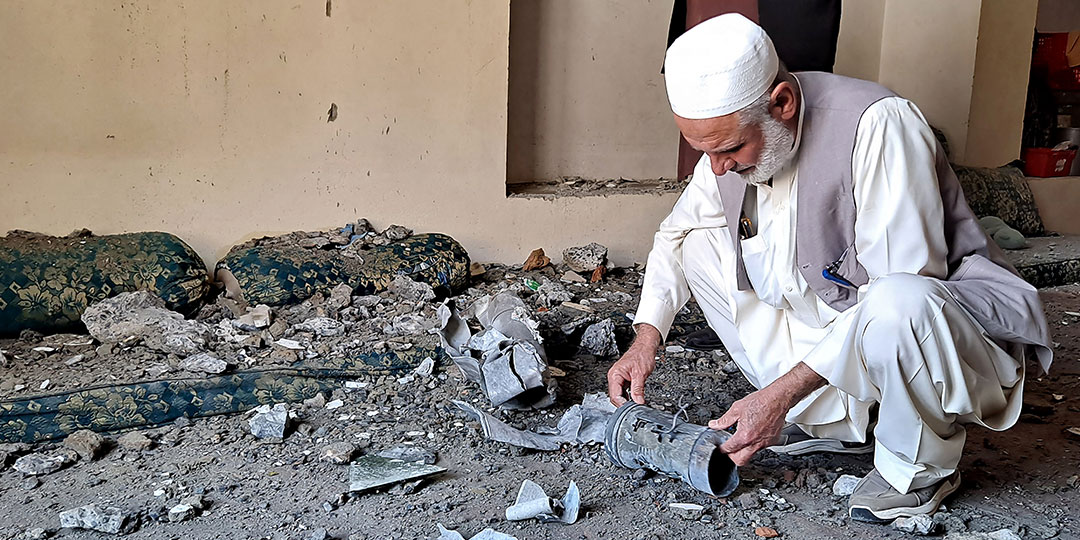

The United Nations announced Thursday that the escalating border conflict between Afghanistan and Pakistan has forced approximately 115,000 Afghans and 3,000 Pakistanis to flee their homes in search of safety. The displacement came amid intensifying military operations and aerial bombardment that have devastated civilian areas. UN High Commissioner for Human Rights Volker Turk reported separately that 56 civilians, including 24 children, have been killed in just the past week alone.
The humanitarian crisis marks a dramatic deterioration since February 26, when Afghanistan launched a cross-border military operation that Pakistan answered with extensive airstrikes targeting multiple Afghan cities and strategic locations. The escalation represents the most severe fighting between the neighboring nations in recent years.
Mass Displacement on Both Sides of Border
The UN Refugee Agency stated that “clashes along the Afghanistan-Pakistan border have forced thousands of families to flee their homes.” Civilians on both sides of the frontier now face constant danger from aerial bombardment, heavy artillery fire, mortars, and gunfire, leaving them with little choice but to abandon their properties and seek refuge in safer areas.
The displacement reflects the severity of the military campaign, which has made civilian areas increasingly unsafe. Families are leaving with minimal possessions and uncertain destinations, many lacking resources or established shelter in host areas. The UN has warned that ongoing violence continues to disrupt humanitarian operations across both nations.
Military Escalation in Recent Weeks
Afghanistan and Pakistan entered open warfare on February 26 following months of repeated border skirmishes. Afghanistan initiated cross-border military operations targeting Pakistani positions, prompting Islamabad to respond with a broad air campaign and ground operations.
Pakistani airstrikes targeted multiple strategic locations:
Bagram Airfield (former U.S. military base)
The capital, Kabul
Kandahar city in southern Afghanistan
Multiple frontier positions and military installations
Civilian Death Toll Reaches Crisis Levels
UN Human Rights Commissioner Volker Turk revealed that 56 civilians were killed in the past week alone, comprising 24 children and 6 women. An additional 129 people sustained injuries, including 41 children and 31 women. Since the beginning of 2026, the cumulative Afghan civilian death toll stands at 69 killed and 141 wounded.
Pakistan denies responsibility for civilian casualties, claiming it has not killed any non-combatants in the conflict. However, independent verification remains difficult, as ongoing violence restricts access for international monitors and fact-finding missions. This disparity in casualty accounts reflects the information gap created by the active conflict.
Challenges in Verifying Casualty Figures
Independent verification of civilian casualties on both sides remains nearly impossible due to the active conflict zone and restricted access. Pakistan maintains that all its military operations have targeted military installations and combatants only, while Afghan officials and international monitors point to reports of civilian harm from Pakistani airstrikes.
This conflicting narrative underscores the difficulty in establishing an objective casualty count. The UN relies on reports from local health facilities and eyewitness accounts, but many areas remain inaccessible to international observers. The lack of independent corroboration creates challenges for accurate humanitarian assessment.
Humanitarian Aid Cut Off as Violence Continues
Turk warned that ongoing military operations are disrupting the delivery of humanitarian assistance to millions dependent on international aid. “Because of the violence, humanitarian aid is not reaching many people who desperately need it,” he stated, warning that civilian suffering will only increase without immediate access to relief supplies.
The crisis is compounded by the return of over 2 million Afghan refugees from Pakistan since September 2023, when Islamabad launched its controversial deportation campaign for undocumented foreigners. An estimated 2 million more Afghans remain in Pakistan, “facing hardships and constant fear of arrest and deportation,” according to Turk.
These overlapping humanitarian challenges create a complex emergency affecting millions across both nations.
International Calls for Ceasefire
Turk urgently called on both “the Pakistani military and Afghan security forces to immediately cease hostilities and prioritize delivering assistance to millions of people dependent on humanitarian aid.” The UN has implored all parties to “end the conflict and make civilian assistance their priority.”
The High Commissioner expressed deep concern that “this new wave of violence is affecting people who have long suffered from violence and misery,” referring to Afghanistan’s decades of conflict and displacement. He emphasized that the timing of this escalation comes at the worst possible moment for vulnerable populations already traumatized by previous conflicts.
Border Tensions and Regional Security
Pakistan accuses the Taliban-led government in Afghanistan of harboring militants from groups such as the Baloch Liberation Army (BLA) who launch attacks from Afghan territory. Islamabad has repeatedly raised concerns about a safe haven for anti-Pakistan militant organizations operating from Afghan soil.
Afghanistan’s government denies these allegations, insisting it does not permit cross-border operations targeting neighboring countries. However, the Taliban’s limited control over remote border regions complicates efforts to prevent militant activities. The porous frontier and challenging terrain make border enforcement extremely difficult.
This dispute over cross-border militant sanctuaries has historically been a flashpoint between the two nations and remains at the core of current tensions.
Conclusion:
The Afghanistan-Pakistan border conflict has escalated into a major humanitarian emergency, with over 115,000 people displaced and dozens killed in recent weeks. As military operations continue, the civilian toll mounts and the delivery of essential humanitarian aid becomes increasingly difficult. The international community, through the United Nations, is calling for an immediate ceasefire to prevent further suffering in a region that has endured decades of conflict. Without rapid de-escalation, the crisis threatens to become one of South Asia’s most serious displacement emergencies.