
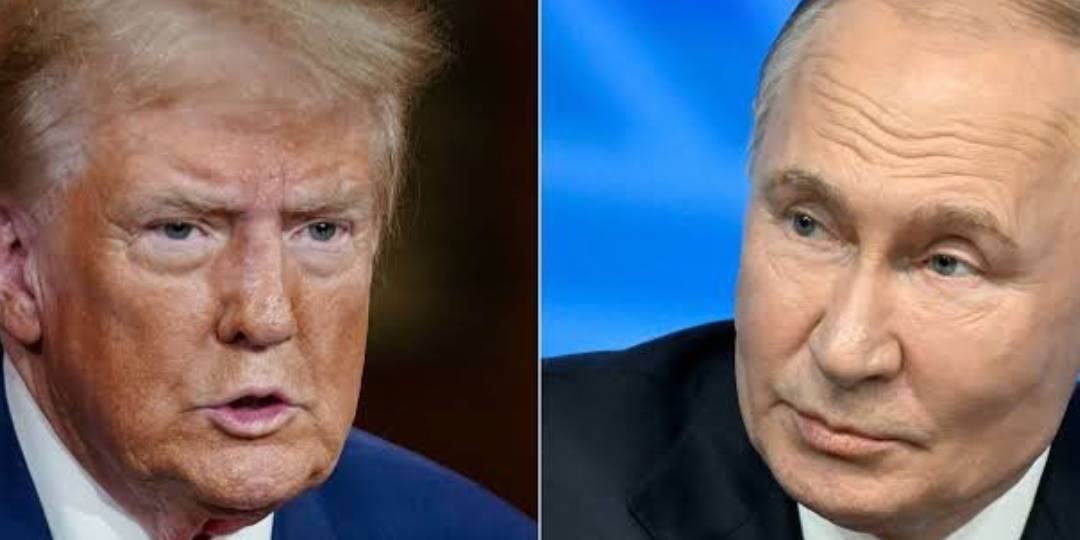

The Kremlin confirmed that Russian President Vladimir Putin reacted with understanding to specific United States proposals aimed at lowering military tensions, during high-stakes Putin and Trump phone talks held on Friday evening. The telephone exchange, requested by US President Donald Trump, lasted approximately ninety minutes and centered predominantly on practical pathways toward a negotiated settlement in Eastern Europe.
The presidential communication extended well beyond the Ukrainian battlefield into broader Middle Eastern security dynamics. Kremlin officials revealed that Putin shared Tehran’s perspective on regional de-escalation following recent direct consultations with Iranian President Masoud Pezeshkian in Turkmenistan. Moscow also reiterated an offer to transfer Iran’s enriched uranium stockpiles to Russian custody, even as a contentious Russian diesel export arrangement drew sharp rebukes from Kyiv and European capitals amid intense battlefield strikes.
Diplomatic Agendas Explored in the Putin and Trump Phone Talks
Kremlin spokesman Dmitry Peskov informed reporters that discussions reviewed specific diplomatic tracks presented by Washington to reduce frontline hostilities and explore structured peace negotiations. Russian presidential foreign policy aide Yuri Ushakov emphasized that diplomatic options concerning both the Ukrainian confrontation and Middle Eastern crises remain far from exhausted, stating that direct discussions between major powers can help prevent broader global escalation.
The conversation addressed complex geopolitical linkages, with Moscow offering to facilitate diplomacy between Washington and Tehran. Following working meetings between Putin and Iranian President Masoud Pezeshkian on the sidelines of a regional summit in Ashgabat, the Russian leadership conveyed Tehran’s framework for regional stability, highlighting nuclear safeguards and maritime navigation.
Russian Initiative on Enriched Uranium and Nuclear Diplomacy
– Formally renewing Moscow’s proposal to accept and store Iran’s highly enriched uranium on Russian soil under international monitoring.
– Utilizing Russian diplomatic channels to revive negotiations over Iranian sanctions and nuclear compliance.
– Establishing coordinated safeguards to ensure maritime security and avoid military confrontations along critical international waterways.
– Linking regional energy transit stability in the Persian Gulf with broader international commercial de-escalation.
Friction Over the Russian Fuel Deal and European Sanctions
The diplomatic talks unfolded alongside significant controversy sparked by President Trump’s announcement of an agreement allowing hundreds of thousands of tons of Russian diesel to enter US and global markets in exchange for temporary sanctions relief. Ukrainian President Volodymyr Zelensky strongly condemned the arrangement, arguing that easing fuel sanctions provides financial resources to sustain Russian military operations.
Zelensky characterized severe Russian air raids on the city of Zaporizhzhia as Moscow’s violent way of answering the sanctions rollback, posting on social media that residential neighborhoods were struck by guided aerial bombs. Meanwhile, the German federal government reiterated through official spokespersons that Berlin and the European Union remain fully committed to existing sanctions packages, while Finland concluded bilateral consultations with Kyiv to deliver specialized munitions for Ukrainian F-16 fighter aircraft.
Recent High-Intensity Military Developments Across Both Fronts
– Kharkiv Operations: The Russian Defense Ministry reported establishing tactical control over the villages of Lukashovo and Lobanovka, claiming over 1,500 opposing casualties within twenty-four hours.
– Black Sea Interdiction: Russian forces targeted port terminals and an inbound cargo vessel near Odesa, reporting the interception of more than 700 drones and two HIMARS rockets.
– Zaporizhzhia Casualties: Ukrainian state emergency authorities confirmed that heavy aerial bombardments against apartment buildings in Zaporizhzhia killed 15 civilians, including three children, and injured 16 others.
– Samara Refinery Strike: Ukrainian military headquarters confirmed successful long-range drone strikes on a major crude oil pumping and distribution station deep inside Russia’s Samara Oblast.
Shifting Balance Between Coercive Warfare and Diplomatic Outlets
The juxtaposition of phone diplomacy with extensive strikes on energy infrastructure reflects a dual-track strategy pursued by the warring parties. While direct communication between Washington and Moscow signals potential openings for political negotiations, tactical commanders continue targeting distribution nodes and civilian logistics to secure leverage ahead of any formal ceasefire.
Security analysts observe that introducing energy supply agreements and nuclear mediation into the Ukraine dialogue creates an intricate diplomatic matrix. Progress on resolving frontline hostilities will ultimately hinge on whether provisional understandings can survive mounting civilian casualties and persistent disagreements among European allies regarding sanctions enforcement.
Conclusion:
The wide-ranging Putin and Trump phone talks illustrate how the conflict in Ukraine and security crises in the Middle East have become intertwined on the global stage. While Russian readiness to discuss US proposals and transfer Iranian nuclear materials offers potential diplomatic off-ramps, ongoing destruction in Ukrainian cities and retaliatory attacks inside Russia demonstrate that peace efforts face severe headwinds on the ground.