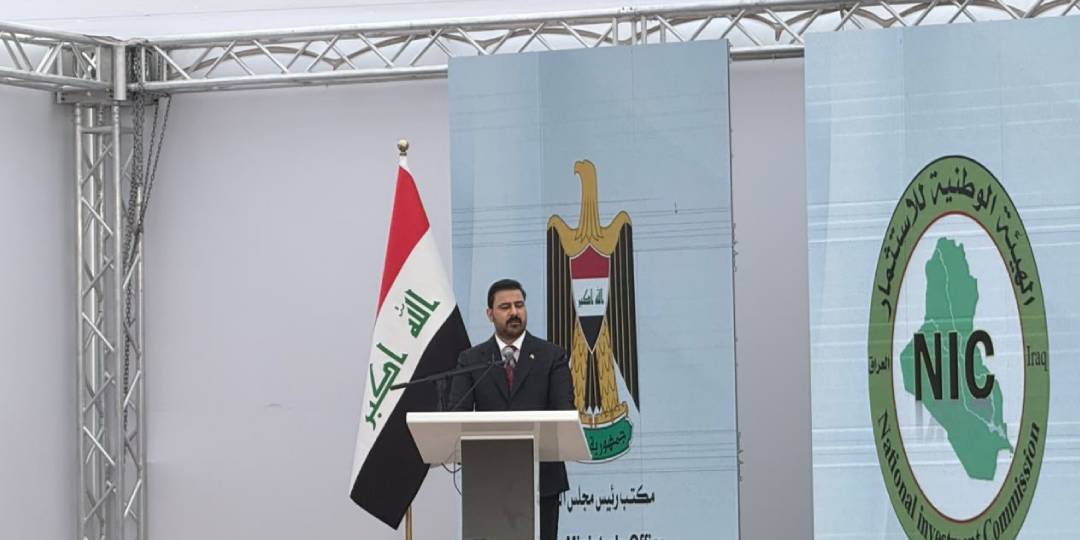

Prime Minister Ali Falah Al-Zidi arrived in Najaf Governorate on Saturday to lay the foundation stone for the one million residential land plots project, officially launching the flagship Watan initiative. The multi-phased state undertaking is designed to tackle Iraq’s structural housing deficit by transforming vacant state acreage into master-planned, serviced residential developments for eligible citizens.
The visit marks an operational pivot toward structured urban expansion outside congested metropolitan centers. Following the groundbreaking, Najaf Governor Yousif Kanawi announced that the Prime Minister approved an immediate expansion of the governorate’s allocation beyond its initial quota, ensuring that private real estate developers install full municipal utility grids before titles are delivered to beneficiaries.
Dual-Track Implementation of the One Million Residential Land Plots Project
Governor Kanawi confirmed during a press briefing attended by the Iraqi News Agency that Najaf’s baseline quota was originally set at 70,000 plots before Prime Minister Al-Zidi sanctioned an increase to accommodate regional population growth. Kanawi underscored that local administrative policy forbids the distribution of unserviced desert plots, placing the financial and engineering burden of building utility networks directly on licensed developers rather than individual citizens.
Under the framework of the Watan initiative, land distribution follows two synchronized tracks designed to address both social welfare obligations and private housing market demand. The programmatic model balances free land transfers for economically vulnerable demographics with low-cost, installment-based developments managed by approved private contractors.
Operational Framework of the Watan Housing Initiative
– Developer-Led Investment Track: Accounts for 50 percent of the project area, with private real estate developers constructing integrated municipal utilities and offering low-cost homes on extended installment schedules.
– Direct Free Allocation Track: Dedicates the remaining 50 percent to the free distribution of fully serviced plots to low-income families, widows, persons with disabilities, and state-eligible categories.
– Statutory Eligibility Verification: Enforces strict legal filters requiring applicants to prove that neither they nor their immediate dependents own real estate or previously registered residential plots.
– Turnkey Infrastructure Requirements: Requires developers to complete drinking water pipes, stormwater drainage, power lines, asphalt paving, and civic facilities before plots are handed over.
Master Plan for Peace City and Najaf Urban Expansion
Governor Kanawi noted that architectural projections for the emerging Peace City development indicate capacity for between 90,000 and 100,000 integrated residential units. The project is designed as an autonomous satellite city equipped with schools, health centers, commercial marketplaces, and communal green spaces.
The governor announced he will personally oversee field execution and municipal workflows under direct instructions from the Prime Minister. Local administrative teams have been instructed to streamline zoning permits, prevent bureaucratic delays, and maintain technical monitoring over master contractors.
Economic and Urban Benefits for the Region
– Relieving chronic population density, traffic gridlock, and informal settlements inside the historic core of Najaf.
– Stimulating domestic industrial demand for Iraqi cement, brickworks, structural steel, and electrical equipment.
– Generating thousands of direct and indirect construction jobs for skilled tradesmen, engineers, and site laborers.
– Expanding municipal green cover, public gardens, and environmental buffers in compliance with modern urban planning criteria.
Private Sector Partnership as a Model for National Housing Solutions
The structural integration of master developers inside the one million residential land plots project marks a fundamental shift from historical state land distributions, which often left citizens with remote, unserviced plots lacking basic water and electricity infrastructure.
Urban planning specialists note that pairing state land assets with private infrastructure capital accelerates project delivery schedules, generates non-oil municipal revenue, and channels local capital into sustainable construction. If replicated across southern and central governorates, the model could serve as a national blueprint to resolve Iraq’s multi-million-unit housing deficit.
Conclusion:
The launch of the one million residential land plots project from Najaf under the Watan initiative establishes an actionable framework to ease the nation’s housing crisis. By combining direct free grants for vulnerable households with private utility development and master-planned urban designs, the federal government aims to deliver secure property ownership and long-term economic stimulus across Iraqi governorates.