
Efforts to boost investment in Iraq gained renewed attention as the head of the Iraqi Federation of Chambers of Commerce called for stronger international partnerships, while a senior government adviser confirmed that Budget 2027 will focus on fiscal sustainability and economic reform.
The remarks reflect parallel tracks aimed at strengthening Iraq’s economic position amid regional and global challenges.
Call for International Partnerships
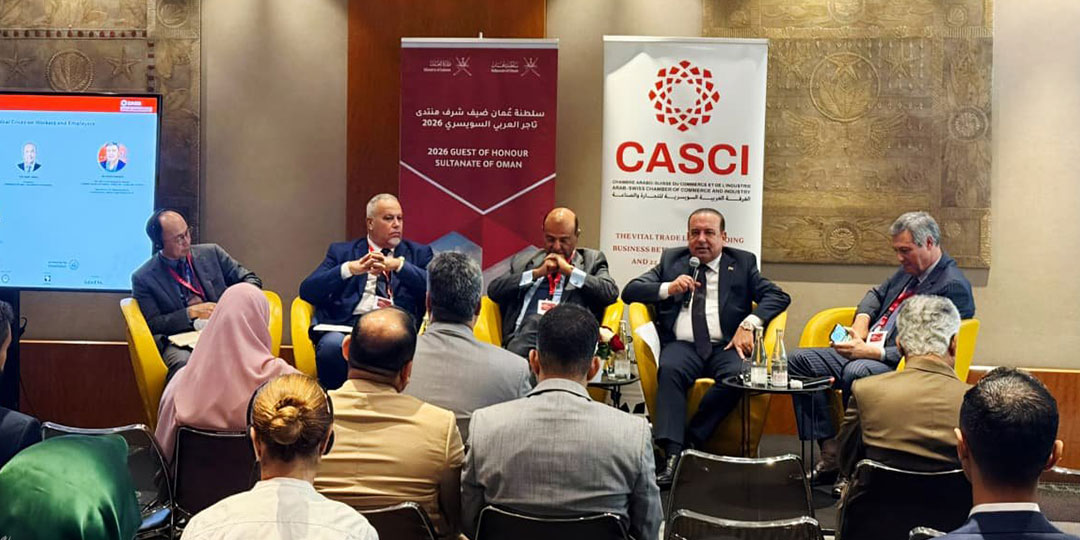
Amer Al-Fahdawi, head of the Iraqi Federation of Chambers of Commerce, participated in the opening of the Arab-Swiss Business Forum, organized by the Arab-Swiss Chamber of Commerce and Industry in cooperation with the Union of Arab Chambers and the Arab League mission in Geneva.
According to a statement carried by the Iraqi News Agency, Al-Fahdawi stressed that Iraq is not merely an observer of geopolitical and economic developments, but a country deeply affected by them.
He noted that Iraq’s geographic location, natural resources, Arab depth, and global trade connections make it both vulnerable to regional instability and capable of contributing to economic stability.
He emphasized the need for structured action across several areas, including:
– Enhancing the resilience of the private sector
– Protecting workers and developing skills
– Building international economic partnerships
– Positioning Iraq as a regional economic platform
Al-Fahdawi also called for stronger dialogue between Arab and international chambers of commerce to monitor the impact of crises on businesses and labor markets, and to expand cooperation with global economic institutions.
Budget 2027 and Fiscal Sustainability
Separately, financial adviser to the Prime Minister Mazhar Mohammed Salih stated that Iraq’s fiscal policy continues to operate under the Federal Financial Management Law No. 6 of 2019, particularly Article 13, which regulates spending when the federal budget is delayed.
He explained that the provision allows the Ministry of Finance to authorize monthly spending equivalent to one-twelfth of the previous year’s actual current expenditures, excluding non-recurring expenses.
This mechanism, he said, has ensured the continuation of key obligations, including:
– Salaries and wages
– Pensions
– Social protection benefits
– Essential operational expenses
It also permits funding for ongoing investment projects based on completion rates, provided sufficient liquidity is available.
Economic Challenges in 2026
Salih noted that Iraq’s public finances faced exceptional challenges in 2026 due to geopolitical developments and disruptions in global energy markets and supply chains.
As oil revenues remain the primary source of public income, fluctuations in energy markets directly affected the government’s fiscal capacity.
He said these pressures prompted the government to prepare the 2027 federal budget with a reform-oriented perspective aimed at preserving fiscal sustainability and macroeconomic stability.
Priorities of Budget 2027
According to Salih, Budget 2027 will focus on:
Improving efficiency in public resource management
Rationalizing operational spending
Protecting social expenditures for vulnerable groups
Prioritizing high-impact investment projects
Diversifying revenue sources and reducing reliance on oil
Advancing financial and administrative reforms and digital transformation
He added that these priorities align with Iraq’s broader financial strategy and the Iraq Vision 2035 framework, which aims to build a diversified and sustainable economy capable of withstanding external shocks.
Conclusion:
The parallel calls to boost investment in Iraq and advance fiscal reform through Budget 2027 highlight the country’s efforts to strengthen economic resilience. While international partnerships are seen as key to increasing investment inflows, the government’s reform-oriented budget approach aims to ensure long-term fiscal stability and sustainable growth.