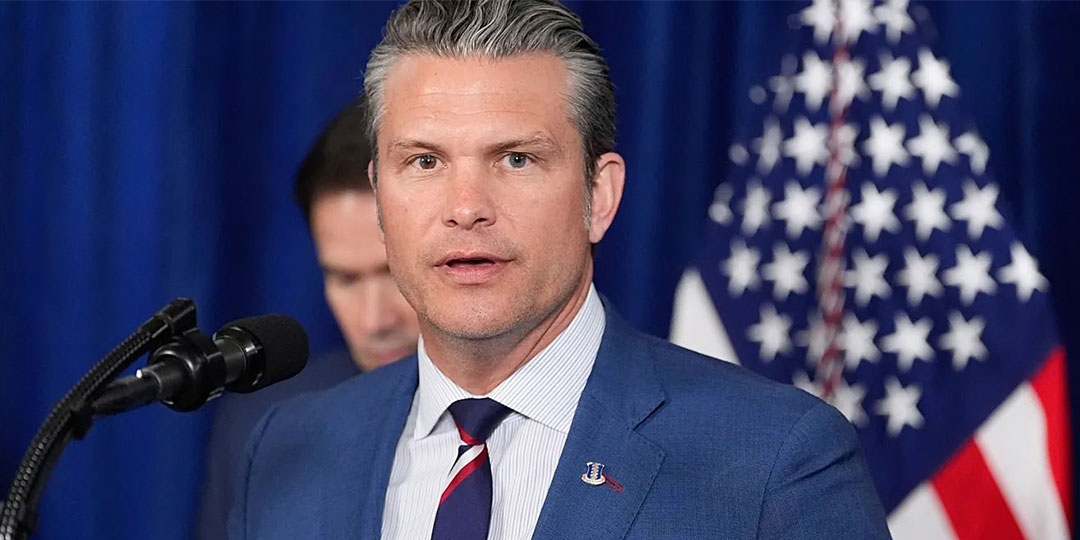

US Defense Secretary Pete Hegseth said on Saturday that Iran must not become nuclear, stressing that preventing Tehran from acquiring nuclear weapons remains a core objective of US policy.
He said Washington continues to work toward ensuring that Iran does not transform into a nuclear power, in line with its international security commitments.
The remarks come amid ongoing diplomatic contacts between the United States and Iran.
Nuclear issue remains top priority
Hegseth reiterated that the United States remains firmly committed to preventing Iran from obtaining a nuclear weapon.
He emphasized that this objective remains unchanged across all negotiation tracks with Tehran.
According to the defense chief, President Donald Trump is determined to ensure Iran does not acquire nuclear capabilities.
Talks described as fruitful
The US defense chief said recent discussions with the Iranian side were fruitful and produced positive results.
He added that President Trump would not sign any agreement unless it serves US strategic interests and aligns with Washington’s objectives.
Hegseth maintained that while dialogue continues, US goals toward Iran remain consistent.
Conditions for any agreement
According to US officials, any potential deal must:
Guarantee that Iran does not obtain a nuclear weapon
Protect US national security interests
Contribute to regional stability
Hormuz Strait to remain open without fees
In separate remarks, Hegseth stated that the Strait of Hormuz would be open to maritime traffic without transit fees imposed by Iran.
He said the waterway should remain accessible to all vessels, describing this as the appropriate status for one of the world’s most strategic shipping routes.
Regional context
The statements come at a time of heightened regional tensions and renewed focus on:
Iran’s nuclear program
US Iran diplomatic engagement
Security of navigation in the Strait of Hormuz
Conclusion:
The US defense chief’s comments underline Washington’s continued priority that Iran must not become nuclear, while describing ongoing talks as constructive. As negotiations proceed, developments in the Strait of Hormuz and the broader regional security environment remain closely watched.