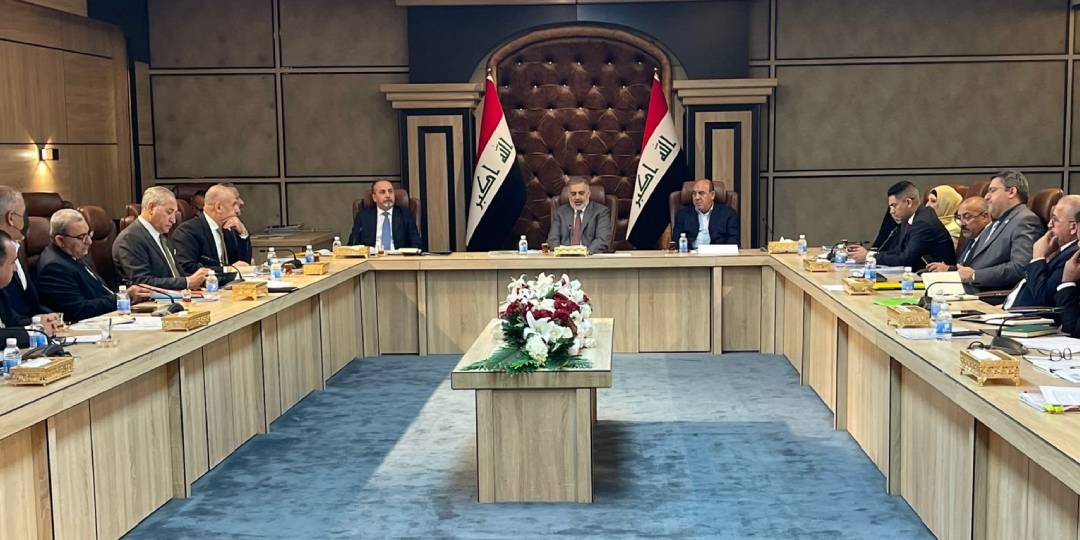

Iraq’s parliamentary investigation committee examining sewage and wastewater contamination of the Tigris River held a meeting Sunday chaired by committee chairman Youssef al-Kalabi. The session brought together Baghdad’s municipality administrator and representatives from health, environmental, and relevant government agencies to address the contamination incident resulting from sewage overflow from the Diyala River into the Tigris. The meeting reflects parliamentary concern regarding public health implications of water contamination affecting Iraq’s major river and the capital city’s water supply.
Parliamentary member Kadhim al-Shammari, speaking on behalf of the investigation committee, emphasized that committee priorities extend beyond identifying responsibility to include compensating residents affected by water contamination. The focus on compensation addresses immediate public health and economic impacts of pollution incident while authorities determine root causes and accountability.
Parliamentary Response to Contamination Crisis
Committee Formation and Mandate
The parliamentary investigation committee formed following the contamination incident involving sewage and stagnant water flowing from the Diyala River into the Tigris. The creation of Committee Order 63 reflects parliament’s determination to address environmental emergency affecting capital city’s water supply and public health.
The investigation represents organized parliamentary response to what appears to be recurring water quality problems in Iraq’s river systems, with particular concern regarding Diyala River management contributing to Tigris contamination.
Meeting Participants and Agency Representation
The investigation committee meeting included Baghdad municipality administrator and representatives from critical government agencies:
- Ministry of Water Resources
- Ministry of Environment
- Ministry of Health
- Baghdad Municipality Administration
- Baghdad Governorate officials
The broad participation demonstrates comprehensive institutional engagement addressing water contamination across multiple government portfolios.
Investigation Committee Objectives
Identifying Contamination Sources
The committee’s primary technical objective involves identifying specific causes of contamination and determining which agencies or operations bear responsibility for allowing sewage and stagnant water to enter the Tigris River system. The investigation requires detailed analysis of Diyala River management practices and identification of facilities or operational failures permitting overflow.
Compensation for Affected Residents
Committee member al-Shammari explicitly stated that compensation for residents affected by water contamination represents key committee responsibility. This emphasis reflects recognition that contamination has created economic and health impacts on Baghdad population dependent on Tigris water for consumption and domestic use.
The compensation focus acknowledges that while identifying responsibility is important, immediate priority involves addressing harm already inflicted on affected populations rather than limiting focus to punishment or administrative reorganization.
Root Cause Analysis and System Improvement
Diyala River Management Concerns
The investigation focuses particular attention on Diyala River operations and infrastructure maintenance. The contamination incident appears to result from inadequate sewage treatment or containment capacity, allowing untreated sewage to overflow into the Tigris during periods of excess flow from Diyala.
Addressing this issue requires examining both physical infrastructure capacity and operational procedures governing sewage management in the Diyala system.
Excess Water Flows and System Capacity
Al-Shammari identified “excess water flows” affecting the Tigris as central problem requiring investigation. The language suggests that Diyala River may have exceeded normal flow capacity, overwhelming sewage containment systems and forcing untreated water into the main Tigris channel.
This analysis points to potential infrastructure inadequacy, weather-related factors, or upstream diversion issues affecting water management in the Diyala system.
Coordination Among Government Agencies
Multi-Agency Investigation Approach
The investigation involves coordinating among multiple government departments with different environmental and resource management responsibilities. Water Resources Ministry manages river systems and water allocation, Environment Ministry addresses pollution standards and remediation, Health Ministry monitors public health impacts, and Baghdad administration represents affected urban population.
This coordination reflects recognition that comprehensive water contamination requires integrated response addressing infrastructure, public health, environmental standards, and municipal administration.
Shared Responsibility and Accountability
The investigation framework acknowledges that contamination likely results from system failures rather than single agency action. Multiple agencies contribute to Tigris River management through water resource allocation, sewage treatment, quality monitoring, and municipal infrastructure maintenance.
Effective resolution requires identifying which agency or agencies failed in responsibilities and establishing mechanisms preventing recurrence.
Public Health and Environmental Implications
Tigris River as Critical Infrastructure
The Tigris River represents critical infrastructure supporting Baghdad’s 7-8 million population and surrounding communities. Water contamination affecting this system creates immediate health risks through drinking water quality degradation, agricultural irrigation with contaminated water, and ecosystem damage.
The river’s importance makes contamination events high-priority issues requiring rapid investigation and remediation.
Sewage Treatment System Failure
The incident points to potential failures in sewage collection or treatment systems serving Diyala River basin. Proper sewage treatment should prevent untreated wastewater from reaching river systems during normal operations, suggesting that overflow resulted from treatment facility malfunction or inadequate capacity management.
Investigation requires assessing whether facilities operated properly or failed to function as designed.
Compensation Mechanisms and Implementation
Scope of Compensation
While specific compensation mechanisms remain undetermined, the committee’s emphasis suggests examination of:
- Health impacts from contaminated water consumption
- Economic losses from business disruption
- Agricultural damages from irrigation with contaminated water
- Costs for alternative water supply during contamination period
- Property value impacts in affected areas
Implementation Challenges
Establishing compensation mechanisms requires identifying eligible affected populations, documenting damages, assessing causation, and determining compensation amounts. These administrative and legal procedures may require months or longer to complete.
The committee’s focus on compensation alongside investigation suggests recognition that administrative processes must proceed simultaneously rather than sequentially.
Broader Water Quality Management
Systemic Water Infrastructure Issues
The contamination incident reflects broader challenges in Iraqi water infrastructure maintenance and sewage treatment capacity. Baghdad’s rapid population growth has outpaced sewage system development, creating recurring capacity crises during periods of increased flow or heavy precipitation.
Addressing these systemic issues requires substantial infrastructure investment beyond immediate remediation of current contamination.
Environmental Regulation and Enforcement
The investigation provides opportunity to examine environmental regulations governing river quality standards, sewage discharge limits, and monitoring procedures. If contamination resulted from inadequate environmental standards or poor enforcement of existing standards, investigation should identify regulatory improvements needed.
Conclusion:
Iraq’s parliamentary investigation committee meeting on Tigris River contamination represents organized institutional response to serious public health and environmental crisis. The committee’s focus on both identifying responsibility and compensating affected residents reflects recognition that effective crisis response requires addressing both accountability and immediate harm mitigation. Participation of Baghdad municipality administrator and representatives from Water Resources, Environment, and Health ministries demonstrates comprehensive agency engagement. Committee member al-Shammari’s emphasis that investigation aims at “diagnosing responsibility” and “cooperating to address causes” rather than punishment indicates focus on system improvement rather than purely punitive accountability. The contamination incident highlights vulnerability of Baghdad’s water supply infrastructure and inadequacy of Diyala River sewage treatment capacity. Successful investigation must determine whether contamination resulted from infrastructure failures, inadequate treatment capacity, operational errors, or combination of these factors. Implementation of compensation mechanisms and identification of preventive measures will require sustained parliamentary oversight and agency coordination extending beyond investigation phase.