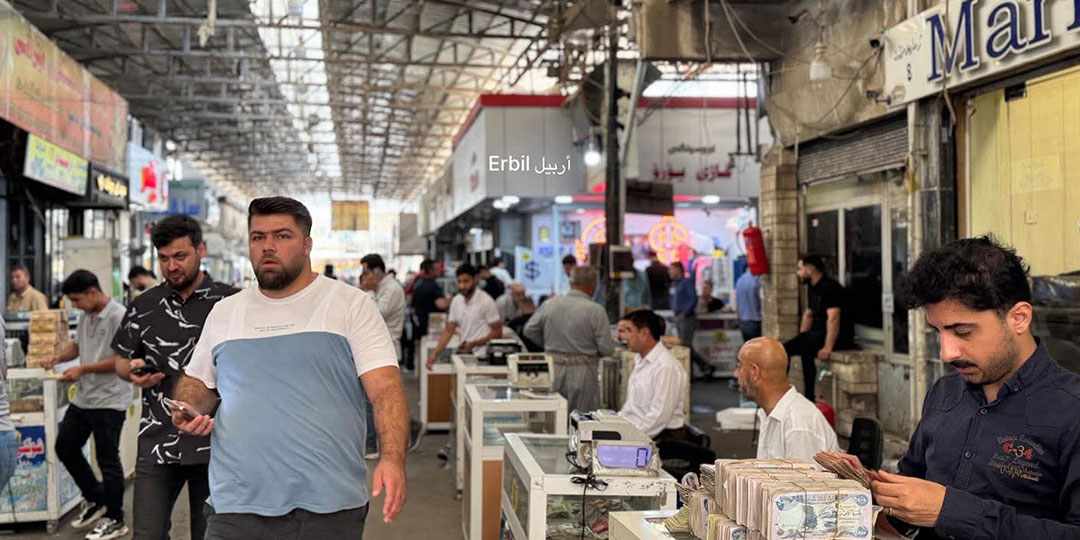

Gold prices in Baghdad’s markets reached record highs on Tuesday, with the 21-carat gram surpassing the one-million-dinar threshold for the first time. Market observers reported that a single mithqal (traditional Islamic unit of weight equivalent to approximately one gram) of 21-carat gold climbed to over 1.03 million dinars, reflecting broader pressures on Iraq’s economy from regional conflict and currency fluctuations.
The sharp rise in precious metal prices reflects multiple overlapping factors including elevated global gold prices driven by geopolitical instability, currency market volatility from Middle East tensions, and increased domestic demand as Iraqi investors seek safe-haven assets during periods of economic uncertainty.
Gold Prices Accelerate Amid Economic Uncertainty
Baghdad’s precious metals markets have experienced sustained upward pressure on gold valuations, with the 21-carat mithqal climbing above 1.03 million dinars per unit. This represents a significant milestone in Iraq’s gold market, as the psychological threshold of one million dinars has been decisively breached, signaling deepening inflationary pressures and currency depreciation concerns among investors and savers.
The rate of increase has accelerated notably in recent weeks, corresponding with escalating Middle East tensions and the ongoing US-Iran conflict that has disrupted regional commerce and created broad-based economic uncertainty.
Global Gold Markets Drive Local Prices
International gold markets remain elevated due to persistent geopolitical tensions and safe-haven demand from investors worldwide. Global gold prices have benefited from Middle East conflict-driven uncertainty, currency weakness in various emerging markets, and central bank demand for precious metals as hedges against economic volatility.
Baghdad’s prices track closely with London and New York spot prices, adjusted for currency conversion and local market premiums. The conversion mechanism means that any strengthening of gold prices internationally directly translates into higher dinar valuations for domestic Iraqi consumers.
Dollar Exchange Rates Show Relative Decline
Concurrent with gold price escalation, the Iraqi dinar showed modest appreciation against the US dollar in parallel market trading on Tuesday, with exchange rates declining across major Iraqi trading centers. The relative strength of the dinar against the dollar provided temporary relief to importers and those holding foreign currency exposure.
Baghdad Exchange Rates
In Baghdad’s parallel foreign exchange markets, the dollar traded at approximately 153,700 dinars per 100 dollars for sales transactions and 153,250 dinars per 100 dollars for purchase transactions on Tuesday morning. These rates represent a marginal decline from previous trading sessions, reflecting shifting supply-demand dynamics in currency markets.
Regional Rate Variations
Exchange rates varied modestly across Iraq’s major trading centers. In Erbil, the dollar was quoted at 153,700 dinars per 100 dollars for sales and 153,600 dinars per 100 dollars for purchases, indicating tighter spreads between buy and sell rates compared to Baghdad.
Basra’s markets showed slightly higher dollar valuations, with sales prices reaching 154,000 dinars per 100 dollars and purchase prices at 153,500 dinars, suggesting marginally weaker dinar conditions in Iraq’s southern port city.
Official Versus Parallel Market Divergence
Iraq’s Central Bank maintains an official exchange rate of 130,000 dinars per 100 US dollars, significantly lower than parallel market rates. The substantial gap between official and market rates reflects persistent capital controls, foreign exchange scarcity, and the state bank’s attempt to maintain a nominal peg that diverges from underlying economic realities.
The parallel market premium of approximately 18-20 percent above the official rate indicates limited foreign currency availability in the formal banking system and continued reliance on unofficial channels for currency exchange among importers and business operators.
Central Bank Policy Constraints
Iraq’s Central Bank has maintained its official exchange rate despite mounting inflationary pressures and regional economic disruption. The persistence of the official peg despite significant parallel market premiums suggests limited willingness or capacity to adjust the formal exchange rate in response to fundamental economic conditions.
Economists note that maintaining the official rate below market-clearing levels creates artificial demand for dollars in the banking system and contributes to periodic foreign currency shortages that encourage parallel market activity.
Economic Pressures Underlying Currency and Metal Price Movements
The simultaneous movement of gold prices upward and dollar rates downward reflects complex underlying economic dynamics. Rising gold prices indicate increased investor demand for safe-haven assets as economic uncertainty grows, while modest dollar weakness suggests temporary surplus supply of hard currency in parallel markets.
Iraq’s economy faces multiple headwinds from Middle East conflict disruption, including trade impediments through the Strait of Hormuz affecting regional commerce, direct security threats to infrastructure and commerce in conflict-affected areas, and general investor risk aversion that reduces capital inflows.
Safe-Haven Asset Demand
Gold’s traditional status as a safe-haven asset becomes particularly pronounced during periods of geopolitical instability and currency uncertainty. Iraqi investors and savers facing inflation concerns, currency depreciation risks, and security uncertainties increasingly allocate wealth into precious metals as inflation hedges and wealth preservation mechanisms.
The surge in gold prices reflects both international demand factors and domestic Iraqi demand as households and small businesses seek to protect purchasing power against inflation and currency devaluation.
Supply Chain and Inflation Implications
Higher gold prices complicate Iraq’s inflation picture and affect the purchasing power of citizens across income levels. For ordinary Iraqis seeking to purchase gold jewelry or preserve wealth through precious metals, the higher prices in dinars reduce accessibility to these traditional stores of value.
Simultaneously, imported goods priced in foreign currencies become more expensive at parallel market rates, creating inflationary pressure on consumer prices for imports ranging from food and medicines to industrial inputs.
Import Costs and Consumer Prices
The modest decline in dollar rates provides limited relief to importers facing foreign exchange scarcity. Even at the improved rates, the parallel market premium ensures that imports remain substantially more expensive than they would be at official rates, contributing to consumer price inflation.
Food security concerns emerging from Middle East war-related supply disruptions combine with currency depreciation pressures to create a challenging environment for ordinary Iraqis managing household expenses and basic consumption.
Forward-Looking Outlook
Iraq’s precious metals and currency markets will likely remain volatile as long as regional geopolitical tensions persist and the US-Iran conflict remains unresolved. The fragile ceasefire between Washington and Tehran carries no guarantee of durability, meaning that further escalation could rapidly reverse the modest currency gains observed this week.
Central Bank capacity to stabilize the dinar remains constrained by limited foreign exchange reserves and ongoing military and security expenditures required to combat extremist threats. Without durable peace in the region and restoration of normal trade flows, the fundamental pressures driving safe-haven demand for gold and currency market volatility will likely persist.
Policy Options Limited
Iraqi policymakers face limited options to stabilize the exchange rate without increasing foreign exchange supplies. Allowing the official rate to move closer to parallel market rates would reduce the artificial gap but could trigger additional inflation as import prices adjust upward across the economy.
Maintaining the current peg preserves the nominal value of government revenues and reduces the dinar cost of debt servicing, but perpetuates foreign exchange scarcity and encourages parallel market activity that operates outside formal financial system oversight.
Conclusion:
Baghdad’s gold markets have entered new territory with 21-carat grams surpassing one million dinars per unit, signaling mounting economic pressures from regional conflict and currency uncertainty. While the Iraqi dinar showed modest appreciation against the dollar this week, the fundamental drivers of currency weakness and precious metals demand remain intact. Iraq’s economy operates under multiple stresses from Middle East conflict disruption, limited foreign exchange supplies, and inflationary pressures that encourage safe-haven asset demand. Until regional tensions resolve and normal trade flows resume through critical waterways like the Strait of Hormuz, Baghdad’s precious metals and currency markets will likely continue reflecting economic uncertainty and investor risk aversion.