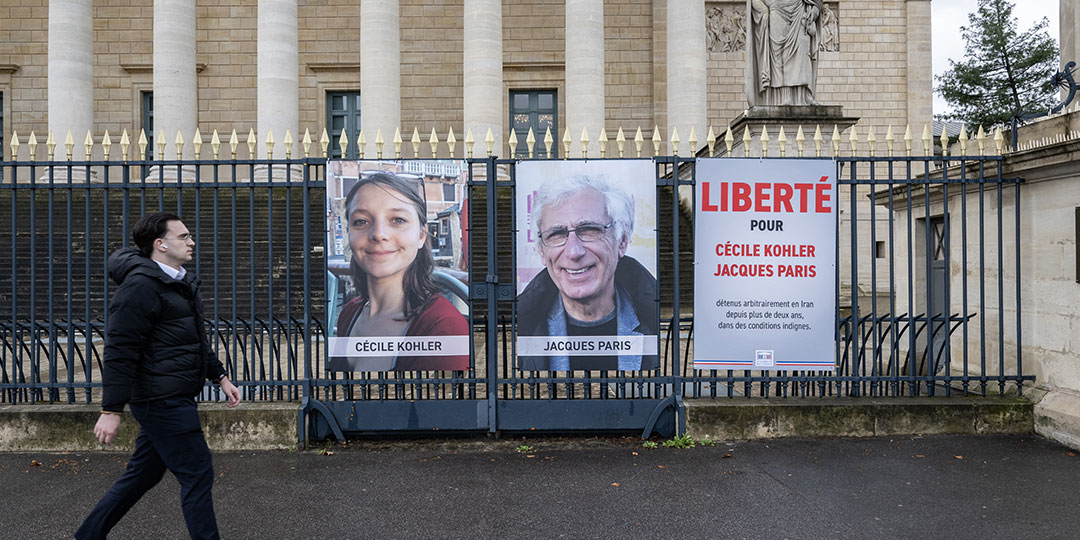

French President Emmanuel Macron announced Tuesday that Iran released French nationals Cecile Collet and Jacques Paris following harrowing 3.5-year detention on charges of spying for French and Israeli intelligence services. The former detainees departed Tehran early Tuesday in official diplomatic motorcade with French ambassador, currently in Baku, Azerbaijan, awaiting return to France Wednesday. Macron thanked Omani authorities for their crucial mediation efforts resulting in release of pair who endured five months forced residence at French Embassy before final liberation. The successful diplomatic effort demonstrates persistence of French diplomacy despite expanding regional conflict.
The release reflects successful French diplomatic efforts amid deteriorating regional circumstances.
Macron’s Announcement and Expected Return
Macron posted on X: “Cecile Collet and Jacques Paris are free and on their way to France after three and a half years detention in Iran.”
French President added: “This is relief for all of us, certainly for their families. We thank Omani authorities for mediation efforts.” Macron spoke personally by telephone with released detainees.
Collet and Paris expected to arrive France Wednesday following overnight in Baku, Azerbaijan capital.
Personal Testimony of Freedom
Anne-Laure Paris, daughter of Jacques Paris, told AFP: “We are very moved. We await their return to France to embrace them.”
Support committee lawyer Thierry Moser expressed profound joy: “Tears filled my eyes, I cannot express my happiness, I am extremely happy.”
Such testimonies reflect pain and suffering families endured throughout detention years.
Story of Detention and Espionage Charges
French language teacher and union activist Cecile Collet (41) and retiree Jacques Paris (72) were arrested May 7, 2022 during Iranian tourist visit. Detainees held in notorious Evin Prison in Tehran.
Mid-October 2025, Collet sentenced 20 years imprisonment and Paris 17 years on espionage charges for French and Israeli intelligence services. Released November 4 but placed under forced residence at French Embassy with prohibition on leaving Iranian territory.
Human Rights Violations and Unlawful Detention
French Foreign Ministry deemed Collet and Paris arbitrarily detained, repeatedly condemning detention conditions as “inhuman,” describing conditions as “torture.” France issued repeated criticism Iranian regime regarding detainee treatment.
Multiple French foreign ministers worked securing release amid complications from February 28 regional war outbreak.
Diplomatic Efforts and Omani Mediation
France engaged in race against time especially as US President Trump threatened Iran Tuesday with “complete civilization” destruction potentially affecting negotiation prospects.
French Foreign Minister Jean-Noel Barrot announced he spoke with Iranian counterpart Abbas Araghchi Sunday, expressing hope for release.
Barrot posted on X: “Completely free! They told me in telephone call moments ago their feelings and joy at imminent return to homeland and loved ones.”
Crucial Omani Authority Role
Omani authorities played pivotal mediation role between France and Iran, ultimately resulting in release agreement. France publicly thanked Oman for efforts bridging perspectives.
Source close to French Foreign Minister stated: “Current situation enabled reaching release decision. Iranians took situation into account, perhaps proving decisive for release, but process had begun following its path.”
Possible Agreement and Undisclosed Exchange
Tehran announced reaching agreement with France involving exchange of Collet and Paris for Iranian Mahdie Esphendiary whom Paris arrested February 2025 on “terrorism promotion” charges.
Esphendiary released late October following eight months detention under judicial supervision with prohibition on leaving French territory. France never officially confirmed such agreement.
However, Esphendiary’s lawyer Nabil Boudy stated forced residence was lifted from Mahdie Esphendiary hours after French nationals’ Iran departure announcement, suggesting clear prisoner exchange.
Iranian Bargaining Mechanisms
Over past decade, Iran escalated arrests Western nationals, especially French, accusing them of espying, aiming use detainees as “bargaining chips” for releasing imprisoned Iranians in Western countries or obtaining political economic concessions.
France described Collet, Paris and other French nationals as “state hostages” arbitrarily detained by Iran.
French Political Consensus on Release
French politicians from across political spectrum expressed joy at detainee release.
National Assembly President Yael Braun-Pivet stated: “France demonstrated example of unity and steady mobilization achieving this release.” Parliamentary members stood applauding solidarity with released detainees.
La France Insoumise Party leader Jean-Luc Melanchon stated: “French hostages in Iran, Cecile Collet and Jacques Paris, aboard plane heading to Paris. We congratulate French diplomatic teams achieving this accomplishment.”
Historical Context of French Detentions
French citizens detained in Iran simultaneously reached peak seven during acute crisis. This represented major diplomatic crisis between nations.
French detention cases exemplify repeated Iranian practice using foreign detainees as political economic pressure leverage.