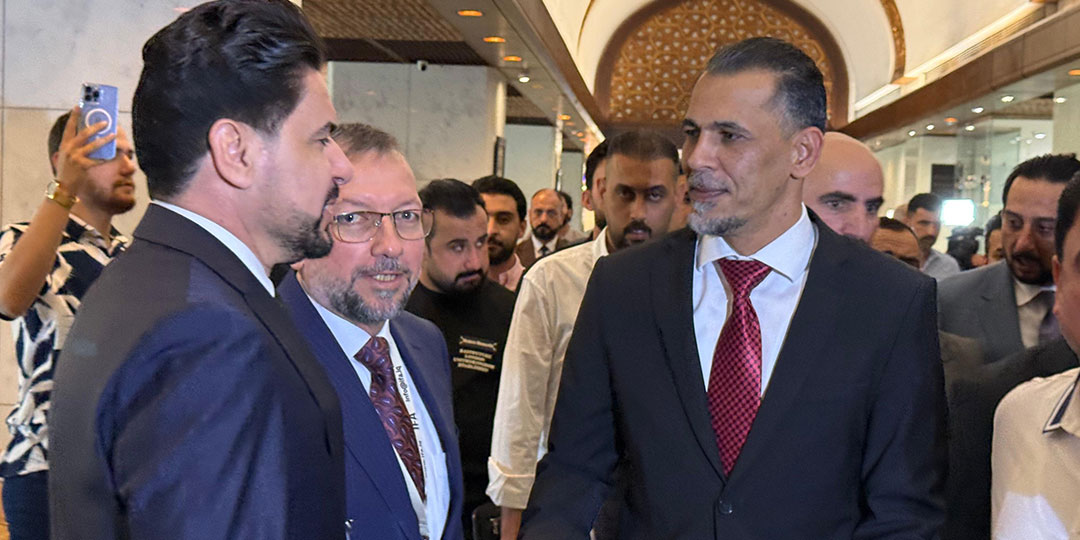

Younis Mahmoud has been elected President of the Iraqi Football Association (IFA) after securing 38 votes in the executive office elections held on Saturday. Mahmoud defeated rivals Adnan Dirjal and Iyad Baniyan in a vote conducted under the supervision of the authorized electoral committee and in the presence of the General Assembly members.
The election of Younis Mahmoud as Iraqi FA President marks a new phase for Iraqi football administration amid expectations of structural reform and competitive development.
Results of the IFA presidential election
The final vote count was as follows:
- Younis Mahmoud: 38 votes
- Adnan Dirjal: 20 votes
- Iyad Baniyan: 1 vote
- Two ballots were invalidated
Mahmoud’s 18-vote margin over his closest rival reflects broad support within the General Assembly.
Transparent electoral process
The election was conducted in accordance with the federation’s statutes and regulations, with oversight from the designated committee to ensure transparency and procedural integrity.
Sarmad Abdulilah elected First Vice President
Sarmad Abdulilah won the position of First Vice President after receiving 44 votes.
Ali Jabbar secured 14 votes, while Hakim Shakir received one vote.
The role of First Vice President is central to supporting the President in managing technical and organizational responsibilities.
Duties of the First Vice President
Responsibilities include:
- Assisting in strategic planning
- Supervising technical committees
- Representing the federation at official events
- Overseeing implementation of executive decisions
Mohammed Nasser Shakroun elected Second Vice President
Mohammed Nasser Shakroun won the Second Vice President position with 45 votes.
Ali Jabbar Fadel received 15 votes, and Yasser Saeed Hassan secured one vote.
The strong vote total indicates substantial confidence from the General Assembly.
Role of the Second Vice President
The Second Vice President contributes to executive oversight and supports administrative and regulatory functions within the federation.
A new chapter for Iraqi football
The newly elected leadership takes office at a time when Iraqi football faces multiple challenges, including:
- Strengthening the Iraqi Premier League
- Preparing national teams for continental competitions
- Enhancing governance and transparency
- Expanding youth development programs
The leadership transition is viewed as a key opportunity for modernization.
Strategic priorities moving forward
The administration is expected to focus on:
- Improving domestic competition standards
- Investing in youth academies
- Enhancing refereeing systems
- Expanding international partnerships
Official congratulations from Ministry of Youth and Sports
Acting Minister of Youth and Sports Mohammed Nouri Ahmed congratulated Younis Mahmoud and the newly elected executive committee.
He reaffirmed the ministry’s support for the IFA in alignment with the government’s broader program aimed at advancing Iraq’s sports sector and strengthening international representation.
Government support commitments
The ministry pledged to:
- Provide institutional backing
- Support infrastructure development
- Enhance training programs
- Promote Iraq’s presence internationally
Younis Mahmoud’s football legacy
Younis Mahmoud is widely regarded as one of Iraq’s most prominent football figures.
He captained Iraq to victory in the 2007 AFC Asian Cup and has extensive domestic and international experience.
His background as a former international striker provides firsthand insight into players’ needs and federation challenges.
Symbolism of his election
The election of a former national team captain signals a shift toward leadership rooted in playing experience combined with administrative ambition.
Challenges ahead
Despite strong electoral backing, the new administration faces significant tasks, including:
- Stabilizing league operations
- Enhancing commercial sponsorship
- Ensuring financial transparency
- Strengthening grassroots football
Sustained collaboration between clubs, the General Assembly, and government authorities will be essential.
Conclusion:
Younis Mahmoud’s election as Iraqi FA President ushers in a new administrative era for Iraqi football. With Sarmad Abdulilah and Mohammed Nasser Shakroun as vice presidents and official backing from the Ministry of Youth and Sports, expectations are high for meaningful reform and competitive advancement. The coming period will test the new leadership’s ability to translate electoral mandate into sustainable progress for Iraqi football domestically and internationally.