
Approximately half a million Lebanese students have abandoned their schools since the Israeli-Lebanese war erupted roughly one month ago. More than 350 public schools have been converted into shelters for displaced families, while thousands more remain shuttered due to ongoing combat and airstrikes. Both students and teachers face an education crisis of unprecedented severity that threatens to leave lasting scars on an entire generation.
Atef Rafiq, head of the education department at UNICEF in Lebanon, stated: “We are witnessing an educational collapse since the first days of the war.” The crisis reflects genuine suffering experienced by hundreds of thousands of children and adolescents who have simultaneously lost stability and educational opportunity.
Stories from Inside Converted School Shelters
Ahmad Melhem: Studying in a Shelter
In a classroom converted into a shelter for displaced families at Lycée Abdel Qader in central Beirut, 17-year-old student Ahmad Melhem attempts to continue his studies using a tablet without internet connection. Melhem and his family fled from Beirut’s southern suburbs, which faced intensive bombardment and widespread destruction.
Melhem says: “We try with all available means to continue our education so we can achieve our goals. I don’t want to regret not completing my studies despite difficult circumstances.” The student, preparing for secondary school exams, hopes to enter an engineering college next year.
Harsh Living Conditions
Melhem shares a classroom separated by plastic sheeting with several families. The cramped room contains small mattresses and blankets, with a makeshift kitchen consisting of a table and small stove where plastic plates of vegetables and tea-making supplies are arranged. Melhem placed his books and computer screen in his corner, but internet connection is unavailable at the school.
His private school in the southern suburbs resumed distance learning after two weeks of war, but with severe curriculum cuts—eliminating non-core subjects and reducing class duration dramatically. Although an NGO provided internet service in the crowded school yard filled with children and adults, Melhem complains he cannot “concentrate” amid the noise and chaos.
Missing Real Education
Melhem says quietly: “Attending school in person is more educational and interactive. I miss group work and the science projects we used to do.” His words reflect the deep psychological and social gap created by educational disruption, particularly for students planning university entrance. The loss extends beyond curriculum to social development and peer relationships—critical components of education that distance learning cannot replace.
Aya Zahran: Without Internet and Without Hope
Double Displacement and Deprivation
Seventeen-year-old Aya Zahran, displaced from the southern suburbs, spends her days “preparing food and maintaining the shelter” in a vocational institute converted to an evacuation center in Dekwaneh north of Beirut. The girl who previously enjoyed better educational opportunities now finds herself confined between survival duties and daily necessities.
She states: “My siblings and I share one phone” to follow distance learning, but “the link my school sent us doesn’t work.” This reality embodies the enormous digital divide in Lebanon between students with connectivity and those completely cut off.
Infrastructure Crisis in Public Schools
Zahran’s school represents one of hundreds of public institutions lacking resources to maintain distance education, according to Rafiq. Many struggled even before the war; now the situation has become catastrophic. The resource gap is not merely about technology—it reflects deeper systemic failures in Lebanon’s educational infrastructure.
In response, the Ministry of Education partnered with UNICEF to launch a platform containing recorded lessons covering the official curriculum, accessible to students independently without relying on internet connectivity. UNICEF also launched a “Call and Learn” hotline enabling students to receive educational content via phone call without internet access.
A Mother’s Testament: Loss and Desperate Hope
Nesima Ismail: “No Internet, Not Even Pencils”
Nesima Ismail sat at the entrance of the vocational institute-turned-shelter, registering her children with the Ministry of Education so authorities could assess what educational services might be available. She said sadly: “The situation here is very difficult… there is no internet here, not even pencils.”
The woman displaced from the Bekaa region emphasized: “My children are excellent students and I don’t want them to lose their education like we did when we were children” during the civil war (1975-1990). She stated with weary determination: “I want them to continue their education even if nothing remains for us. I hope they will have better days than we did.”
Her words reflect profound fear that history may repeat itself—a new generation losing educational opportunity as previous generations did. The cycle of war stealing futures appears unbroken.
Structural Challenges in Education System
Rafiq warns: “There is a very large digital divide” in Lebanon regarding device availability and internet access. He adds: “Children and schools in the south have been disproportionately affected by this conflict since 2023, and the situation now is far worse.”
Just one week before the current war, UNICEF had reopened 30 schools in the south damaged during the previous conflict (2023-2024). Now those same institutions may be closed again, erasing years of reconstruction and rehabilitation efforts.
Existential Threats to Adolescent Girls
Warnings of Early Marriage and Exploitation
Atef Rafiq expressed deep concern about the future of “secondary school exam students particularly” who are preparing for university entrance amid ongoing war. He warns of “the danger of educational discontinuation especially for adolescent girls, due to risks they may face when not in school such as early marriage and other horrific situations.”
This warning reflects a stark reality: wars harm vulnerable populations disproportionately, and displaced girls face elevated risks of exploitation, forced marriage, and trafficking. Educational withdrawal removes one of their primary protections.
Gender-Specific Vulnerabilities
Research consistently shows that girls are more vulnerable to exploitation during conflicts and displacement. Without the structure and community protection schools provide, adolescent girls become targets for early marriage arrangements made by desperate families seeking financial survival, or worse, human trafficking networks.
The Lebanese government lacks resources to adequately protect vulnerable populations, while international safeguarding mechanisms are overwhelmed. UNICEF and humanitarian organizations struggle to identify and assist at-risk girls across dispersed shelters.
Economic Toll on Lebanon’s Future
Devastating Financial Costs
According to a 2023 World Bank report, each day of public school closures costs the Lebanese economy three million dollars. With 350 schools converted to shelters and ongoing forced closures, economic and educational losses compound at terrifying rates.
Over one month of conflict, the direct economic loss from educational disruption alone exceeds 90 million dollars. These figures exclude indirect costs: lost parental productivity as guardians must remain with children instead of working; healthcare and psychological services required to address war trauma; long-term reduced earning potential of students who miss critical educational years.
Human Capital Flight
Lebanon already faces massive brain drain as educated families emigrate seeking stability. Educational disruption accelerates this exodus. Families with means will seek education abroad rather than risk their children’s futures in war-torn schools. This pattern deepens Lebanon’s skill deficit and economic weakness.
Journalists Killed Documenting Reality
Deaths of Those Seeking Truth
In tragic demonstration of war’s indiscriminate toll, Ali Shaib, correspondent for Al-Manar (Hezbollah-affiliated), and Fatima Fotouni, correspondent for Al-Mayadeen, along with a cameraman, were killed in an Israeli airstrike targeting their vehicle in southern Lebanon Saturday.
Shaib was among the most prominent war correspondents, having covered Israeli attacks on Lebanon for decades. Both networks issued urgent statements mourning their correspondents, adding another dimension to war’s tragedy: the death of those attempting to document truth and suffering.
Impact on Reporting and Accountability
The targeting of journalists creates additional crisis dimensions. Without adequate documentation of conditions in shelters, schools, and displaced camps, international accountability mechanisms cannot function effectively. Evidence of potential war crimes and humanitarian violations may be lost.
Ongoing Military Escalation in Southern Lebanon
Intensive Airstrikes Saturday Dawn
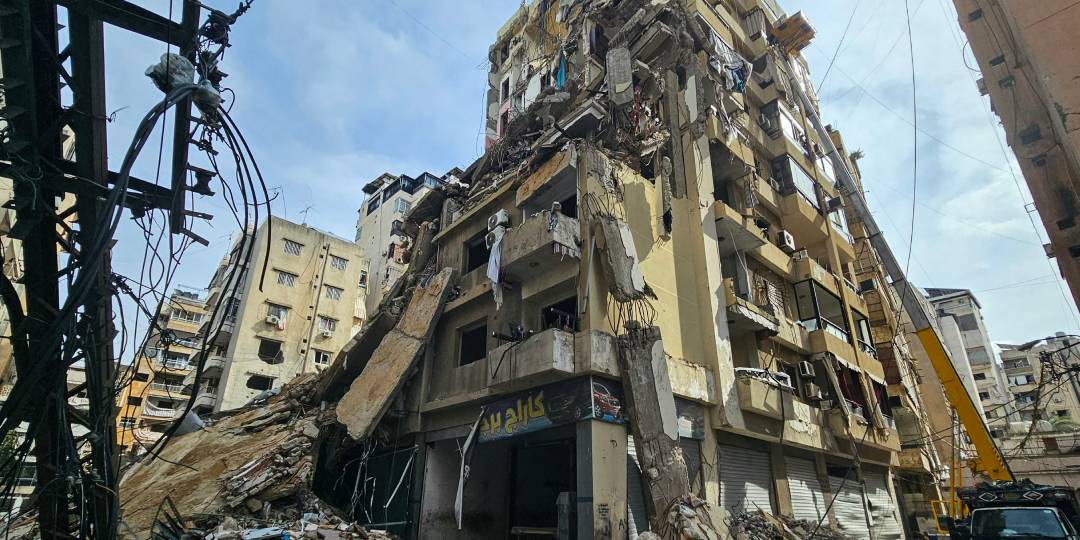
Israel conducted widespread strikes on southern Lebanon Saturday dawn, targeting villages including Majdal Silm, Kafra, Al-Hania, Tollein, and Adeissiyeh. Additional strikes targeted “residential buildings, commercial structures, and a fuel station” in Nabatieh.
Reports indicated strikes on border settlements including Al-Tibe with “Israeli forces attempting to advance toward the Litani River region,” reflecting Israeli strategy to establish a 30-kilometer security buffer from the border.
Hezbollah’s Continued Response and Escalation Cycle
Hezbollah announced Saturday morning attacks on Israeli military concentrations in the border village of Deble. The group stated it targeted a Merkava tank “with a suicide drone” and an Israeli military force with “a kamikaze drone.”
The group also announced strikes on “Northern Regional Command headquarters” of the Israeli military north of Safed with a rocket barrage. This escalation demonstrates the relentless cycle of action-reaction with no apparent endpoint.
Strategic Stalemate and Humanitarian Cost
Neither side appears capable of decisive military victory, yet both continue operations that primarily harm civilians. Schools remain targets because combatants shelter in them. Hospitals become frontlines. Families huddle in underground spaces while bombs fall above. The strategic situation produces only humanitarian catastrophe.
Crisis Timeline and Statistics
| Metric | Figure |
| Students Out of School | 500,000 |
| Public Schools Converted to Shelters | 350+ |
| Total Deaths in War | 1,100+ |
| Child Deaths Confirmed | 122 minimum |
| Daily Economic Loss | $3 million |
| Monthly Economic Loss | $90 million |
| Schools Reopened Pre-War | 30 |
| Teacher Displacement Rate | Unknown (data gap) |
Emerging Mitigation Efforts and Their Limitations
Digital Learning Platforms
The Ministry of Education working with UNICEF launched a platform containing recorded lessons covering the official curriculum. Students can follow independently without direct internet connection, providing some hope for thousands of sheltered youth. However, platform accessibility remains limited by device availability and electricity supply in shelter settings.
Phone-Based Learning Initiative
UNICEF partnered with “Education for Lebanon” to establish the “Call and Learn” hotline, enabling students to receive educational content via telephone without internet access. This creative solution attempts to overcome the digital divide through alternative infrastructure. Yet capacity remains severely limited—the hotline cannot serve hundreds of thousands of students.
Persistent Fundamental Gaps
Rafiq reminds: “We also need teachers who are connected” with internet capability and ability to teach. Currently, no reliable data exists on displaced teachers or those unable to continue work. Without educators actively engaged, educational platforms become hollow shells.
The fundamental problem persists: war has displaced the educational system itself, not merely students. Teachers are refugees. Schools are shelters. Infrastructure is destroyed. No technological solution can overcome these realities.
Psychological and Social Dimensions
The educational crisis carries profound psychological costs beyond curriculum loss. Children lose daily routines providing stability and predictability. Peer relationships—central to adolescent development—are severed. Social hierarchies established over years collapse as displacement randomizes who shelters where.
Anxiety and trauma permeate shelter environments. Sounds of explosions and artillery induce hypervigilance. Sleep disturbance becomes universal. Concentration becomes impossible. These neurobiological impacts of sustained stress affect learning capacity even when education resumes.
Girls face specific psychological dangers: loss of school-based protection; exposure to exploitation; anxiety about future prospects; trauma from witnessing family breakdown under displacement stress.
Conclusion:
Lebanon’s education crisis represents a slowly unfolding humanitarian catastrophe. Half a million students outside schools means an entire generation may lose critical educational years and opportunity. Girls and adolescents face tangible social and economic dangers. Schools rebuilt from previous war damage have been destroyed again. Economic resources are depleted. Digital infrastructure is inadequate. Yet Ahmad, Aya, and Nesima’s stories reveal something crucial: an unwavering desire to continue learning even amid unimaginable circumstances. What Lebanon needs now is not only cessation of warfare but genuine investment in educational system reconstruction and assurance that another generation does not lose its future. The cost of inaction extends far beyond current suffering into decades of diminished human potential, economic capacity, and social stability. Lebanon’s education crisis is simultaneously a crisis of Lebanon’s future itself.