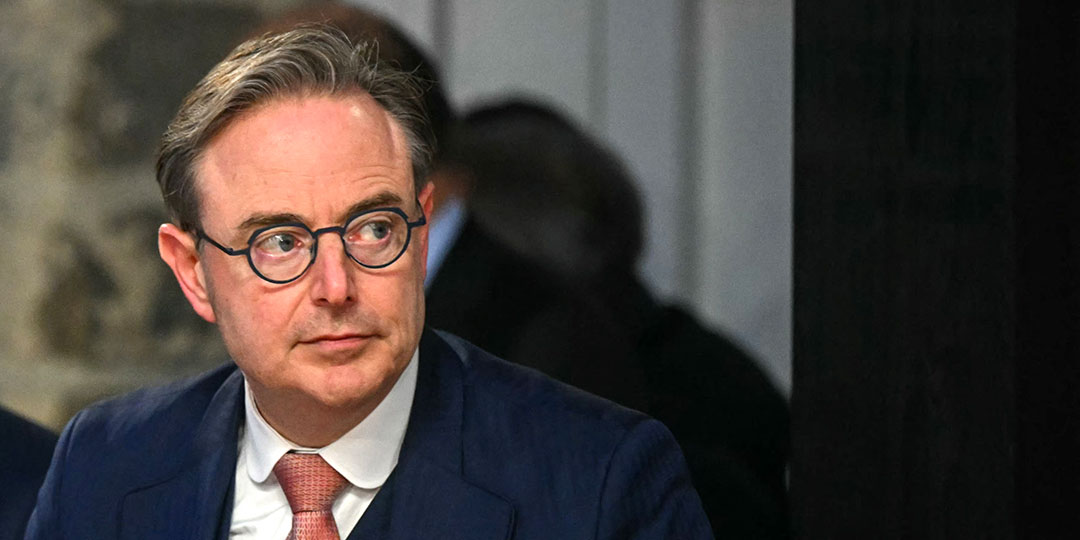

Belgian Prime Minister Bart De Wever called Saturday on European Union member states to authorize the bloc to conduct direct negotiations with Russia regarding the Ukraine war, warning that failed European pressure campaigns necessitate a new diplomatic strategy. De Wever’s appeal comes amid escalating European divisions over how to address the Ukrainian conflict and growing concerns that unilateral American-Russian negotiations could produce agreements detrimental to European interests.
De Wever stated: “Since we cannot threaten Putin by sending weapons to Ukraine, and we cannot strangle him economically without US support, there is only one way left: making a deal.” The Belgian prime minister warned that excluding Europe from negotiations with Moscow will result in an agreement drafted “solely” by the United States—an arrangement he characterized as potentially disastrous for European strategic interests.
De Wever’s Assessment of Military Impossibility
De Wever believes that subjugating Russia militarily remains possible only “with full support from the United States.” This assessment reflects recognition that European states collectively, even unified, lack sufficient military capacity to impose military defeat on Russia without decisive American support.
De Wever stated explicitly: “Without complete US support, we will not be able to subjugate Russia.” The statement represents stark strategic realism regarding the military disparity between European capabilities and Russian military power. This position acknowledges that Europe cannot force a Ukrainian military victory through European military resources alone.
Implicit Critique of American Strategic Ambiguity
De Wever expressed concern that the United States is not fully aligned with Ukraine, at times appearing “closer to Putin” than to Ukrainian President Volodymyr Zelenskyy. This assessment reflects escalating European concerns regarding potential Trump administration intentions in handling the Ukrainian file.
De Wever’s characterization may reflect European anxiety that the Trump administration might prefer a rapid settlement with Russia even at the expense of Ukrainian sovereignty and European security interests. The statement signals European skepticism regarding American reliability as a strategic ally in containing Russian expansionism.
Warning Against Unilateral US-Russia Negotiations
De Wever articulated a specific nightmare scenario: direct US-Russia negotiations producing settlement terms without European participation. He stated: “Without a mandate to go negotiate in Moscow, we will not be at the negotiating table where Americans will pressure Ukraine to accept a deal. I can say now that it will be a bad deal for us.”
This warning reflects profound European concern about marginalization in decision-making regarding Ukraine’s future—a nation with direct borders to multiple European states and whose fate directly impacts European security architecture.
Fears of Ukrainian Sacrifices in European Absence
De Wever believes any settlement negotiated without European participation will include Ukrainian “sacrifices” potentially unacceptable from a European perspective. Such sacrifices might encompass territorial concessions to Russia or acceptance of security arrangements leaving Ukraine vulnerable to future Russian aggression.
The Belgian prime minister’s concern reflects European anxiety that bilateral US-Russia negotiations might disregard Ukrainian agency and European security concerns in pursuit of rapid conflict termination.
European Movement Toward Restoring Putin Contact
Multiple European leaders, including French President Emmanuel Macron, have recently sought to restore communication with Russian President Vladimir Putin. This European initiative aims to prevent the American president from conducting unilateral negotiations with Russia regarding the invasion launched in February 2022.
This European diplomatic movement reflects growing recognition that diplomatic resolution may represent the only available pathway for ending the war, particularly amid escalating skepticism regarding prospects for decisive Ukrainian military victory.
France’s Leading Diplomatic Role
France plays a leading role in European attempts to restore contact with Russia. Macron’s position reflects French conviction that Europe requires independent negotiating capacity with Russia rather than accepting a subordinate role in American-led diplomacy.
The French initiative suggests European determination to preserve strategic autonomy and avoid complete dependence on American negotiating strategy regarding European security interests.
Contrasting Position of EU Foreign Policy Chief Kaja Kallas
Kaja Kallas, EU foreign policy chief, articulated a contrasting position to De Wever’s immediate negotiation call. Kallas stated that the EU must first achieve internal agreement regarding expectations from Russia before approaching Moscow directly. Her position reflects a different sequencing logic for European diplomatic steps.
Kallas’s “Maximum Demands” Framework
Kallas emphasized last month that Europe must formulate “maximum demands” and pressure Russia to provide concessions, including agreement to reduce its military forces. This position reflects a philosophy asserting that negotiation should proceed from a position of European strength rather than weakness and desperation.
Kallas’s framework suggests a more hardline approach: complete internal European alignment on negotiating positions, followed by unified pressure on Russia to make substantive concessions before accepting any settlement framework.
European Strategic Divisions Regarding Ukraine
The contrasting opinions between De Wever and Kallas reflect deeper European divisions over optimal strategy for addressing the Ukrainian file. European leaders divide between:
Those favoring immediate negotiations to end warfare
Those preferring continued pressure on Russia before negotiating
Those fearing unilateral US-Russia negotiations without European participation
Those prioritizing Ukrainian sovereignty against those emphasizing rapid conflict termination
Competing Visions of European Strategic Autonomy
The debate reflects competing European visions regarding strategic autonomy. Some leaders, particularly in Central and Eastern Europe, fear that emphasizing negotiation signals weakness to Russia. Others, particularly in Western Europe, believe that diplomatic engagement represents the only realistic path to conflict resolution.
Broader Strategic Context
The current European discussions reflect deeper strategic transformation in the international system. Europe confronts a complicated strategic situation:
Military dependence on the United States regarding Russian containment
Concern regarding potential American isolationism or US-Russia understandings
Inability to impose military outcomes without American support
Necessity for European participation in any future settlement
Fear of American unilateralism regarding European security
Economic Pressure Limitations
De Wever noted that economic pressure on Russia remains ineffective “without American support,” reflecting the reality that the United States possesses superior economic tools (dollar dominance, financial services control) surpassing European capabilities.
Ukrainian Sovereignty in Negotiation Frameworks
The current European debate raises a sensitive question: should Ukraine be a full party to negotiations regarding its future, or might settlements occur at Ukraine’s expense conducted by great powers?
De Wever’s concern regarding a “bad deal” reflects fear that American-Russian negotiations might disregard Ukrainian and European voices in negotiation processes.
Implications for European Solidarity
Current European divisions regarding Ukraine strategy could undermine European solidarity toward Ukraine. If Europe appears divided regarding the correct policy stance, this could encourage Russian intransigence in negotiations.
Russian strategists may calculate that exploiting European divisions creates negotiating advantages for Moscow, reducing pressure for meaningful concessions.
Institutional Role of European Union
De Wever’s appeal raises questions about the EU’s institutional role in major international negotiations. Should the European Union represent the sole European negotiator with Russia, or should major member states like France conduct independent negotiations?
This question reflects ongoing tensions between supranational EU institutions and member state sovereignty in foreign policy decision-making.
American Strategic Ambiguity Concerning Europe
The Trump administration’s unclear stance toward Ukraine and Europe creates European strategic uncertainty. De Wever’s concerns reflect genuine anxiety that American negotiating positions might not adequately protect European interests or Ukrainian sovereignty.
Trump Administration Signals and European Anxiety
Previous Trump administration statements suggesting willingness to accept Russian territorial gains in Ukraine have amplified European concerns regarding American reliability in supporting European security interests. De Wever’s warnings may reflect these anxieties regarding American strategic intentions.
Timing and Diplomatic Windows
De Wever’s call for immediate European-Russian negotiations suggests concern that postponing diplomatic engagement narrows potential diplomatic windows. Escalating military devastation and economic disruption may eventually close negotiating possibilities as conflicts harden.
The Belgian PM’s urgency may reflect calculation that immediate diplomatic initiative represents Europe’s last opportunity to shape settlement terms before American-Russian negotiations marginalize European participation.
Conclusion:
Belgian Prime Minister De Wever’s call for EU negotiations with Russia reflects escalating European divisions regarding optimal Ukraine strategy. While some leaders view immediate negotiations as necessary to prevent worse outcomes through unilateral US-Russia agreements, others prefer continued pressure on Russia before negotiating. De Wever’s warnings regarding a “bad deal” without European representation articulate genuine European concerns that American negotiating interests might not align with European strategic interests. EU decision-making regarding negotiation strategy with Russia will significantly impact future European-Russian relations and European solidarity regarding Ukraine.