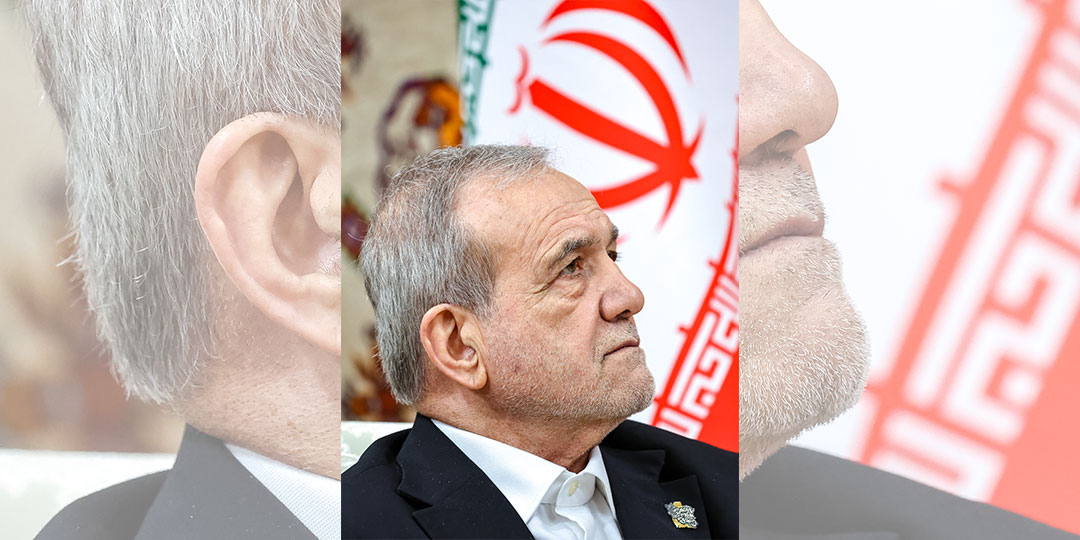

The Middle East is sliding toward critical levels of confrontation as the US-Israeli war against Iran enters its second week. Iranian President Masoud Pezeshkian declared on Saturday that “enemies will take their dreams of the Iranian people’s surrender to the grave,” directly challenging US President Donald Trump’s demand for Iran’s “unconditional surrender” to end the conflict.
Tehran experienced the heaviest bombardment of the campaign overnight Friday into Saturday, with over 80 US and Israeli warplanes striking targets across the Iranian capital and central provinces. Massive fires erupted at Tehran’s Mehrabad Airport, one of the country’s largest aviation hubs, as military infrastructure and weapons storage facilities sustained severe damage.
In response, Iran continued its barrage of missiles and drones targeting Israel and American military installations across the Gulf region. The Iranian Navy announced a new “intensive wave” of drone attacks on Israeli territory and US bases in the United Arab Emirates and Kuwait, marking a sustained counter-offensive despite the enormous scale of incoming strikes.
Scale of Destruction and Rising Civilian Toll
Footage from Agence France-Presse captured towering flames and thick smoke billowing from Mehrabad Airport in the heart of Tehran. The Israeli military confirmed that operations targeted military academies, troop assembly points, and weapons storage facilities across multiple Iranian provinces.
According to Iran’s Health Ministry, the civilian death toll on Friday alone reached 926, with approximately 6,000 injured. This represents a stark escalation from the first week of the campaign, which began on February 28 with the killing of Iran’s Supreme Leader Ayatollah Ali Khamenei.
The bombardment extends far beyond military targets. Residential buildings, power infrastructure, and medical facilities have been struck, compounding the humanitarian crisis as hospitals struggle with overwhelming numbers of casualties.
Conflict Expands to Lebanon
The war has rapidly expanded beyond Iran’s borders into Lebanon, where Israel intensified aerial strikes and launched ground incursions beginning Monday. Israeli forces conducted helicopter-borne landings near the Syrian border, triggering direct combat with Hezbollah fighters in the eastern Bekaa Valley.
Lebanon’s Health Ministry reported 16 deaths and 35 injuries from the intensive strikes on southern Lebanon and Beirut’s southern suburbs. The overall death toll in Lebanon since Israeli bombardment began exceeds 200, with approximately 300,000 civilians forcibly displaced from their homes, according to the Norwegian Refugee Council.
Iran’s Coordinated Drone and Missile Response
The Iranian military announced on Saturday that naval forces launched a “concentrated wave” of drone strikes against Israel and American bases across the Gulf. Targets included Al-Minhad Air Base in the UAE, an installation in Kuwait, and Al-Dhafra Air Base in the Emirates.
The Islamic Revolutionary Guard Corps claimed strikes on American air operations centers, satellite communications hubs, early warning radar systems, and fire control networks. However, US and Israeli officials contend that the pace of Iranian launches has diminished compared to the first week of conflict.
The Iranian Navy also disclosed that it targeted the oil tanker “Prima” as it transited the Strait of Hormuz, the critical global energy chokepoint. Commercial shipping traffic through the strait has contracted sharply since hostilities commenced, as Tehran has threatened to interdict vessels traversing this vital waterway.
Aviation and Economic Disruptions
Dubai’s civil aviation authorities suspended operations at Dubai International and Al Maktoum airports following air defense intercepts over the emirate. Additional interception operations were reported over Manama, Bahrain, and near Riyadh, where Saudi forces intercepted a ballistic missile targeting an air base hosting American personnel.
The regional economic toll is mounting rapidly. Stock markets have retreated sharply, while oil and natural gas prices have surged on supply concerns. Energy markets remain highly volatile as the conflict disrupts global commodity flows and investor confidence in regional stability.
Apologies to Arab Allies and Trump’s Escalatory Threats
In his televised address, Pezeshkian apologized to neighboring Gulf Arab states for Iranian attacks, stating: “I apologize in my name and on behalf of Iran to neighboring countries that Iran has attacked.” He assured that Tehran would refrain from targeting them unless attacks originate from their territory.
President Trump responded with sharp rhetoric via Truth Social, posting: “Today Iran will be hit very hard!” He threatened to expand targeting parameters, stating that areas and groups “not considered for targeting up until this moment in time” are now under serious consideration for “complete destruction.”
Trump characterized Iran as “the Loser of the Middle East,” arguing that Pezeshkian’s conciliatory gestures stemmed from the “relentless U.S. and Israeli attack.” Saudi Defense Minister Prince Khalid bin Salman urged Iran to “exercise wisdom and abandon faulty calculations,” hinting at a broader Arab coalition stance against Tehran.
International Law and Sovereignty Concerns
An emergency session of Arab League foreign ministers is scheduled for Sunday to address “Iranian attacks on Arab territories,” according to Arab League Assistant Secretary-General Hossam Zaki. This convening signals deepening regional diplomatic fractures.
Iran’s UN Ambassador Saeid Iravani condemned Trump’s demands for involvement in selecting Iran’s next Supreme Leader as “a flagrant violation of the principles of non-interference in domestic affairs enshrined in the UN Charter.”
American Military Casualties and Psychological Impact on Iranians
Six US military personnel have been killed in the conflict so far. President Trump is scheduled to attend a repatriation ceremony for their remains at Dover Air Force Base in Delaware on Saturday, a symbolic moment highlighting American losses in the campaign.
Inside Iran, the bombardment has revived traumatic memories of Israel’s 2025 June attack on the Islamic Republic, though the current assault far exceeds that operation in intensity and breadth. The present strikes are inflicting significant damage on civilian infrastructure, power grids, and residential areas.
A 26-year-old teacher in Tehran captured the psychological strain: “I don’t think anyone who hasn’t experienced war can understand it. When you hear bomb sounds, you don’t know where they will fall.” Her testimony reflects widespread anxiety among Iranian civilians as the campaign intensifies.
The broader regional conflict now spans from Sri Lankan waters, where US forces sank an Iranian naval vessel, to Cyprus, where drones struck two British military installations, underscoring the geographic expansion of hostilities.
Conclusion:
As the war enters its second week, both sides show no inclination toward de-escalation. Iran’s defiant stance, backed by sustained drone and missile attacks, contrasts sharply with Trump’s escalatory posture and threats of expanded targeting. The human, economic, and infrastructural costs are mounting rapidly across Iran, Lebanon, and the broader Middle East. The conflict’s trajectory remains uncertain, with neither side signaling readiness for negotiation, raising the prospect of prolonged regional instability and widening international involvement.