
Israeli troops shot and killed a Palestinian family of four in the occupied West Bank town of Tammun on Sunday, while settler attacks across the territory escalated dramatically during the Middle East war with Iran. The deaths of two adults aged 37 and 35, and two boys aged five and seven, represent a spike in lethal violence that Palestinian authorities and international observers attribute directly to the distraction created by the US-Israeli campaign against Iran, which began February 28.
Palestinian health authorities and the UN report that six Palestinians have been killed by Israeli settlers since the start of March, with 180 Palestinians newly displaced and over 500,000 Israeli settlers living illegally in the occupied territory. The timing of the violence surge raises questions about whether the international focus on the Iran conflict has created a security vacuum in which settler attacks proliferate with reduced oversight.
Family of Four Shot Dead in Tammun Incident
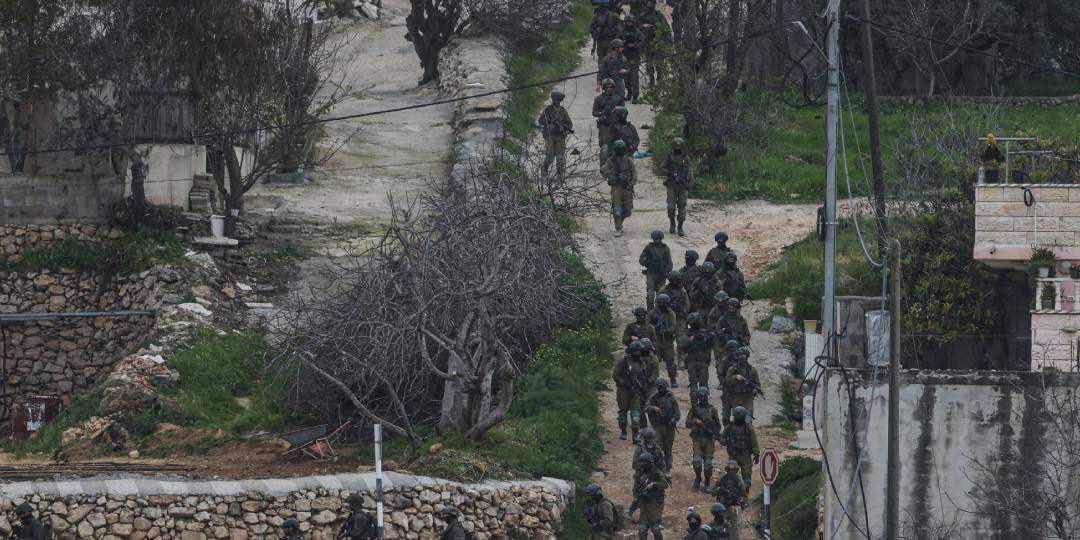
The Palestinian health ministry announced Sunday that Israeli forces shot and killed a family of four in Tammun, a town in the northern West Bank. The victims included a man aged 37, a woman aged 35, and two boys aged five and seven. The Palestinian Red Crescent confirmed recovery of the four bodies from a vehicle that had been fired upon by Israeli forces.
The Turkish Public Hospital in nearby Tubas received the bodies, with medical staff documenting gunshot wounds on all four victims. Additionally, the couple’s two surviving children aged eight and 11 were wounded by shrapnel from the gunfire that killed their parents and younger siblings.
The Israeli military stated it was investigating the incident but provided no immediate explanation for why troops fired on the civilian family vehicle. The lack of immediate military clarification raised questions about the circumstances that led to the lethal response.
Survivors Witness Family Deaths
The two surviving children, aged eight and 11, witnessed the shooting death of their entire family in what Palestinian officials described as an extrajudicial killing without warning or apparent provocation. The psychological trauma to child survivors of witnessing parental deaths and sibling killings raises humanitarian concerns beyond the immediate fatality toll.
Surge in Settler Attacks Coincides with Iran War Focus
Palestinian health ministry data shows six Palestinians killed by Israeli settlers since the start of March 2026, a dramatic increase attributed to diminished international oversight as global media attention focuses on the US-Israeli war against Iran. The timing coincides precisely with the February 28 launch of the Iran bombing campaign.
Israeli human rights group B’Tselem stated that the increase in settler violence “indicates the intensification of Israel’s ethnic cleansing efforts under cover of the war with Iran.” The characterization reflects Palestinian and international observer assessments that the Iran conflict provides political cover for accelerated settlement expansion and violence against Palestinian communities.
Comparative Violence Statistics
Between October 2023 and February 2026, a period of 28 months during the Gaza war, 24 Palestinians were killed by settlers according to UN Office for the Coordination of Humanitarian Affairs (OCHA) figures. However, in just the first 15 days of March 2026, six Palestinians have been killed by settlers, indicating an approximate 240 percent increase in settler killing pace compared to the Gaza war period.
The acceleration suggests that settler violence has fundamentally changed character and intensity during the Iran war period, with perpetrators potentially emboldened by reduced international oversight.
Abu Falah Village Attack; Three Palestinians Killed
Settlers attacked Abu Falah village northeast of Ramallah on Saturday, leading to the deaths of three Palestinians. Milia Hamayel, mother of a victim, told AFP: “I called him two or three more times and he didn’t answer. After that, may God have mercy on him, that was it.”
The victims included her 30-year-old son Thaer and another village resident killed by settler gunfire. A third Palestinian died from suffocation after Israeli troops fired tear gas, according to Palestinian authorities. The military response to settler violence paralleled military support for settler actions.
Ibrahim Hamayel, an Abu Falah resident attempting to defend community land, reported: “They were all masked and some of them were carrying firearms.” He observed stone circles laid as impromptu memorials at the death site, with a Palestinian flag flapping above.
Masked Armed Settlers Pattern
Survivors described coordinated settler attacks involving masked, armed individuals, suggesting organized group operations rather than spontaneous violence. The systematic nature of the attacks, combined with documented military support or non-intervention during settler violence, raises questions about coordination between settler militias and Israeli security forces.
Total West Bank Death Toll Since Gaza War Began
According to an AFP tally based on Palestinian health ministry figures, Israeli troops or settlers have killed at least 1,045 Palestinians since the Gaza war began in October 2023, with many victims being armed militants but significant numbers being civilians. Official Israeli figures claim 45 Israeli deaths from Palestinian attacks or during military operations, indicating a casualty ratio of approximately 23:1 favoring Israeli security.
The vast disparity in casualties reflects both the intensity of Israeli military operations and the relatively limited armed Palestinian resistance capacity in the West Bank compared to Gaza.
Displacement Crisis Accelerating
The UN reports that 180 Palestinians have been displaced since the Iran war began on February 28, with 1,500 Palestinians displaced since the start of 2026. The displacement rate during the Iran war period appears to be accelerating compared to earlier 2026 figures.
Displacement of Palestinian communities has reached 90 percent of full-year 2025 levels within just the first 15 days of March, indicating exponential acceleration in forced population movement correlated with reduced international attention.
Ethnic Cleansing Characterization
International observers including the European Union have used explicit language condemning West Bank violence, with the EU stating that Palestinian communities “have been attacked, properties damaged and livelihoods destroyed” since the Iran war began. The characterization of systematic displacement coupled with violence echoes international legal definitions of ethnic cleansing.
Illegal Settlement Expansion Context
The West Bank contains approximately 500,000 Israeli settlers living in settlements and outposts that international law designates as illegal. The Palestinian population of roughly 3 million coexists in territory under Israeli military control, creating demographic and security dynamics where settler violence and military support operate with limited external oversight.
Disputed Circumstances and Military Response Ambiguity
The Israeli military stated it sent troops to Abu Falah “after receiving reports of Palestinians being attacked by Israeli settlers” and “acted to disperse those involved using crowd dispersal measures.” However, Palestinian witnesses and international observers noted that military tear gas fire contributed to at least one Palestinian death, and the military response did not result in settler arrests or investigations.
The pattern suggests military forces responding to settler violence in ways that sometimes increase rather than decrease Palestinian casualties, raising questions about military impartiality or coordination with settler operations.
Reduced International Oversight Creates Security Vacuum
Palestinian residents expressed views that the Iran war has created opportunity for accelerated violence. Abu Falah resident Ibrahim Hamayel stated: “It seems that when the Iran war began, the settlers saw it as a golden opportunity.”
Daily incidents in West Bank villages have become routine, with residents reporting constant fear and insecurity. Muath Qassam, beaten with a club during the Abu Falah attack, described the environment: “Every day the settlers establish new outposts. We are not safe from them at all.”
Conclusion:
The simultaneous killing of a Palestinian family of four in Tammun and acceleration of settler violence across the West Bank during the Iran war period raises serious questions about the relationship between international attention diversion and violence escalation. The six settler killings in March alone, compared to 24 during the entire 28-month Gaza war period, suggest fundamental changes in settler violence intensity and coordination. With 180 Palestinians displaced since February 28 and international observers characterizing the pattern as ethnic cleansing under cover of the Iran conflict, the West Bank faces accelerating displacement and violence as global attention remains focused on the Middle East war.