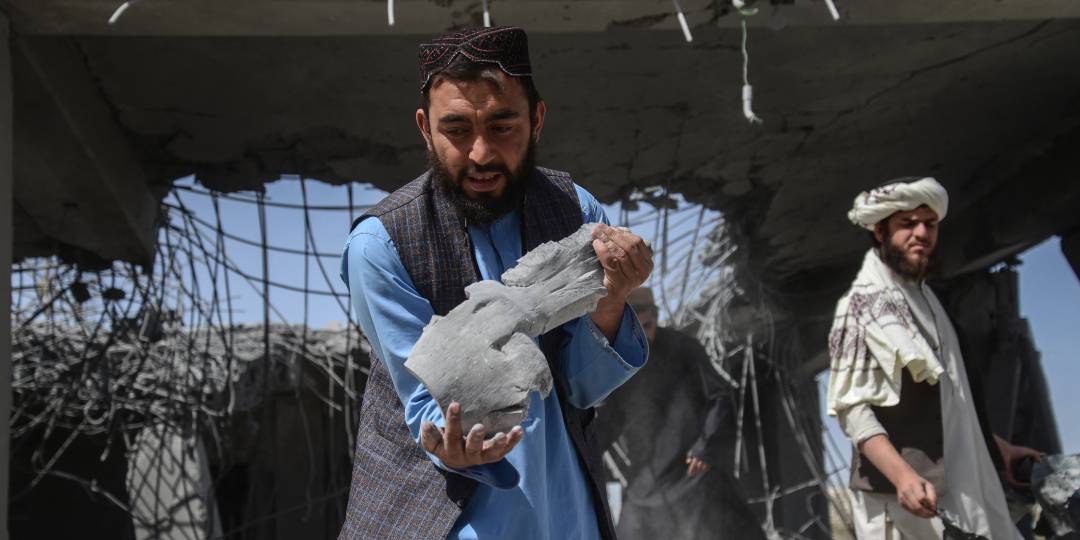

The United Nations World Food Programme announced Sunday emergency assistance delivery to 20,000 Afghan families displaced by escalating conflict with Pakistan, warning that “continued instability will push millions of people into severe hunger.” The humanitarian declaration came as military escalation between Afghanistan and Pakistan intensified following Pakistani airstrikes and subsequent Afghan counter-operations, with civilian casualties mounting and displacement figures reaching catastrophic levels.
WFP Representative John Aylieff stated: “In Afghanistan crises follow one after another. After suffering job losses and earthquakes, families already malnourished now find themselves at the frontlines.” The UN agency confirmed the World Food Programme had begun delivering “emergency food assistance to save lives of 20,000 displaced families.” Beyond fortified biscuits, affected families would receive two-month food rations and cash assistance, according to the agency. Many Afghans in border regions with Pakistan were forced to abandon homes due to repeated clashes, with some residents now living in tent camps under difficult humanitarian conditions.
Escalating Afghanistan-Pakistan Border Conflict Displaces Border Populations
Afghanistan and Pakistan have been engaged in confrontations for months, with Islamabad accusing its neighbor of harboring fighters from the Pakistani Taliban movement that has claimed responsibility for deadly attacks in Pakistan—accusations Afghan authorities deny categorically.
October 2025 clashes resulted in dozens of deaths and near-complete land border closure. Following multiple mediation efforts, confrontation intensity decreased temporarily. However, conflict re-escalated February 26 following Pakistani airstrikes followed by Afghan ground counteroffensive operations, marking resumption of open hostilities.
Casualty and Displacement Figures Indicate Catastrophic Impact
According to an updated UN report released Friday, 75 Afghan civilians have been killed since fighting escalated February 26. Additionally, at least 115,000 persons have been internally displaced within Afghanistan. The casualty and displacement figures represent catastrophic humanitarian impact occurring simultaneously with other regional crises affecting the broader region.
Pakistan Claims Military Target Strikes in Kandahar Region
Pakistan announced Sunday it had targeted military positions and “terrorist” hideouts in Kandahar in southern Afghanistan. Pakistani security sources requesting anonymity stated Pakistani forces “destroyed infrastructure and equipment storage sites in Kandahar used by the Afghan Taliban movement and terrorists against innocent Pakistani civilians.”
Kandahar residents told Agence France-Presse they witnessed military aircraft flying over the city and heard explosion blasts. One resident described: “Military planes flew over a mountain where a military base is located, then an explosion occurred,” adding he witnessed flames rising from the site. The targeting of Kandahar reflects its significance as Taliban stronghold region housing senior leadership.
Taliban Leader Akhundzada Position in Kandahar
Taliban movement leader Hibatullah Akhundzada is known to maintain an isolated position in Kandahar. The targeting of Kandahar areas suggests Pakistani military operations aimed at Taliban leadership structures and military capabilities concentrated in the southern region.
Taliban Denial of Military Targets and Casualty Claims
Taliban government spokesman Zabihullah Mujahid told Agence France-Presse that strikes targeted “a drug addiction rehabilitation center” and “empty shipping containers” in mountains where soldiers shelter from daytime heat, claiming no casualties resulted.
Mujahid stated: “The locations mentioned by Pakistanis are far removed from these two places.” The divergent accounts of strike targets reflect fundamental disagreements regarding military operations and target locations between the belligerent parties.
Verification Challenges in Border Conflict Reporting
Independent casualty verification faces significant obstacles in border region reporting:
Limited international media presence in remote border regions
Afghan government capacity constraints limiting casualty documentation
Conflicting claims from both Afghan government and Pakistani sources
Remote terrain complicating field casualty surveys
Difficulty distinguishing civilian from combatant casualties in conflict zones
Limited access to damaged sites for independent assessment
Continued Cycle of Tit-for-Tat Military Operations
Saturday, Islamabad announced it had “thwarted a drone attack conducted by the Afghan Taliban,” while Pakistani President Asif Ali Zardari accused Kabul of “crossing the red line” by conducting attacks on civilian targets.
The previous day, Pakistan had bombed multiple locations in Afghanistan, including the capital Kabul. The strike on Kabul killed four civilians, according to UN reports. The pattern of escalating operations in rapid succession indicated dangerous deterioration in border stability and escalating cycle of military operations.
Accelerating Cycle of Retaliation and Escalation
Local residents reported hearing aerial strikes in Spin Boldak in southern Afghanistan, while Taliban authorities announced clashes in Khost Province in the east. The pattern of military operations across multiple regions suggested systematic military campaign rather than isolated incidents, indicating strategic escalation by both sides.
UN Warnings of Compounding Humanitarian Crisis
WFP Representative Aylieff emphasized Afghanistan faces consequences of multiple simultaneous conflicts. Beyond the Pakistan confrontation, Afghanistan borders Iran, which experiences American and Israeli bombardment, with significant numbers of Afghans residing on Iranian territory beginning to return due to conflict there.
Aylieff warned that beyond severe hunger resulting from displacement and crop disruption, continued instability would increase pressure on “a region already on the brink of collapse.” The compounding crises create cascade effects undermining humanitarian capacity, economic stability, and governmental functionality.
Multiple Crisis Vectors Affecting Afghan Population
Afghanistan confronts simultaneous crises:
Pakistan-Afghanistan border conflict displacing border populations
Iran-US conflict creating refugee pressures from Iranian territory
Economic collapse limiting government humanitarian response capacity
Taliban governance constraints on international aid delivery
Regional instability disrupting cross-border commerce and humanitarian corridors
Food insecurity from displacement and agricultural disruption
Displacement Creates Acute Humanitarian Vulnerability
Forced abandonment of homes represents loss of livelihoods, property, and community structures, creating acute vulnerability particularly among women, children, and elderly populations. Tent camps lack adequate sanitation, water access, healthcare services, and protection from weather conditions.
Children face elevated risks of malnutrition, disease transmission, and developmental disruption. Women confront increased security threats in overcrowded camp conditions. Elderly populations struggle with health conditions in harsh camp environments. The humanitarian emergency encompasses not only immediate food scarcity but comprehensive deprivation of basic services.
International Attention Limited Despite Humanitarian Scale
Afghanistan’s humanitarian emergency receives limited international media and diplomatic attention relative to Middle East conflicts. Limited international media presence in remote border regions constrains reporting of humanitarian conditions and casualty figures. Diplomatic mediation efforts appear absent or ineffective in preventing continued escalation.
Geopolitical Marginalization of South Asian Conflicts
The Afghanistan-Pakistan conflict demonstrates how regional crises receive limited international diplomatic priority despite substantial humanitarian consequences. International focus concentrates on Middle East conflicts, potentially explaining inadequate international mediation and humanitarian response to South Asian crises affecting millions.
Taliban Government Legitimacy Questions and International Recognition
The Afghanistan-Pakistan conflict occurs within context of Taliban government international recognition challenges. Pakistani military operations against Taliban-controlled territory raise questions regarding international legal status of cross-border military operations against recognized Afghan government entities. The Taliban’s international isolation may limit humanitarian assistance and diplomatic support for Afghan civilian populations.
Economic Collapse and Humanitarian System Dysfunction
Afghanistan’s economic collapse limits government capacity for humanitarian response. The Taliban government struggles to provide basic services even without conflict disruption. Military escalation further damages economic capacity and disrupts whatever limited humanitarian infrastructure exists. The convergence of state weakness and military escalation creates catastrophic conditions for civilian populations.
Food Security Crisis Deepening Beyond Displacement
WFP warnings regarding “severe hunger” reflect comprehensive food security collapse beyond displacement-induced disruption. Families previously experiencing chronic malnutrition now face acute displacement, agricultural disruption from conflict, and inability to access remaining markets. The humanitarian emergency encompasses not only immediate food scarcity but systemic economic devastation affecting all food production and distribution mechanisms.
Conclusion:
UN World Food Programme emergency assistance to 20,000 Afghan families displaced by Afghanistan-Pakistan border conflict represents immediate humanitarian response to crisis escalating despite previous mediation efforts. Casualty figures of 75 civilians and 115,000 internally displaced persons indicate significant humanitarian impact receiving limited international media and diplomatic attention relative to Middle East conflicts. Compounding displacement from Iran-US conflict adds pressure to already-strained Afghan humanitarian systems and border regions. WFP warnings regarding severe hunger and regional collapse risk indicate that emergency assistance represents temporary palliative measure to underlying structural humanitarian emergency requiring comprehensive international engagement addressing both immediate displacement response and longer-term conflict resolution mechanisms. The Afghanistan-Pakistan border conflict demonstrates how regional crises receive limited international diplomatic priority despite substantial humanitarian consequences affecting millions of vulnerable civilians.