
Stock markets across the United States and Europe suffered significant losses on Thursday as crude oil prices climbed sharply, driven by escalating concerns over supply disruptions linked to the ongoing Middle East conflict. The Dow Jones Industrial Average declined 2.2 percent, losing more than 1,050 points to close at 47,681.72, reflecting investor anxiety over potential inflationary pressures. The sell-off extended globally, with European exchanges shedding around 1.5 percent, while Asian markets showed mixed results as traders grappled with the widening geopolitical crisis now in its sixth day.
The volatility stems directly from the Iran-Israel conflict that intensified after the United States and Israel launched strikes against Iran on Saturday, killing the country’s supreme leader and triggering retaliatory operations across the Gulf region. Iran’s effective closure of the Strait of Hormuz, through which approximately one-fifth of the world’s crude oil and liquefied natural gas pass, has magnified supply concerns and sent energy prices to levels unseen in nearly two years.
Oil Markets Rally While Stocks Retreat
Crude oil prices rebounded sharply on Thursday after dipping slightly the previous day. Brent North Sea Crude, the primary international benchmark, climbed 4.9 percent to $85.41 per barrel, while West Texas Intermediate, the main US contract, surged 8.5 percent to $81.01. Analysts attributed the spike partly to unconfirmed reports of Iranian strikes on tankers operating offshore Iraq, which heightened fears of further disruptions to the critical shipping corridor.
The rebound proved temporary, however. By Friday morning in Asian trading, West Texas Intermediate had fallen 2.09 percent to $79.32 per barrel, suggesting some stabilization after the steep gains. Brent crude figures were not yet available at that hour.
Global Equity Markets Show Weakness
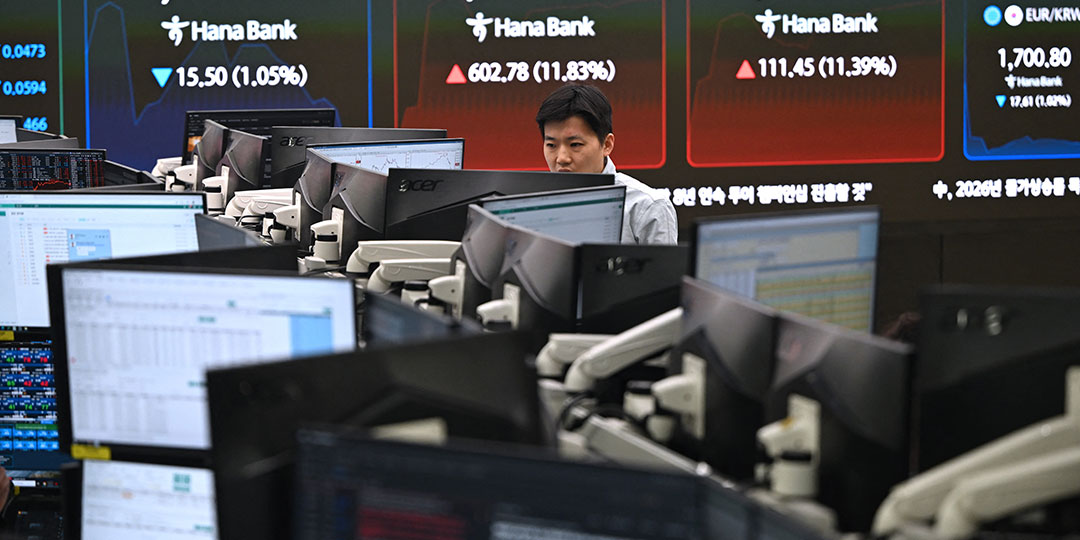
The broader market decline extended across major indices. The S&P 500 fell 1.4 percent to close at 6,830.71, while the Nasdaq Composite Index slipped 0.3 percent to 22,748.99. In Europe, London’s FTSE 100 lost 1.5 percent, Paris’s CAC 40 fell 1.5 percent, and Frankfurt’s DAX declined 1.6 percent. Asian markets presented a more complex picture: Japan’s Nikkei 225 rose 1.9 percent, South Korea’s Kospi surged 9.6 percent after an earlier sharp decline, while Hong Kong and Shanghai advanced modestly.
Strait of Hormuz Closure Amplifies Supply Fears
Iran’s effective blockade of the Strait of Hormuz has emerged as the critical flashpoint for energy markets. The waterway represents one of the world’s most strategic chokepoints, with roughly 20 percent of global crude oil and liquefied natural gas passing through it daily.
China Takes Precautionary Measures
Anticipating prolonged supply constraints, China instructed its largest oil refiners to suspend exports of diesel and gasoline, according to reporting by Bloomberg News. The move underscores regional concerns that the conflict could disrupt energy supplies for an extended period.
Major shipping companies have also moved to protect operations. Maersk, the Danish global shipping giant, announced it was suspending new bookings in the Gulf region until further notice, citing the unpredictable security environment.
Trump Administration Pledges Market Intervention
US President Donald Trump stated Thursday that his administration would soon implement measures to “reduce pressure on oil” prices. “Further action to reduce pressure on oil is imminent and the oil seems to have pretty much stabilized,” he said at a White House event, though he offered no specifics on the interventions planned.
Trump referenced earlier steps taken by his administration, including:
Ordering the US Development Finance Corporation to provide political risk insurance for all maritime trade transiting the Gulf (announced Tuesday)
Pledging that the US Navy would begin escorting tankers through the Strait of Hormuz “as soon as possible,” should circumstances warrant
Navy Escorts Face Operational Challenges
Analysts expressed skepticism about the feasibility of Trump’s escort proposal. Ken Crompton of National Australia Bank noted that protecting all vessels operating in the region remains logistically impractical, particularly given ongoing attacks by Houthi rebels in Yemen on commercial shipping. The Houthis have conducted multiple operations against merchant vessels in recent years, demonstrating the persistent security threats the region faces.
Inflation Pressures and Consumer Concerns
Higher crude prices translate directly to rising gasoline costs for American households already struggling with elevated living expenses. Average US gasoline prices climbed approximately 9 percent over the preceding week, according to the AAA gas prices index.
Market analysts flagged oil price movements as potentially overshadowing other economic indicators. Briefing.com’s Patrick O’Hare noted that “higher oil and gas prices are going to translate into higher gasoline prices coming at a time when people are already feeling pinched by high costs.” He added that oil price direction “has the potential to supersede” even major economic releases, such as Friday’s US labor market report, as a market driver.
Market Timeline and Key Figures
The deterioration accelerated through the week. On Wednesday, oil and energy prices had dipped, offering a brief respite. However, the rebound on Thursday proved severe enough to derail an early equity market recovery that had emerged during Asian trading hours.
Key Market Closes (as of Thursday, 2115 GMT):
Dow Jones Industrial Average: Down 1.6% at 47,954.74
S&P 500: Down 0.6% at 6,830.71
Nasdaq Composite: Down 0.3% at 22,748.99
FTSE 100 (London): Down 1.5% at 10,413.94
CAC 40 (Paris): Down 1.5% at 8,045.80
DAX (Frankfurt): Down 1.6% at 23,815.75
Currency Markets:
Euro/dollar: $1.1604 (down from $1.1634)
British pound/dollar: $1.3357 (down from $1.3375)
Dollar/yen: 157.55 yen (up from 157.06)
Conclusion:
The volatile trading patterns reflect underlying uncertainty about the duration and scope of the Middle East conflict, energy supply reliability, and the real economy’s capacity to absorb sustained higher fuel costs. While Trump’s administration has outlined initial steps to stabilize markets, questions remain about their effectiveness in the face of geopolitical risks that extend beyond conventional policy tools. Investors will continue monitoring both military developments in the Gulf and signals from major central banks regarding inflation management.