

US Secretary of State Marco Rubio issued a warning to Iraq on Sunday against the formation of a pro-Iranian government, as the prospective return of Nouri al-Maliki to the premiership raises significant concern in Washington.
Maliki, who stepped down from power in 2014 following intense pressure from the United States, has been put forward by Iraq’s largest Shiite political bloc, positioning him as a leading candidate for prime minister.
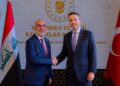
In a telephone call with current Prime Minister Mohammed Shia al-Sudani, Rubio stated that the US hopes the next Iraqi government will work to make the nation “a force for stability, prosperity and security in the Middle East.”
According to State Department spokesman Tommy Pigott, “The secretary emphasized that a government controlled by Iran cannot successfully put Iraq’s own interests first, keep Iraq out of regional conflicts or advance the mutually beneficial partnership between the United States and Iraq.”
The formation of a pro-Iranian government in Iraq would be a significant development for Tehran, which has recently faced major setbacks, including internal mass protests where thousands of Iranians have been killed. Regionally, since the October 7, 2023 attacks, Israel has conducted strikes inside Iran and against its ally Hezbollah in Lebanon, while Iran lost a key regional ally with the ousting of Bashar al-Assad in Syria.
An Iraqi political source confirmed to AFP that the United States had conveyed its “negative view of previous governments led by former prime minister Maliki.”
In a formal letter, US representatives noted that while selecting a prime minister is an internal Iraqi decision, “the United States will make its own sovereign decisions regarding the next government in line with American interests.”
Washington maintains considerable leverage over Iraq, as the country’s oil export revenues are held at the Federal Reserve Bank in New York, an arrangement established after the 2003 US invasion. A primary US demand is that Baghdad prevents any resurgence of Iran-backed Shiite armed groups. Prime Minister Sudani, in office since 2022, has gained US confidence for his efforts to manage these factions.
Maliki first became prime minister in 2006 with American support due to his backing of US military operations against Al-Qaeda in Iraq and other Sunni militants. However, the relationship deteriorated as the US came to believe Maliki’s sectarian policies contributed to the conditions that allowed for the rise of the Islamic State extremist group.
Iraq’s parliament is scheduled to convene Tuesday to elect a new president, a largely ceremonial role, who will then be tasked with appointing the next prime minister.