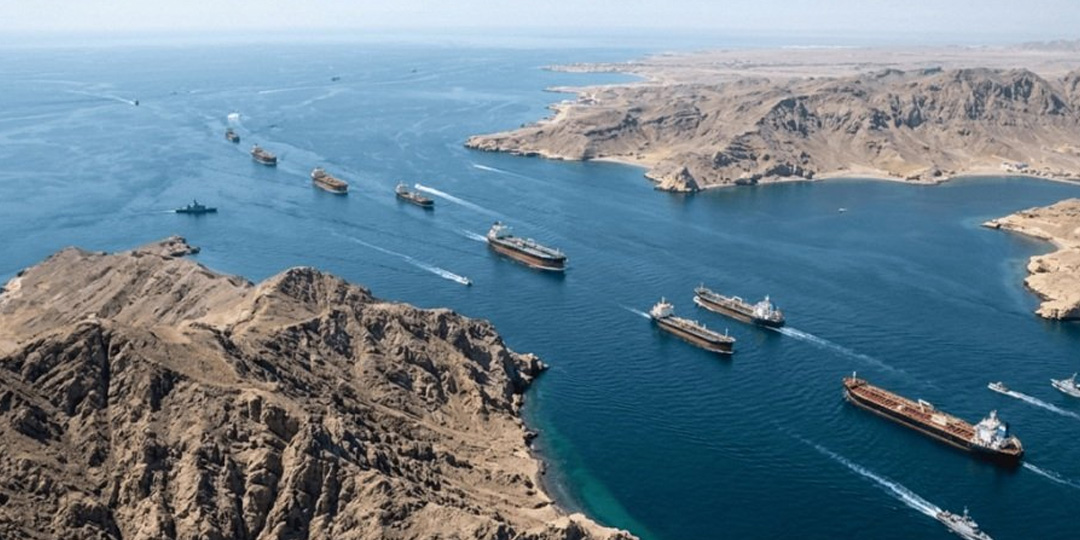

Iran rejected a proposal for joint administration of the Strait of Hormuz on Saturday, maintaining its insistence on exclusive control of the strategically vital waterway. The Financial Times reported from informed sources that “Iranian negotiators rejected the proposal for shared administration of the Strait of Hormuz,” noting that “discussions regarding reopening the Strait of Hormuz continue to represent a major point of contention.” According to the sources, “Iran insists on maintaining control of the Strait of Hormuz and imposing transit fees on vessels.”
Simultaneously, the US Central Command announced the beginning of mine clearance operations in the strait. President Donald Trump declared the launch of operations to “open and purify” the waterway, stating “We have begun the process of opening the Strait of Hormuz and clearing it.” These parallel military and diplomatic developments occur amid trilateral negotiations in Islamabad between the United States, Iran, and Pakistan aimed at achieving a permanent peace agreement.
Iran Refuses Joint Administration, Demands Exclusive Control
Tehran categorically rejected the proposal for shared administration of the Strait of Hormuz, reaffirming its hardline stance. The Financial Times reported that informed sources stated “discussions regarding reopening the Strait of Hormuz continue to represent a major point of contention,” indicating continued fundamental disagreements over the waterway’s future.
The sources emphasized that “Iran insists on maintaining control of the Strait of Hormuz and imposing transit fees on vessels,” reflecting Tehran’s determination to preserve the strategic and economic advantages afforded by exclusive control of this vital maritime passage.
Strategic and Economic Significance of Hormuz
The Strait of Hormuz represents one of the world’s most critical maritime passages, through which approximately one-third of global seaborne oil transits. Iran seeks to maintain complete control to ensure its regional influence and economic leverage.
US Central Command Initiates Hormuz Mine Clearance Operations
The US Central Command announced Saturday the commencement of mine clearance operations in the Strait of Hormuz. The command stated it had “begun preparing conditions for mine removal from the Strait of Hormuz,” clarifying that “two US Navy destroyers equipped with guided missiles crossed the Strait of Hormuz today.”
The command identified the vessels, stating “The destroyers USS Frank Peterson and USS Michael Murphy crossed the Strait of Hormuz and conducted operations in the Gulf,” noting that “the destroyers’ mission aims to ensure the Strait of Hormuz is cleared of mines planted by the Revolutionary Guards.”
Military Operations and Naval Mine Removal
Mine clearance operations represent complex military procedures requiring extensive coordination and specialized expertise. The United States focuses on ensuring the safety of commercial and military navigation through the vital passage.
Trump Asserts American Military Superiority, Claims Iranian Forces Neutralized
President Donald Trump declared on Saturday the commencement of operations to open and clear the Strait of Hormuz publicly. In press statements, Trump said “We have now begun the process of opening the Strait of Hormuz and clearing it,” affirming American military success.
Trump offered a sharp assessment of Iranian military capabilities, stating “The Iranian Navy and Air Force have disappeared and their air defense systems have become non-existent,” reflecting his conviction regarding American military dominance in the region.
American Assessment of Iranian Military Capabilities
Trump’s statement reflects the administration’s conviction of complete military superiority. However, the harsh rhetoric may also represent an attempt to pressure Tehran during negotiations.
Trump Minimizes Remaining Iranian Military Options
The American president minimized Iran’s effective military threat capacity. Trump stated “The only card Iran has currently is the threat of possibly colliding one of the ships with their naval mines,” reflecting his assessment that Iranian military options are extremely limited.
Naval Mines as Iran’s Remaining Threat Tool
Trump identified naval mines as Iran’s remaining threat mechanism, suggesting US determination to remove them entirely and ensure complete freedom of navigation.
Trump Frames Hormuz Clearance as Global Service
The American president reframed clearance operations as an international humanitarian service. Trump stated “Clearing the Strait of Hormuz of mines is a service to countries including China, Japan, South Korea, France, and Germany,” reflecting efforts to confer international legitimacy on American operations.
International Legitimacy and Shared Interests
Trump seeks to present American operations as serving shared international interests, potentially reducing international criticism of US military actions.
Trump Announces Massive Oil Tanker Fleet Heading to America
The American president announced ambitious economic plans related to petroleum. Trump stated “There are massive numbers of empty oil tankers heading to the United States to be loaded with the finest quality oil and gas.”
Trump emphasized American energy resource quality, stating “We have petroleum reserves exceeding what the second and third largest oil economies possess combined and our oil is distinguished by superior quality,” reflecting the administration’s desire to capitalize on current geopolitical opportunities.
American Economic Strategy and Energy Resources
Trump’s statements reflect administration determination to leverage the current geopolitical situation to promote America’s position as a leading global energy supplier.
Trilateral Negotiations in Islamabad for Permanent Peace Agreement
Trilateral negotiations began Saturday in Islamabad between the United States, Iran, and Pakistan aimed at achieving a permanent peace agreement. Reuters reported from a Pakistani source that “the trilateral US-Iranian-Pakistani talks occurred face-to-face.”
The American delegation included Vice President J.D. Vance, alongside envoys Steve Witkoff and Jared Kushner. The Iranian delegation included Mohammad Baqer Qalibaf, Speaker of Iran’s Consultative Assembly, and Foreign Minister Abbas Araghchi. The Pakistani delegation included General Asim Munir, Chief of Staff of the Pakistani Army.
Levels of Diplomatic Engagement and Official Representation
The composition of official delegations from the highest levels underscores the talks’ importance to all three parties. The presence of the American Vice President, cabinet ministers, and military leaders indicates seriousness of diplomatic efforts.
Negotiation Objectives and Resolution of Outstanding Issues
The Iranian FARS News Agency confirmed the commencement of trilateral negotiations “to resolve outstanding issues,” reflecting shared understanding of the importance of achieving comprehensive settlements.
Pakistani Prime Minister Shehbaz Sharif defined the core objective, stating that Islamabad hopes the United States and Iran will “engage constructively in negotiations to reach a permanent peace agreement following agreement on a temporary ceasefire between the two countries.”
Pakistani Mediation and Regional Role
Pakistan plays a pivotal role as mediator, hosting the negotiations and seeking to achieve a settlement serving regional and international interests.
Parallel Military Operations and Diplomatic Negotiations
The simultaneity of Hormuz clearance operations and trilateral negotiations represents a complex strategy. The United States combines military and diplomatic pressure to achieve its objectives.
Multi-Dimensional Pressure Tactics
America employs a mixture of military operations and diplomatic negotiations to ensure achievement of objectives, reflecting a comprehensive strategy combining force and diplomacy.
Uncertainty Over Resolution Prospects
Despite intensive diplomatic efforts, fundamental disagreements persist regarding Hormuz control and broader regional arrangements. The gap between American demands and Iranian positions remains substantial.
Key Remaining Disputes
- Iran’s uranium enrichment program
- Mine clearance
- Vessel transit fees
- Regional military arrangements
Core issues including Iran’s uranium enrichment program, mine clearance, vessel transit fees, and regional military arrangements remain contentious despite ongoing talks.
Conclusion
Current developments reflect a complex struggle over control of the Strait of Hormuz and the region’s future. While Iran refuses concessions on control, the United States initiates actual operations to clear the waterway. These parallel developments occur alongside diplomatic negotiations in Islamabad seeking a permanent peace agreement. The fundamental question remains whether diplomatic talks will achieve settlements acceptable to opposing parties or whether tension will persist between military operations and peace efforts. The outcomes will significantly influence regional stability and global energy security for years ahead.