
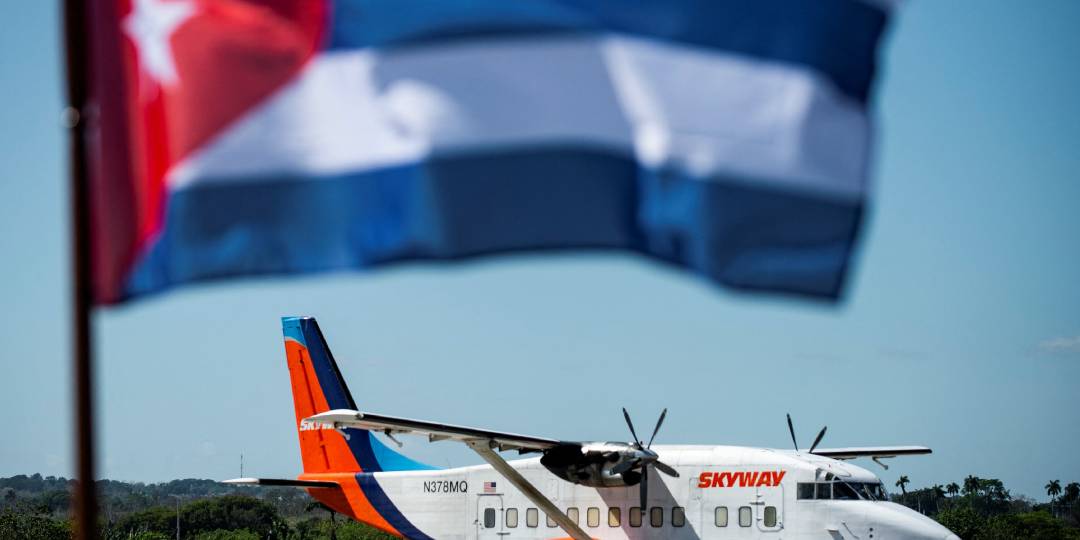

Russia evacuates tourists from Cuba after a severe fuel crisis on the island disrupted aviation operations and left thousands of Russian citizens stranded. Moscow’s aviation authorities confirmed that return-only flights will be operated to bring tourists back home.
The crisis comes amid tightened US restrictions on Venezuelan oil supplies to Cuba, a move that has sharply reduced fuel availability across the island. Havana is facing one of its most serious energy shortages in years.
Russian officials have also advised citizens to avoid travel to Cuba until the situation stabilizes, while Moscow signaled plans to supply oil to the Caribbean nation as what it described as humanitarian assistance.
Flight disruptions force evacuation of Russian tourists
Russia’s federal aviation regulator, Rosaviatsia, said Wednesday that aircraft refueling difficulties in Cuba had forced Russian airlines to revise their schedules.
According to Rosaviatsia, Rossiya Airlines and Nordwind Airlines adjusted their operations due to limited jet fuel supplies at Cuban airports.
In a statement, the regulator confirmed that:
Rossiya Airlines will operate return-only flights from Havana and Varadero to Moscow.
The flights are aimed at evacuating Russian tourists currently in Cuba.
Travel to Cuba is discouraged until the fuel crisis is resolved.
Russia’s Association of Tour Operators stated earlier this week that approximately 5,000 Russian tourists may still be on the island.
Several foreign airlines have also suspended routes to Cuba, including Canada’s Air Transat and WestJet, citing the inability to refuel aircraft reliably.
Cuba fuel crisis linked to US restrictions
Impact of Venezuelan oil supplies
Cuba fuel crisis has intensified following US measures targeting Venezuelan oil exports. Washington has long maintained a trade embargo on Cuba, in place for more than six decades.
According to AFP, recent US actions have significantly restricted Venezuelan oil shipments to the island, sharply limiting Havana’s access to fuel. Venezuelan oil has historically been a key source of energy for Cuba.
The reduced supplies have forced Cuban authorities to introduce strict rationing measures. These reportedly include limiting industrial fuel consumption and restricting aircraft refueling at airports.
The Kremlin, a longstanding political ally of Havana, accused the United States earlier this week of attempting to “suffocate” Cuba economically. Washington has consistently pursued policies aimed at weakening or changing Cuba’s communist-led government.
Russia plans oil deliveries to Cuba
Proposed humanitarian oil assistance
Russian media outlet Izvestia reported Thursday that Moscow is expected to supply oil and petroleum products to Cuba as part of what officials described as humanitarian aid.
Russia’s Ministry of Economic Development told Izvestia that, to its knowledge, shipments could be delivered soon to ease the energy shortage.
If implemented, the move would:
Help stabilize fuel availability on the island.
Support aviation and essential services affected by shortages.
Reinforce Moscow’s political and economic ties with Havana.
Russia and Cuba have maintained close relations for decades, particularly in energy and defense sectors.
Broader regional implications
The developments highlight growing geopolitical tensions in the Caribbean region.
The tightening of US pressure on Venezuela and Cuba has had direct economic consequences, particularly in energy supply chains. The disruption of commercial flights illustrates how the crisis is affecting not only domestic services in Cuba but also international tourism and transportation.
For Iraq and other energy-producing countries, the situation underscores the broader impact of sanctions and energy supply restrictions on global markets and political alignments. However, there has been no official indication of Iraqi involvement in the current developments.
Conclusion:
Russia evacuates tourists from Cuba as the island confronts one of its most severe fuel shortages in recent years. While Moscow prepares emergency flights and considers oil shipments as humanitarian aid, the crisis reflects ongoing geopolitical tensions surrounding US sanctions and regional energy supplies.