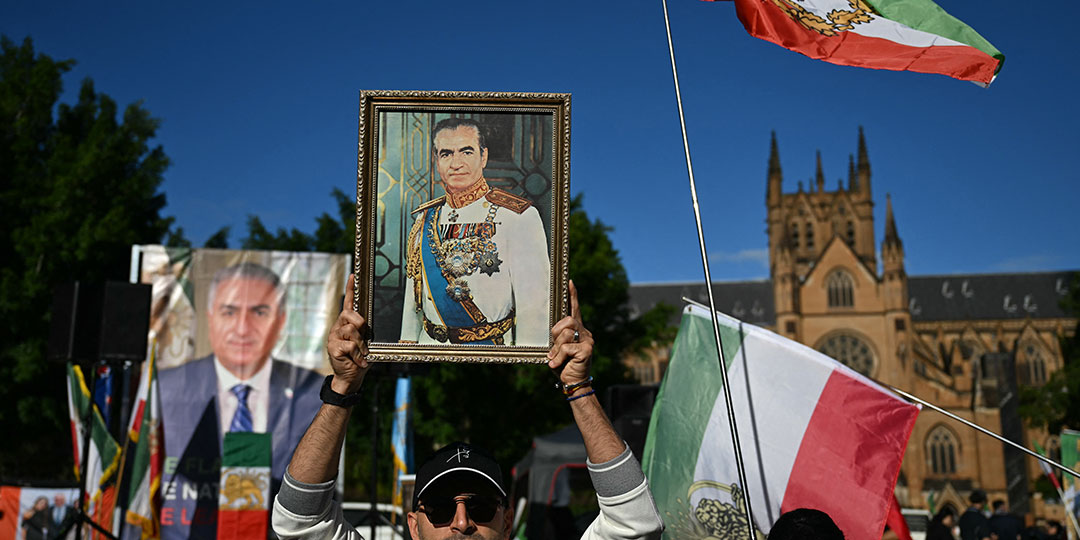

The exiled son of Iran’s deposed Shah declared Saturday his readiness to lead Iran following the collapse of the Islamic Republic, announcing preparations for a transitional government comprising individuals from both inside and outside the country. Reza Pahlavi’s declaration arrived as the three-week-old conflict between Iran and the US-Israeli coalition continues, while Iranian leadership under newly appointed Supreme Leader Majid Khamenei demonstrates determination and institutional continuity despite the assassination of his father Supreme Leader Ali Khamenei.
Pahlavi stated through social media that competent individuals had been identified domestically and internationally to lead various components of a “transitional system” that would be “ready to govern the country immediately upon the fall of the Islamic Republic,” establishing “order, security, freedom and conditions necessary for Iran’s prosperity and growth.”
Pahlavi Outlines Detailed Transition Plans
The exiled former crown prince provided specific details regarding his post-Islamic Republic governance vision. He indicated that selection of transitional government members had been undertaken by Said Qasemi Najad, chief advisor on Iranian affairs at the Foundation for Defense of Democracies (FDD), a prominent American research institution known for fierce opposition to the Islamic Republic.
Pahlavi’s announcement represents the most explicit statement to date from exile leadership regarding power transfer preparations should the Islamic Republic’s institutional structures prove less resilient than current assessments suggest. The involvement of FDD, a neoconservative American think tank, underscores connections between exile opposition leadership and influential American policy circles skeptical of exclusive reliance on military means for regime change.
Uncertain International Backing
Despite Pahlavi’s preparations and public statements, the exiled prince has not secured explicit endorsement from US President Donald Trump, who has repeatedly expressed skepticism regarding Pahlavi’s capacity to effectively lead Iran. Trump responded to questioning about Pahlavi by stating he is “appreciated by some” but that serious substantive discussions have not yet occurred.
Trump indicated preference for leadership “from someone inside Iran,” drawing on Venezuelan precedent where opposition figure Juan Guaidó briefly gained international recognition before losing political viability. Trump stated that “a personality from within might be more suitable” than Pahlavi, reflecting American strategic preference for internally-based alternatives to exile-led successors.
Iranian Leadership Displays Continuity and Determination Despite Catastrophic Losses
Analysts observed that Iranian leadership under newly appointed Supreme Leader Majid Khamenei is emphasizing systemic resilience and determination to perpetuate the Islamic Republic despite severe losses. The assassination of former Supreme Leader Ali Khamenei, who had led Iran since 1989 following the death of Islamic Republic founder Ayatollah Khomeini, represented a catastrophic blow that killed multiple family members and senior security officials in February 28 airstrikes.
The appointment of Khamenei’s son Majid as successor signals the regime’s commitment to preserve continuity and dynastic succession despite unprecedented military pressure and existential external threats to regime survival. This succession mechanism demonstrates the regime’s confidence in institutional capacity to manage leadership transitions through established mechanisms.
Revolutionary Guard Influence Consolidated
Analysts noted that Majid Khamenei’s succession will likely consolidate the Islamic Revolutionary Guard Corps (IRGC), the regime’s ideological foundation and most powerful military-economic institution. The IRGC’s political and economic influence has expanded substantially over the past two decades, and succession by the ideologically hardline Majid—characterized by analysts as closely aligned with IRGC interests—suggests the regime intends to entrench rather than moderate its ideological posture.
The strengthening of IRGC influence under Majid Khamenei indicates that the regime will likely maintain militant positioning and resist accommodationist policies toward Western powers.
Analytical Consensus: Islamic Republic Likely to Survive
Contrary to assumptions that Supreme Leader Khamenei’s assassination and sustained US-Israeli bombardment might precipitate imminent regime collapse, analysts emphasize the Islamic Republic’s demonstrated institutional resilience and proven capacity for succession management.
Thomas Juneau, professor at University of Ottawa, told Agence France-Presse that “the system is flexible and capable of implementing well-coordinated contingency plans,” adding that “continuity is integral to the system and its institutions, and so far there are no indicators of imminent Islamic Republic collapse.”
Juneau characterized the regime as structurally designed to survive leadership transitions through institutional depth and distributed power centers that prevent dependence on individual leaders. The regime’s demonstrated capacity to function across successive crises suggests institutional mechanisms for perpetuating system continuity.
Historical Precedent of Regime Resilience
The Islamic Republic has demonstrated survival capacity across nearly five decades despite multiple existential challenges. The regime endured the devastating 1980-1988 Iran-Iraq War, sustained internal factional struggles, persistent international sanctions, and multiple external military threats. The appointment of Majid Khamenei suggests confidence that existing institutional structures will perpetuate regime continuity despite current military conflicts.
This historical pattern of regime resilience suggests that current hostilities may result in degradation of Iranian military capacity and leadership but not necessarily regime collapse.
Public Display of Regime Defiance at Quds Day Demonstrations
Iranian leadership conducted a symbolic show of regime force and determination Friday by marshaling prominent government and security officials to participate in large-scale Quds Day demonstrations in Tehran, proceeding despite bombing strikes on nearby areas. The public demonstration emphasized regime durability and official refusal to display weakness or fear.
Security Council Secretary Ali Larijani appeared wearing dark sunglasses despite heavy rainfall, asserting that American President Trump fundamentally miscalculated Iranian resolve, declaring that “the more pressure increases, the more determined the nation becomes.” Judicial Chief Gholam Hossein Mohseni Ejei demonstrated official indifference to security threats by remaining unmoved when a nearby explosion shook the demonstration area, conveyed through official television broadcasts.
Strategic Absence of New Supreme Leader
Notably, Supreme Leader Majid Khamenei did not publicly appear at the demonstrations, maintaining the extremely low public profile he has adopted since appointment as Supreme Leader successor. Also conspicuously absent was parliament speaker Mohammad Baqer Qalibaf, former Islamic Revolutionary Guard Corps commander, whom some analysts believe coordinates military operations against the United States and Israel.
The absences may reflect security precautions to protect top leadership, or may indicate internal discussions regarding public visibility strategy and regime narrative management. The selective visibility of some officials while others maintain strategic absence suggests calculated presentation management.
“Dangerous Trajectory” With Absent Clear Exit Routes
Risk analysis experts assessed the conflict as entering a “dangerous trajectory” unlikely to reverse course in the near term. Thorbjorn Soltvedt, assistant director at Verisks Maplecroft risk analysis firm, told Agence France-Presse that the conflict “is taking a dangerous turn unlikely to change soon,” with Iran conducting regular attacks on regional states that have sharply elevated global energy prices.
Soltvedt emphasized the absence of clear diplomatic off-ramps: “Despite intensive American and Israeli aerial bombardment, Iran remains capable of systematically and concerningly targeting maritime traffic and critical energy infrastructure.” He assessed that “the regime has demonstrated considerable flexibility to date, reflecting the broad control and influence of the office of the Supreme Leader, hardline political factions, and the armed forces.”
Iranian Operational Capacity Persists Despite Losses
Despite acknowledging substantial losses in senior leadership and military capabilities, analysts confirmed that Iran retains capacity to conduct systematic military operations against Gulf energy infrastructure and international maritime commerce. This persistence of operational capability contradicts assumptions that intensive bombing campaigns would rapidly degrade Iranian military capacity to negligible levels.
The regime’s ability to maintain offensive operations despite aerial bombardment demonstrates institutional resilience in military command structures and distributed command-and-control systems that survive targeted strikes on senior leadership.
Majid Khamenei’s Authority Contingent on Revolutionary Guard Support
Barbara Slavin, researcher at the Stimson Center, observed that Majid Khamenei’s authority “will depend heavily on continued support from the Revolutionary Guard, whose political and economic influence has expanded substantially over the past two decades.”
Slavin assessed it “unlikely that Majid is prepared to make any concessions to the United States and Israel,” particularly given American and Israeli responsibility for killing Iranians and destroying Iranian infrastructure. The appointment of an ideologically hardline successor aligned with IRGC interests suggests the regime intends to maintain militant positioning rather than pursue diplomatic accommodation or policy moderation.
The dependence of the new Supreme Leader on IRGC support indicates that the Revolutionary Guard will exercise decisive influence over Iranian foreign policy and military strategy during the succession period and beyond.
Potential “Imposed War” Narrative for Regime Survival Claims
Analysts observed that if Iran survives the current conflict, assessed as probable by multiple experts despite severe costs, the regime could adopt a narrative framework similar to that following the 1980-1988 Iran-Iraq War, known in Iran as the “Imposed War,” positioning mere survival as strategic victory.
Juneau noted: “If Iran survives this war, which appears probable so far, it will be able to claim victory.” However, he cautioned that “it would be a costly victory. Its leadership has been decimated, its military capabilities have declined substantially, and its economic infrastructure has been damaged.”
This narrative strategy would allow the regime to claim vindication of its ideological and strategic positioning despite the actual degradation of Iranian power and influence.
Cost-Benefit Analysis of Nominal Survival
Even if the Islamic Republic survives the current conflict, the regime will inherit a profoundly diminished position: assassination of the Supreme Leader and senior officials, significantly reduced military capabilities, damaged economic infrastructure, disrupted energy exports, and regional economic consequences from Strait of Hormuz navigation disruptions.
Nominal survival would represent institutional continuity but not restoration to pre-conflict capabilities and international standing. The regime would face substantial internal reconstruction challenges alongside continued external pressure and potential renewed or expanded international sanctions. The victory narrative, while politically useful domestically, would mask underlying strategic degradation.
International Implications of Pahlavi’s Transitional Government Plans
Reza Pahlavi’s announcement of transitional government preparations signals that exile opposition leadership is positioning itself for potential power transfer should the Islamic Republic’s institutional structures prove less resilient than current analytical consensus suggests. However, the absence of explicit Trump administration endorsement substantially limits the political viability and international credibility of such succession plans.
American historical experience with exile-based leadership transitions, particularly in Venezuela and Cuba, demonstrates that international recognition without substantial internal political support proves insufficient for political viability. Pahlavi’s extended residence abroad and limited connections to contemporary Iranian society may constrain his political acceptability should regime collapse scenarios materialize.
American Strategic Ambiguity Regarding Succession
Trump’s measured response to Pahlavi—expressing non-committal appreciation while indicating preference for internally-based alternatives—reflects American strategic ambiguity regarding post-Islamic Republic governance structures. This deliberate ambiguity may preserve American flexibility to support alternative internal leadership structures should Iranian dissidents or military factions emerge with greater political viability and organizational capacity.
American preference for “someone from within” Iran suggests focus on supporting internal actors over exile-based successors, though this preference has not been formalized into explicit commitments.
Factional Tensions Within Iranian Leadership
The absence of parliamentary speaker Mohammad Baqer Qalibaf, former IRGC commander, from Quds Day demonstrations may reflect factional tensions within regime leadership or different assessments regarding military strategy and communication. The selective visibility of some officials while others maintain strategic public absence suggests ongoing internal discussions regarding regime strategic posture and public presentation.
The differential visibility may indicate competing views within the regime regarding appropriate public responses to military losses and international pressure.
Broader Strategic Context: Regime Resilience vs. Collapse Scenarios
The analytical consensus suggests that while the Islamic Republic faces unprecedented challenges, including assassination of its Supreme Leader, substantial military losses, infrastructure damage, and economic disruption, institutional structures remain resilient and succession arrangements appear functional. This assessment contradicts more optimistic scenarios assuming regime collapse in the near term.
The regime’s demonstrated survival capacity through multiple historical crises, combined with rapid succession mechanisms for the new Supreme Leader and continued institutional power of the Revolutionary Guard, suggests the Islamic Republic will likely persist despite current military pressures and external existential threats.
The analytical consensus does not suggest regime invulnerability, but rather likely institutional continuity despite severe costs and degradation of capabilities.
Conclusion:
Reza Pahlavi’s announcement of readiness to lead a transitional Iranian government represents exile opposition positioning for potential regime change, yet confronts the analytical consensus that the Islamic Republic possesses sufficient institutional resilience to survive the current conflict. Iranian leadership under new Supreme Leader Majid Khamenei demonstrates resolve and continuity through accelerated succession arrangements and public displays of regime durability. While the cost to the Islamic Republic has been severe—including assassination of Supreme Leader Ali Khamenei and substantial military degradation—analysts assess that regime institutional structures will likely perpetuate Islamic Republic continuation, albeit in substantially diminished form. Pahlavi’s transitional government preparations may prove relevant only if internal Iranian dynamics produce regime collapse more rapidly than current expert assessments suggest probable. American strategic ambiguity regarding successor structures preserves flexibility to support alternative internal leadership should viable alternatives emerge.