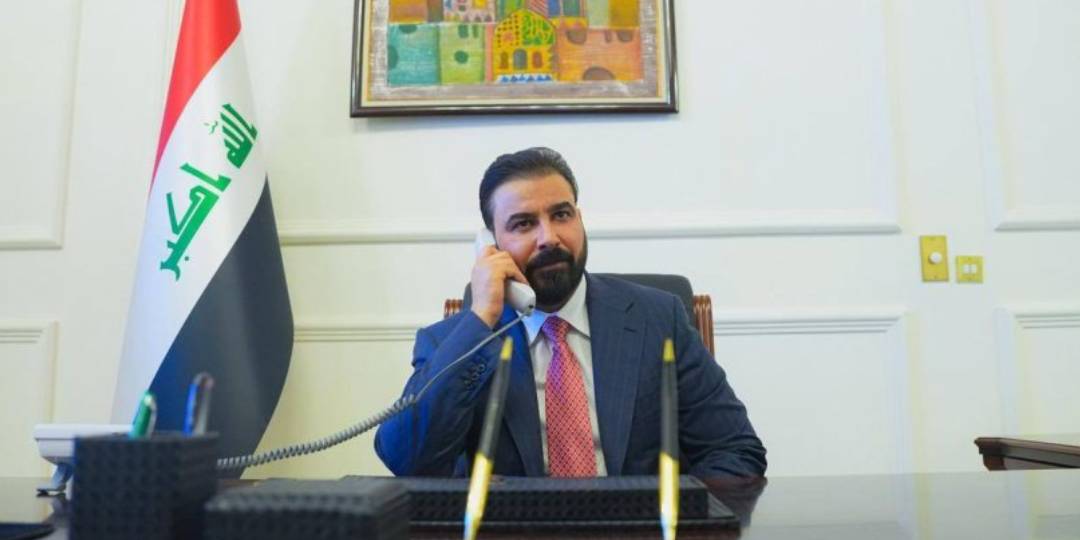

The Iraqi government announced on Friday an official agreement enabling resuming Iranian flights to Najaf Airport at a capacity of 40 flights daily for Iranian air carriers, excluding Mahan Air. The arrangement comes following continuous follow-up by Prime Minister Ali Falah Al-Zidi with international and regional stakeholders to ease travel procedures for passengers, students, patients, and pilgrims traveling between the two neighboring countries.
The breakthrough follows diplomatic engagements conducted in Washington by Iraqi Foreign Minister Fuad Hussein with US Treasury Secretary Scott Bessent. Those consultations led to an understanding regarding the unique religious and humanitarian status of Najaf International Airport, resulting in a targeted exemption from unilateral aviation sanctions to maintain essential passenger travel while preserving regional stability.
Humanitarian Framework and Operational Parameters of the Agreement
The media office of the Prime Minister stated that governmental efforts focused primarily on safeguarding humanitarian, medical, educational, and tourism movement. Prime Minister Al-Zidi welcomed the positive engagement shown by the United States administration in granting the necessary exemption, emphasizing that open communication channels remain capable of delivering practical solutions that serve public interests.
Al-Zidi noted that air transport serves as an essential bridge connecting societies rather than a mere transit link between airports. He highlighted that passenger manifests include medical patients traveling for specialized healthcare, families reuniting across borders, students enrolled in academic institutions, and religious pilgrims visiting holy shrines in Najaf and Karbala.
Key Operational Provisions of the Aviation Agreement
– Authorizing up to 40 scheduled flights per day operating between Iranian airports and Najaf International Airport.
– Applying the operational exemption across Iranian civil aviation carriers while keeping Mahan Air excluded from services.
– Dedicating flight capacities to religious tourism, medical travel, academic transit, and family visits.
– Ensuring full operational oversight and regulatory safety enforcement by Iraqi civil aviation authorities.
Bilateral Diplomacy Between Baghdad and Washington
Foreign Minister Fuad Hussein confirmed via his official account on X that he held extensive discussions in Washington with US Treasury Secretary Scott Bessent, addressing economic developments, regional security dynamics, and the broader impact of sanctions.
Hussein explained that discussions centered on mitigating secondary economic consequences on Iraqi infrastructure, specifically emphasizing the vital importance of Najaf International Airport. He commended the US Treasury’s recognition of religious freedoms and facilitation of access to holy sites, stating that the decision supports an enduring Iraq-US partnership anchored in mutual respect.
Strategic Principles Guiding Iraqi Foreign Policy
– Restricting decisions of peace and war exclusively to sovereign state institutions and constitutional authorities.
– Enforcing the constitutional mandate that all weapons must remain strictly under state control.
– Utilizing balanced diplomatic mediation to address humanitarian and economic challenges facing the public.
– Building constructive international partnerships that protect Iraqi national sovereignty and promote regional de-escalation.
Economic and Logistical Impact for Najaf and Surrounding Provinces
The agreement on resuming Iranian flights to Najaf Airport provides immediate economic relief to commercial sectors across central and southern Iraq. Regular flight schedules directly stimulate local hospitality, hotel occupancy, internal transport networks, retail markets, and service employment throughout Najaf Governorate.
The measure also alleviates logistical pressure on land border crossings, offering a faster and safer transit route for thousands of Iraqi students pursuing higher education abroad and citizens seeking medical consultations, while sustaining vital religious tourism revenues for municipal development.
Conclusion:
The resolution of the aviation file demonstrates the capacity of Iraqi diplomacy to balance international relations while safeguarding core public interests. By facilitating resuming Iranian flights to Najaf Airport for humanitarian and religious purposes, Baghdad reinforces its commitment to pragmatic governance, local economic vitality, and constructive engagement with global partners.