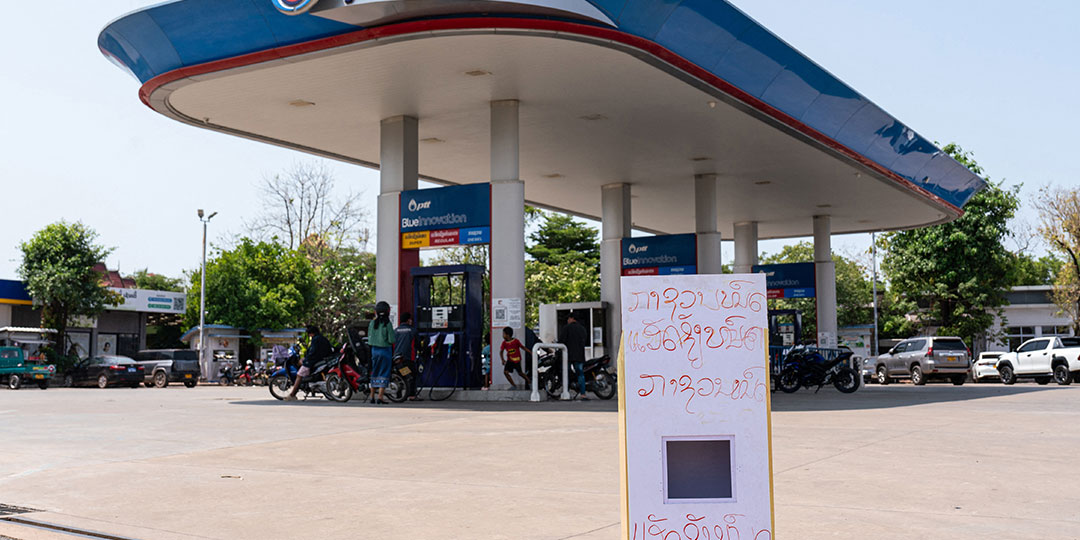

Global oil markets experienced extreme price swings on Tuesday as the International Energy Agency convened emergency meetings to assess potential release of strategic reserves in response to Middle East war-triggered supply disruptions. Crude prices oscillated between sharp declines and gains, reflecting investor uncertainty about energy supply security and the effectiveness of government interventions.
Brent North Sea crude plunged 11.3 percent to $87.80 per barrel after climbing near $120 the previous day, while West Texas Intermediate fell 11.9 percent to $83.45. The volatility underscores the fragility of global oil markets as the Strait of Hormuz remains effectively closed and major refinery operations shut down across the Gulf.
IEA Convenes Crisis Meeting on Strategic Reserve Release
Member states of the International Energy Agency met Tuesday for extraordinary crisis talks to assess security of supply and evaluate the potential release of emergency stocks. IEA executive director Fatih Birol stated that “conditions have deteriorated in recent days” with challenges extending beyond Strait of Hormuz transit restrictions to include “substantial curtailment of oil production.”
“This is creating significant and growing risks for the market,” Birol warned ahead of the meeting. The IEA, created after the 1973 oil crisis to coordinate responses to major supply disruptions, currently holds over 1.2 billion barrels of public emergency stocks, with an additional 600 million barrels of industry stocks held under government mandates.
Birol stated the IEA would assess “current security of supply and market conditions to inform a subsequent decision on whether to make emergency stocks available to the market.” However, the IEA announced no immediate decision following Tuesday’s meeting.
G7 Nations Prepare Emergency Response Framework
French Finance Minister Roland Lescure, whose country holds the rotating presidency of the Group of Seven advanced economies, stated that while the situation was “not there yet” for automatic reserve releases, G7 nations wanted to “be ready to react at any moment.”
“We have asked the International Energy Agency to start working on scenarios and update its stock data so that we have the most recent information,” Lescure told reporters. He noted that North America and Europe currently faced no supply constraints, but Asia remained vulnerable due to its dependence on oil transiting through the Strait of Hormuz.
Approximately 100 million barrels of oil are consumed globally every day, making any sustained supply disruption a catastrophic risk to the global economy.
Major Refinery Shutdowns Escalate Supply Crisis
The UAE’s Ruwais Industrial City, home to the world’s fourth-largest single-site refinery, shut down operations “as a precaution” after drone attacks in the area. State-owned oil company Adnoc confirmed the facility had halted operations, though it remained unclear whether the refinery itself was directly struck.
A driver evacuating personnel from the complex told AFP: “Just as we were about to leave, we saw two more bursts of fire rising from the complex, with loud sounds like explosions.” The closure removes critical refining capacity from global markets already stressed by transit disruptions.
Saudi Aramco’s Ras Tanura facility, one of the Middle East’s largest refineries and a cornerstone of the Saudi energy sector, also halted some operations after being targeted by Iranian attacks. QatarEnergy, one of the world’s largest liquefied natural gas producers, halted production the previous week and declared force majeure, signaling that circumstances beyond producers’ control may prevent meeting export commitments.
Targeted Attack Strategy Against Energy Infrastructure
Iran appears to be implementing a coordinated strategy to maximum impact on global energy supplies by simultaneously targeting major refinery infrastructure and maintaining the Strait of Hormuz blockade. Energy facilities across the Gulf have been struck, including critical production and processing installations.
Kuwait and Qatar have made force majeure declarations, and Saudi oil fields themselves have been targeted. This multi-faceted approach creates cascading disruptions across the entire energy supply chain, not just limiting exports but degrading the region’s processing capacity.
Saudi Aramco Warns of Catastrophic Consequences
Saudi Aramco CEO Amin H. Nasser warned that the conflict could have “catastrophic consequences” for oil markets and called urgently for reopening the Strait of Hormuz, which normally carries approximately 20 percent of global oil supplies. “The disruption has caused a severe chain reaction in not only shipping and insurance but there’s also a drastic domino effect on aviation, agriculture, automotive and other industries,” Nasser stated.
“While we have faced disruptions in the past, this one by far is the biggest crisis the region’s oil and gas industry has faced. It’s absolutely critical that shipping resumes in the Strait of Hormuz,” he added. Nasser emphasized that continued disruption would inflict “catastrophic consequences for the world’s oil markets.”
Broader Economic Implications of Energy Crisis
The energy disruption extends far beyond the oil industry, creating cascading impacts across aviation, agriculture, automotive manufacturing, and other sectors dependent on stable energy costs. The combination of targeted refinery strikes, production curtailments, and export route closure creates what analysts describe as a perfect storm for global economic stability.
Robert Mogielnicki, a scholar at the Arab Gulf States Institute, noted: “The Gulf energy sector is getting whacked from multiple angles. Energy facilities being targeted, export capability through the strait is hampered, and storage capacity filling up.” This multi-vector attack strategy maximizes economic disruption across global supply chains.
Oil Price Volatility Reflects Market Uncertainty
Oil prices swung dramatically throughout the week, surging 30 percent on Monday to nearly $120 per barrel before retreating sharply after President Trump stated the war would be “ended soon.” Tuesday brought continued volatility, with sharp declines followed by a 5.03 percent surge to $87.65 when Trump escalated threats regarding the Strait of Hormuz.
The confusion surrounding an Energy Secretary social media post about Navy escort operations triggered additional price swings. When the post was deleted within minutes, oil prices dove to session lows before recovering. This pattern of oscillation reflects fundamental uncertainty about supply security and government commitment to maintaining energy flows.
Trump threatened Iran with military consequences “at a level never seen before” if it placed mines in the Strait of Hormuz. “If for any reason mines were placed, and they are not removed forthwith, the Military consequences to Iran will be at a level never seen before,” Trump posted Tuesday.
Global Stock Markets React to Oil Price Movements
Stock markets broadly recovered on falling oil prices, with European exchanges gaining over 1.5 percent after European gas prices sank 15 percent. Frankfurt ended up 2.4 percent, while Paris and London each gained approximately 1.6-1.8 percent. Asian markets rallied strongly, with Seoul up more than 5 percent and Tokyo gaining 2.9 percent.
However, Wall Street equities lost ground after the Energy Secretary’s deleted social media post raised and then dashed hopes of Strait of Hormuz reopening. The S&P 500 finished down 0.2 percent while the Nasdaq traded flat. Currency markets reflected risk reassessment, with the dollar strengthening against the euro and pound.
Iran’s Counter-Threat to Oil Exports
Iran vowed that not one liter of oil would be exported from the Gulf while US and Israeli bombardment continues, effectively implementing an export blockade through military means. This threat, combined with successful targeting of refinery infrastructure and maintenance of Strait of Hormuz closure, creates a multi-layered constraint on global supply.
Qatar’s foreign ministry spokesman warned Tuesday that attacks on energy facilities “on both sides, are a dangerous precedent… it will cause repercussions throughout the world.” Qatar’s defense ministry subsequently reported intercepting missile salvos, as did UAE and Bahrain authorities.
Missile and Drone Defense Increasingly Strained
Bahrain reported intercepting 106 missiles and 176 drones since the war’s start, while Kuwait reported intercepting 237 missiles and 445 drones. These defensive successes came at the cost of operational strain on air defense systems and economic disruption from air raid alerts and evacuations.
The sheer volume of incoming threats demonstrates Iran’s determination to maintain pressure across multiple domains. Even successful interceptions require constant vigilance and create economic disruption through business halts and personnel evacuations.
Key Market Indicators (as of Tuesday):
Brent North Sea Crude: Down 11.3 percent at $87.80 per barrel
West Texas Intermediate: Down 11.9 percent at $83.45 per barrel
FTSE 100: Up 1.6 percent at 10,412.24
CAC 40: Up 1.8 percent at 8,057.36
DAX: Up 2.4 percent at 23,968.63
Kospi: Up 5.4 percent at 5,532.59
Nikkei 225: Up 2.9 percent at 54,248.39
S&P 500: Down 0.2 percent at 6,781.48