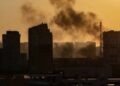
A North Kordofan drone attack killed at least 28 people and injured dozens after a strike targeted a crowded market near the town of Sodari, according to a Sudanese rights group on Monday.
The group, Emergency Lawyers, said the strike took place Sunday evening at Al-Safiya market, an area under the control of the Rapid Support Forces. The toll is preliminary and could rise as more information becomes available.
The incident comes amid intensified fighting between the Sudanese army and the Rapid Support Forces, with both sides increasingly relying on drones in battles across the Kordofan region.
Details of the North Kordofan Drone Attack
In a statement, Emergency Lawyers said drones struck Al-Safiya market, located northeast of Sodari in North Kordofan state, killing at least 28 civilians and wounding dozens with varying degrees of injuries.
The market was reportedly crowded at the time of the strike, including women, children, and elderly residents. The group condemned the targeting of a civilian facility and described the attack as a serious violation of international humanitarian law.
The statement did not assign responsibility for the strike.
Sodari lies about 230 kilometers northwest of El-Obeid, the capital of North Kordofan, which remains under army control. The Rapid Support Forces have been attempting for months to tighten their siege around El-Obeid.
Growing Use of Drones in Kordofan
The Kordofan region has witnessed an escalation in drone warfare in recent months, resulting in:
Increased civilian casualties in populated areas
Damage to infrastructure and essential services
New waves of displacement
Last Wednesday, a separate drone strike killed two children and wounded 12 others in the city of Al-Rahad in North Kordofan. Another attack destroyed a warehouse belonging to the UN World Food Programme in South Kordofan.
Background to the Sudan War
Fighting between the Sudanese army and the Rapid Support Forces erupted in April 2023 and has since evolved into a nationwide conflict. The war has killed tens of thousands of people and displaced more than 11 million, according to the United Nations, which describes the situation as the world’s worst humanitarian crisis.
Kordofan has become a central battleground after the Rapid Support Forces consolidated control over much of the neighboring Darfur region and expanded operations eastward. The region is strategically significant because it:
Links Darfur in the west with Khartoum and eastern Sudan
Contains oil resources and agricultural land
Serves as a key transit corridor for military and commercial routes
Government Position
Separately, Sudanese Prime Minister Kamel Idris said during a press conference in Khartoum, following his participation in the Munich Security Conference, that the government had launched a national initiative to end the war, known as the “Sudan Peace Initiative.”
According to Idris, the proposal calls for the withdrawal of Rapid Support Forces from areas under their control, alongside a ceasefire monitored by a joint mechanism including the United Nations, the African Union, and the Arab League.
He said the government was prepared for dialogue with what he described as “backers of the rebellion,” while stressing that the war had been imposed on the state.
There was no immediate response from the Rapid Support Forces regarding the market strike.
Conclusion:
The North Kordofan drone attack highlights the growing risks facing civilians as drone warfare intensifies in Sudan’s conflict. With frontlines expanding and no confirmed ceasefire in place, humanitarian concerns continue to mount across the country.