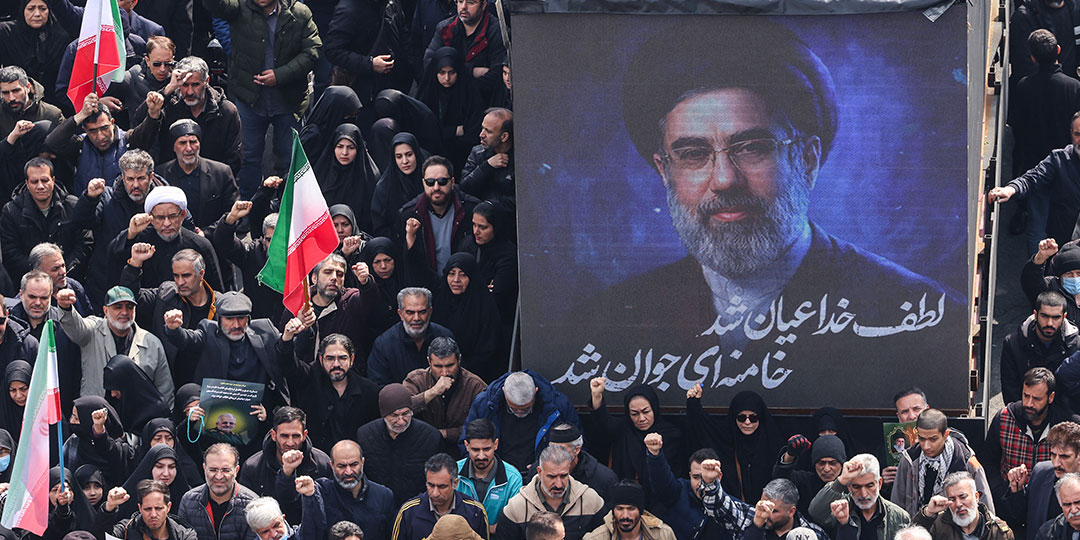

Iran’s ambassador to Cyprus has revealed that the newly appointed supreme leader Ayatollah Mojtaba Khamenei sustained injuries to his legs, arms, and hand during the US-Israeli bombing campaign that killed his father, former supreme leader Ali Khamenei, on February 28. Ambassador Ali Reza Salarian told the British newspaper The Guardian that Mojtaba Khamenei was present at the location targeted in the strike and suffered injuries during the bombardment. The 56-year-old Khamenei has not appeared publicly since being selected as supreme leader on Sunday, fueling widespread speculation about his condition and ability to lead the Islamic Republic during an intensifying regional conflict. The revelation provides the first official confirmation from an Iranian government source regarding Mojtaba Khamenei’s physical status following the attack.
The disclosure comes as Iran escalates military threats and the Revolutionary Guards warn of a prolonged war of attrition against the United States and Israel.
Ambassador Reveals Details of Supreme Leader’s Injuries
Iranian Ambassador to Cyprus Ali Reza Salarian provided specific information about Mojtaba Khamenei’s condition in an interview with The Guardian. The ambassador stated that the new supreme leader “was also there and was injured during that bombing.”
Salarian elaborated on the extent of injuries, saying: “I heard that he was injured in the legs, the hand, and the arm. I think he is in the hospital.”
The ambassador further indicated constraints on the supreme leader’s ability to perform official duties, stating: “I don’t think he is in a condition that allows him to give a speech.”
Conflicting Reports on Supreme Leader’s Status
Official statements regarding Mojtaba Khamenei’s condition have been contradictory:
Ambassador’s account: Confirms injuries to legs, arms, and hand; hospitalization
Presidential family statement: Son of President Masoud Pezeshkian claimed Khamenei is “safe and well”
Media speculation: Days of reports regarding Khamenei’s fate and leadership capability
Public silence: New leader has not appeared publicly since selection
Death of Former Supreme Leader Ali Khamenei
Mojtaba Khamenei’s father, Ali Khamenei, who had served as Iran’s supreme leader since 1989, was killed in an airstrike on February 28 that targeted his residence. The attack marked the opening phase of the joint US-Israeli bombing campaign that initiated the current regional conflict.
Ali Khamenei’s death represents a historic moment in Iranian politics, fundamentally altering the country’s leadership structure during an active military conflict with significant international powers.
Selection Process and Leadership Transition
Mojtaba Khamenei was selected as Iran’s new supreme leader on Sunday following his father’s death. The 56-year-old had served in various positions within the Iranian religious and political establishment prior to his selection to the highest office.
The rapid leadership transition during active military operations created significant uncertainty about the new supreme leader’s ability to manage the complex challenges facing the Islamic Republic.
Revolutionary Guards Warning of Prolonged Conflict
The Islamic Revolutionary Guards Corps issued warnings to the United States and Israel on Wednesday about the potential consequences of continued military operations. Ali Fadavi, an advisor to the commander of the Islamic Revolutionary Guards Corps, stated to state television that the adversaries must consider the possibility of engagement in a prolonged war of attrition.
Fadavi warned: “They (the enemies) must take into account the possibility of their engagement in a long-term war of attrition that will destroy the entire American economy, in addition to the global economy, and will lead to the erosion of all his military capabilities until their complete destruction.”
Iranian Military Threats and Calculations
The Revolutionary Guards articulated specific military and economic threats:
Economic devastation: Prolonged war would destroy American and global economies
Military depletion: Complete erosion and destruction of military capabilities
Extended timeline: War of attrition with no defined endpoint
Regional impact: Broader effects on global economic stability and maritime security
Attacks on Vessels in Strait of Hormuz
The Islamic Revolutionary Guards announced Wednesday that they struck a Liberian-flagged vessel reportedly owned by Israel and a Thai cargo ship in the Strait of Hormuz after both vessels ignored warnings to stop.
According to a statement carried by the Iranian Students News Agency (ISNA), “the Express Rome ship, owned by Israel and flying the Liberian flag, and the container ship Maori Nari were struck by Iranian projectiles and stopped after ignoring warnings from the Islamic Revolutionary Guards naval forces.”
Commander of the Revolutionary Guards naval forces Ali Reza Tangsiri stated on the X platform: “Any ship intending to pass must obtain permission from Iran.”
Escalating Maritime Tensions
The Iranian military actions in the Strait of Hormuz represent serious escalation:
Vessel attacks: Direct strikes on international shipping
Forced compliance: Compelled ships to cease operations through military force
Blockade assertions: Iran claiming de facto control over critical waterway
International commerce impact: Disruption of global shipping through strategic corridor
Strait of Hormuz Strategic Importance
The Strait of Hormuz represents one of the world’s most critical maritime chokepoints, with approximately one-third of global seaborne oil trade transiting through its waters. Iranian military actions threatening commercial vessels in this waterway carry significant implications for global energy security and international commerce.
Control or disruption of traffic through the strait directly impacts global oil prices and energy supply chains worldwide.
Unconfirmed Status and Leadership Questions
Conflicting reports about Mojtaba Khamenei’s condition raise questions about Iran’s leadership structure during active conflict. The ambassador’s revelation that the new supreme leader may be hospitalized and unable to deliver speeches suggests potential constraints on his authority and decision-making capability.
Such limitations could significantly impact Iran’s ability to manage the military conflict effectively and coordinate strategic responses to ongoing military operations.
Political Implications of Khamenei’s Injuries
If confirmed, injuries sustained by the new supreme leader carry important political implications:
Leadership capability: Questions about physical and mental fitness to lead
Decision-making: Potential impact on strategic choices during conflict
Institutional stability: Concerns about power consolidation and authority
International perception: Signals regarding Iranian leadership’s strength and stability
First Official Acknowledgment
The ambassador’s statement represents the first official acknowledgment from an Iranian government source regarding details of the new supreme leader’s condition. The revelation breaks days of official silence about Mojtaba Khamenei’s status following his selection as supreme leader.
The disclosure suggests growing international pressure for information and acknowledgment of the supreme leader’s condition, particularly given the strategic importance of leadership stability during regional conflict.
Revolutionary Guards’ Escalatory Posture
The concurrent warnings from the Revolutionary Guards about prolonged war of attrition and the military attacks on vessels in the Strait of Hormuz suggest an escalatory posture by Iranian military forces. These actions indicate continued Iranian determination to project power and impose costs on adversaries despite potential constraints on central leadership.
The Revolutionary Guards’ apparent independent operational capability raises questions about command structure and decision-making authority during this period of leadership transition.
International Reaction and Concern
The reports of injuries to Iran’s new supreme leader and escalating military actions have prompted concern among international observers about regional stability and the potential for further escalation. The revelation of leadership vulnerability amid military conflict creates uncertainty about Iranian decision-making and strategic direction.
International powers and regional actors are monitoring the situation closely, assessing implications for conflict trajectory and prospects for de-escalation.
Contradictions in Official Statements
The contradiction between the ambassador’s account of injuries and the statement from the president’s son that Khamenei is “safe and well” creates ambiguity about the new supreme leader’s true condition. Such contradictions suggest possible attempts to manage information and public perception regarding leadership status.
The discrepancies underscore the information vacuum surrounding the new supreme leader’s actual condition and capability to exercise authority.
Impact on Regional Security Calculations
If Iran’s new supreme leader is incapacitated or significantly wounded, it could impact regional security calculations by multiple actors. Adversaries may reassess threat assessments based on perceived leadership weakness, while allies may reconsider commitment levels depending on perceptions of Iranian resolve and capability.
Such shifts in calculation could either increase or decrease conflict escalation depending on how various parties interpret perceived Iranian vulnerability.
Conclusion:
The Iranian ambassador’s confirmation that newly appointed supreme leader Mojtaba Khamenei sustained injuries during the US-Israeli bombing campaign raises significant questions about Iran’s leadership structure and decision-making capacity during an active military conflict. The 56-year-old’s reported hospitalization and apparent inability to deliver speeches suggest constraints on his authority precisely when strong centralized leadership is critical for managing the escalating regional crisis. Concurrent warnings from the Revolutionary Guards about prolonged war of attrition and military attacks on international vessels in the Strait of Hormuz indicate Iran’s determination to escalate military pressure despite potential leadership constraints. The combination of a wounded supreme leader, military escalation, and information contradictions creates substantial uncertainty about the future trajectory of the Iran-US-Israel conflict and the stability of Iran’s political and military command structures during this critical period.