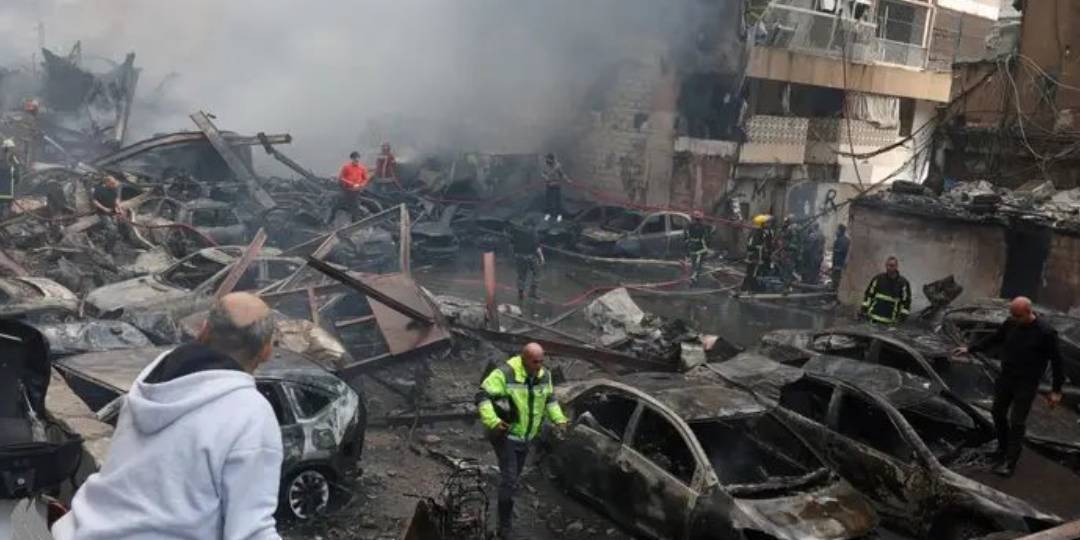

Lebanon’s Health Ministry announced that the cumulative death toll from Israeli military operations since March 2 has risen to 2,491 killed and 7,719 wounded. The casualty figures reflect extraordinary human suffering resulting from over 53 days of intensive bombing and military operations across multiple Lebanese regions. The Health Ministry issued the updated statistics as conflict continues despite announced ceasefire arrangement, with Israeli military operations and Lebanese defensive responses persisting.
Simultaneously, the Islamic Resistance (Hezbollah) announced the successful interception and destruction of an Israeli surveillance drone over the Tyre region using air-to-ground missile. The incident reflects continued Israeli violations of ceasefire terms and ongoing Lebanese defensive operations. The convergence of updated casualty statistics and continued military operations suggests that ceasefire arrangements have not achieved genuine stabilization.
Casualty Figures Continue Rising
The Lebanese Health Ministry released updated casualty data reflecting accumulating toll of Israeli military operations. The ministry statement declared: “Total casualties from Israeli aggression since March 2 to April 24 have risen to 2,491 killed and 7,719 wounded.”
The figures represent extraordinary magnitude of human loss. The statement’s brevity contrasts sharply with the gravity of the statistics, reflecting both the routine nature of casualty announcements and the overwhelming scale of losses. The continued upward revision of casualty figures suggests that casualty accumulation continues despite ceasefire declarations.
Analysis of Casualty Figures
The statistics reveal several critical aspects:
Mortality Rate:
- 2,491 total deaths since March 2
- Approximate daily average: approximately 47 deaths per day
- Total duration: 53 days (March 2 through April 24)
- Sustained high death rate throughout period
Wounded-to-Death Ratio:
- 7,719 wounded
- Wounded-to-killed ratio approximately 3.1:1
- Indicates severe injuries accompanying most operations
- Suggests sustained intensive casualty-producing operations
Cumulative Impact:
- Total casualties exceed 10,200 persons
- Means approximately 5 percent of Lebanese population directly affected
- Represents massive scale of human displacement and trauma
- Creates enormous medical and humanitarian burden
Human Suffering and Humanitarian Crisis
The casualty figures translate into genuine human devastation:
Family and Community Impact:
- Thousands of families lost primary breadwinners
- Children orphaned and families fractured
- Psychological trauma affecting millions
- Social structures damaged throughout affected regions
Medical System Strain:
- Hospital systems overwhelmed with casualties
- Medical supplies severely depleted
- Healthcare workers operating under extreme stress
- Shortage of blood supplies, medicines, and surgical equipment
- Inability to provide adequate care despite best efforts
Displacement and Refugee Crisis:
- Hundreds of thousands internally displaced
- Housing destroyed or made uninhabitable
- Families scattered and separated
- Uncertainty regarding return timelines
Hezbollah Downs Israeli Surveillance Drone
Islamic Resistance announced successful destruction of Israeli military aircraft. The statement declared: “In response to the enemy’s breaches of ceasefire and its encroachment on Lebanese airspace, fighters of the Islamic Resistance brought down an Israeli military drone of the Hermes 450 Zeek type over the Tyre-al-Hawash area using an air-to-ground missile.”
The incident demonstrates continued Lebanese defensive capabilities and ongoing Israeli reconnaissance operations in violation of ceasefire terms.
Details of Drone Interception
The operational details provide military context:
Aircraft Details:
- Drone type: Hermes 450 Zeek
- Designation: Israeli military surveillance platform
- Function: Reconnaissance and intelligence gathering
- Capabilities: Extended range and duration surveillance
Weapon System:
- Defense weapon: Air-to-ground missile
- Effectiveness: Demonstrated capability to engage aerial targets
- Implication: Advanced air defense capability
Location and Significance:
- Region: Tyre (Sour) southern Lebanon
- Specific area: Tyre-al-Hawash
- Geographic importance: Southern border region
- Implication: Continued military operations in ceasefire zone
Continued Israeli Ceasefire Violations
Hezbollah’s statement explicitly identifies violations: Israeli aircraft continuing to encroach on Lebanese airspace despite ceasefire agreement. The statement attributes drone deployment to deliberate violations and “encroachment” on Lebanese airspace.
Categories of Violations:
- Continued reconnaissance operations
- Deployment of surveillance assets
- Airspace incursions
- Failure to respect agreed boundaries
Implications:
- Ceasefire has not achieved genuine stabilization
- Israeli military continues operations
- Threat to Lebanese civilians persists
- Lebanese defensive posture must remain activated
Lebanese Defensive Capabilities Demonstrated
The successful drone interception reveals Lebanese military competencies:
Radar and Detection Systems:
- Capability to detect airborne targets
- Real-time tracking capacity
- Integration of detection with defensive systems
Missile Systems:
- Air-to-ground missile availability
- Demonstrated accuracy
- Rapid deployment capability
- Operational readiness
Command and Control:
- Integrated operational coordination
- Real-time decision making
- Effective target engagement protocols
Civilian Infrastructure Damage Accompanying Casualties
Beyond human casualties, Israeli operations have inflicted massive infrastructure damage:
Residential Destruction:
- Thousands of homes destroyed or severely damaged
- Hundreds of thousands rendered homeless
- Loss of personal possessions and family heirlooms
- Psychological impact of destroyed family homes
Critical Infrastructure:
- Hospital and medical facility damage
- Educational institution destruction
- Transportation networks compromised
- Power and water system disruption
- Fuel shortage affecting basic services
Medical System Overwhelmed
The Lebanese health system faces catastrophic challenges:
Immediate Medical Needs:
- Emergency care for thousands of wounded
- Surgical procedures exceeding capacity
- Blood transfusion services depleted
- Critical medicines in short supply
- Intensive care beds exceeded
Healthcare Worker Crisis:
- Medical personnel exhausted and traumatized
- Ongoing threat to healthcare facilities
- Difficulty attracting international medical assistance
- Psychological impact on medical professionals
International Humanitarian Response
The scale of humanitarian crisis has attracted international attention:
Humanitarian Organizations:
- Red Crescent and Red Cross operations
- International NGO assistance efforts
- UN humanitarian coordination
- International medical volunteer deployments
Critical Needs:
- Emergency food and water
- Medical supplies and medications
- Shelter and temporary housing
- Psychosocial support services
- Reconstruction materials
Questions of International Accountability
The casualty scale raises serious accountability questions:
Documentation Efforts:
- Recording of atrocities and violations
- Forensic investigation of targeting
- Witness testimony collection
- Evidence preservation for future proceedings
Potential Accountability Mechanisms:
- International Criminal Court jurisdiction
- UN fact-finding missions
- Hybrid tribunal possibilities
- Civil litigation for damages
Path Forward for Stabilization
Genuine resolution requires multiple components:
Military Ceasefire:
- Complete cessation of hostilities
- Verified withdrawal of military assets
- Establishment of demilitarized zones
- International monitoring mechanisms
Humanitarian Response:
- Immediate relief for displaced persons
- Reconstruction of infrastructure
- Psychological support services
- Long-term development assistance
Political Resolution:
- Comprehensive peace agreement
- Sovereignty and territorial integrity restoration
- Return of displaced populations
- International guarantees and verification
Conclusion:
The Lebanese Health Ministry’s casualty figures represent an extraordinary human tragedy. 2,491 deaths and 7,719 wounded translate into immeasurable suffering for Lebanese families and communities. The continued Israeli ceasefire violations, as evidenced by drone operations and Hezbollah’s defensive response, indicate that military conflict persists despite announced arrangements.
Genuine stabilization requires comprehensive diplomatic resolution addressing fundamental territorial, political, and security issues. Temporary ceasefires that permit continued military operations provide insufficient basis for lasting peace. The international community must commit to supporting sustainable resolution that ends Israeli military aggression permanently and enables Lebanese population return to normal life. The humanitarian cost of continued conflict has already proven devastating; further escalation would compound the tragedy.