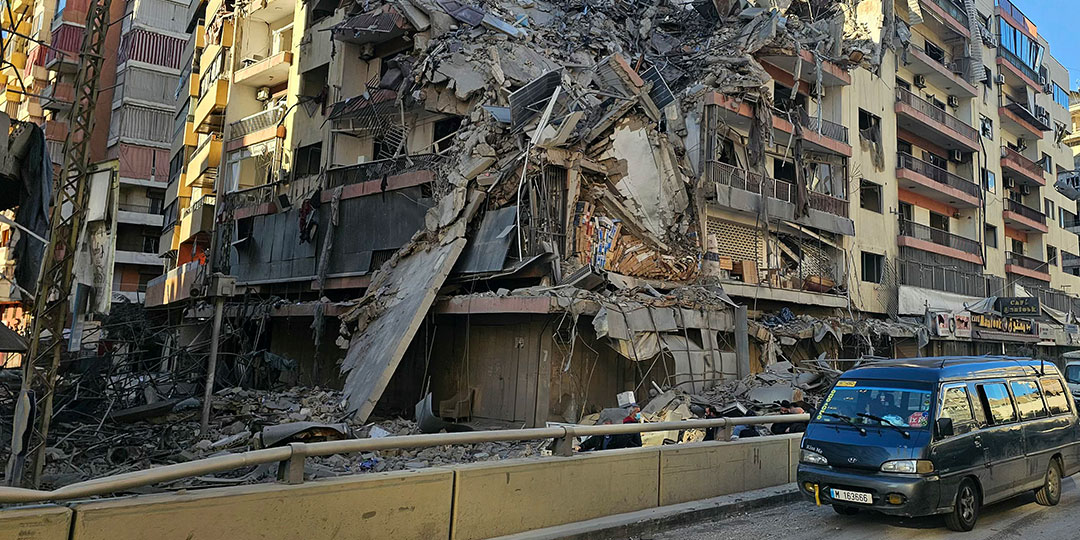

Eight people, including a municipal official and his wife and an entire family of four, were killed in intensive Israeli strikes on multiple areas across southern and eastern Lebanon on Thursday, according to official Lebanese authorities. The strikes come as part of a broadened military operation Israel launched in response to Hezbollah’s rocket fire into its territory.
Israel expanded the scope of its strikes on Thursday to include numerous towns in southern Lebanon, Hezbollah’s stronghold in Beirut’s southern suburbs, and the city of Zahlé in eastern Bekaa. The expanded military operation was accompanied by evacuation warnings targeting tens of thousands of residents with immediate orders to leave their homes.
The military operations resulted in the displacement of more than 83,000 people from their homes across multiple regions, according to Lebanese authorities, reflecting an acute humanitarian crisis likely to worsen as operations continue.
Direct Targeting of Civilians in Southern Regions
An Israeli strike targeted the town of Al-Kfour in Nabatiyeh Governorate in southern Lebanon, killing the town’s municipal official and his wife. The National News Agency described the strike as a direct “air raid” on the official’s home.
In the eastern town of Zoutar in the same region, an Israeli strike on a residential building killed an entire family of four consisting of a man, woman, and two children, following direct targeting by “enemy military aircraft.”
Israel also struck a vehicle on the outskirts of Zahlé city in eastern Bekaa on Thursday morning, resulting in two deaths according to Lebanon’s Health Ministry report.
Strikes on Airport Road and Northern Areas
Three people were killed in two consecutive Israeli strikes on vehicles along the road connecting Beirut to its international airport late Wednesday. The Israeli military stated it targeted two Hezbollah operatives, while Lebanon’s Health Ministry reported three deaths and six wounded “from Israeli enemy strikes on the airport road” adjacent to Beirut’s southern suburbs.
The two strikes came minutes apart, targeting vehicles on the same route. Social media videos showed the first vehicle engulfed in flames immediately after the strike, followed minutes later by the targeting of a second vehicle on the opposite lane.
After midnight, Israel struck an apartment in Al-Badawi refugee camp for Palestinians in Tripoli in the north, killing a Hamas leader and his wife, according to the Lebanese National News Agency.
Strikes on Hezbollah’s Beirut Southern Suburbs Stronghold
Israel struck a building in the Hara Hariek neighborhood of Beirut’s southern suburbs, where Hezbollah is based. A massive cloud of smoke rose from the site following the strike, with explosion echoes heard across areas outside the capital.
The Israeli military issued an advance warning late Wednesday for residents of the building and surrounding area in Hara Hariek to evacuate immediately before the strike, demanding civilians vacate any Hezbollah-affiliated facilities in the area.
Widespread Evacuation Orders and Ongoing Threats
The Israeli military on Thursday renewed evacuation orders for residents of the area south of the Litani River to immediately evacuate their homes. The evacuation zone extends 30 kilometers along the Lebanese-Israeli border, including the strategic towns of Tyre and Bint Jbeil.
The military warned that “any building used by Hezbollah for military purposes may be targeted,” effectively applying a blanket threat to residential structures without specific military designation.
Mass Displacement and Accelerating Humanitarian Crisis
Israeli military operations have resulted in the displacement of more than 83,000 people from their homes across southern, eastern, and other regions, according to Lebanese authority reports. This figure reflects an acute humanitarian crisis with potential for significant expansion as military operations continue.
Hezbollah’s Position and Military Response
Hezbollah Secretary-General Naim Qassem said Wednesday the organization will confront “Israeli-American aggression” and “will not surrender” despite the vast disparity in military capabilities. Qassem emphasized the group’s firm rejection of any settlement.
Hezbollah launched a barrage of rockets and unmanned aircraft late Monday night at Israeli territory, announcing it was “retaliation” for the death of Supreme Leader Ayatollah Ali Khamenei in the American-Israeli offensive against Iran last Saturday.
War Expansion and Ground Penetration
Israel responded to Hezbollah’s rocket fire with intensive strikes across Lebanon, particularly targeting the south and Hezbollah’s Beirut southern suburbs stronghold. Israel began deploying military units into southern Lebanon on Wednesday, announcing its intention to establish a “buffer zone” to protect its northern border communities.
The ground operation represents a significant escalatory step following days of intensive aerial bombardment, suggesting the conflict is shifting toward a prolonged ground warfare model.
Conclusion
Lebanese regions are experiencing an unprecedented military escalation with continued increases in civilian casualties and forced displacement. Thursday’s strikes across multiple regions, including direct targeting of residential areas, reflect a broadened military strategy. The humanitarian crisis is intensifying by the hour, with indicators pointing to sustained escalation in coming days.