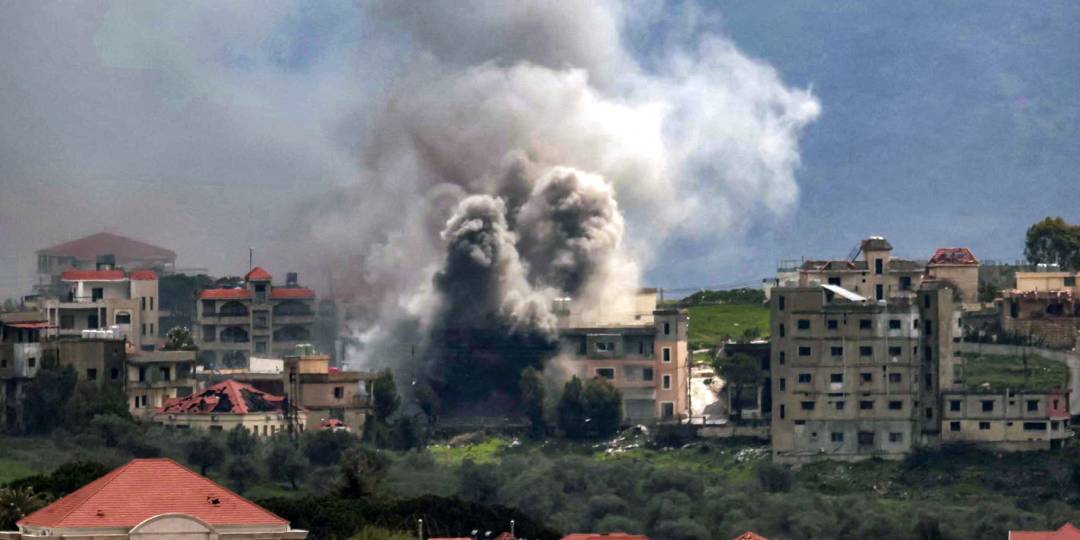

Dr. Hassan Fakieh and hundreds of thousands of Lebanese fled southern Lebanon to escape the devastating war, only to encounter a new obstacle: most hotels and property owners are refusing to house them. The rejection stems from fear that the Israeli military will target hotels and residential buildings sheltering displaced persons, particularly after Israel struck two hotels in Beirut and its suburbs since hostilities with Hezbollah began on March 2, 2026.
Fakieh told AFP in desperation, “I left no one or place where I didn’t ask about an apartment. We searched in several areas and got no response,” adding “they either refused to rent to us or demanded extortionate prices.” Ultimately, Fakieh was forced to separate from his family, sending his wife and children to live in a small room with his son near his university north of Beirut, while he lives alone near the hospital where he works.
War Displaces More Than 830,000 Persons
The war between Israel and Hezbollah has triggered massive displacement unseen in Lebanon for years. The conflict has displaced more than 830,000 persons according to government statistics, with 130,000 sheltered in official reception centers. Others resorted to renting apartments or hotel rooms, moving in with relatives and friends, or pitching tents near the Mediterranean coast and on Beirut streets. Some sleep in their vehicles.
Yet this option has become increasingly difficult as security concerns dominate residents’ thinking. A resident of the Hamra district in west Beirut told AFP that his building’s inhabitants refused to accept displaced relatives of their neighbors from the south, fearing Israeli targeting. The man, who requested anonymity, explained “we feel for the displaced, but a small mistake could turn into a catastrophe.”
Makeshift Shelters and Vehicle Sleeping
Large numbers resorted to less safe and comfortable alternatives. Many established tents near the Mediterranean shore or on Beirut streets, while others sleep inside vehicles. These images reflect the tragic reality of displaced Lebanese whom hotels and property owners deem dangerous to existing residents.
Discriminatory Rental Practices Based on Gender and Age
Hotel owners have begun implementing discriminatory criteria for apartment rentals. Ali Serhan, who manages serviced apartments in the Hamra district, now refuses to rent to middle-aged men. He states bluntly “only for women and elderly persons, or for men I know beforehand.” When families approach wanting to rent, he asks about their employment and origins “to verify their background.”
These discriminatory practices reflect the level of fear that has gripped Lebanon’s residential sector amid the ongoing war.
Security Cell Fears
The primary concern articulated by Serhan and other property owners involves the presence of alleged “security cells” or persons working against Lebanese authorities among the displaced population. Pierre al-Ashqar, president of the hotel owners’ union, told AFP that the new situation demands “stricter measures,” adding “we face illegal security cells who bring in groups known to be targeted by Israel and expose hotels to bombing.”
Municipalities Impose New Security Requirements on Tenants
Several Lebanese municipalities have enacted strict measures monitoring displaced persons. Bikfaya municipality northeast of Beirut announced an “absolute ban on renting or sheltering any person, even on a basis of tolerance or family ties or personal friendship, without notifying the municipality and obtaining prior approval.”
In the northern Beirut suburb of Dekwaneh, the municipality issued similar directives fearing the presence of a “fifth column” among renting displaced residents. Municipality chief Antoine Shkhtur told AFP “it is best to be cautious and careful because we do not know who might be among the strangers coming to the area.”
New Security Procedures in Hotels
Hotels have imposed new security measures restricting visitor and resident movement. At one Beirut hotel entrance, guests encounter a notice announcing new security procedures allowing management to verify guest identities at any time, with prohibitions on guests receiving visitors in lobbies or rooms.
At Lancaster Plaza Hotel, reception supervisor Mohamed al-Hajj stated that “entry and exit occurs exclusively through the main gate,” passing through security personnel. Additionally, “delivery workers are no longer permitted entry,” and restaurants are now “exclusively designated for guests.”
Impact on Hotel Occupancy Rates
Israeli attacks on hotels have severely impacted occupancy rates. Al-Hajj noted that “many guests became frightened after the unexpected attack and departed,” reducing occupancy rates by fifty percent.
Israel’s targeting of the Ramada Hotel in Beirut and another hotel in the Hazmieh district demonstrates hotels have not been fortunate in avoiding bombardment. On the Ramada Hotel’s facade in Raouche, the fourth-floor room struck remains visible without windows and with charred walls.
Hotel Union Issues New Directives
The hotel owners’ union sent a circular directing the “organization of guest movement, ensuring visitors are not substituted for permanent residents” and prohibiting hotels from booking on behalf of persons or groups. Union president Pierre al-Ashqar revealed that “certain individuals were booking rooms then providing them to their visitors,” complicating identification of actual room occupants.
The Ramada Hotel now conducts “security assessments” of guests before approving their admission, supplementing assessments conducted by authorities.
Courts Prosecute Hezbollah Members for Weapons Possession
From a legal perspective, the government commissioner for Lebanon’s military court has filed charges against four Hezbollah members for weapons possession and transport. A judicial source stated that Judge Claude Ghanem “charged four Hezbollah members, with two arrested while transporting rockets toward southern Lebanon, while the other two were found possessing unlicensed military weapons.”
Ghanem referred the case with the detainees to Judge Ghada Abu Alwan for interrogation and requests for arrest warrants. These actions followed Lebanese authorities’ decision to ban Hezbollah’s military and security activities and demand weapon surrender. The Lebanese army announced arresting 27 persons for weapons possession.
Earlier Trials and Lenient Sentencing
Earlier in March, three Hezbollah members appeared before the military court and were interrogated for unlicensed weapons possession. The court ordered their release on bail of approximately twenty dollars, sparking criticism from Hezbollah opponents who considered the sentence overly lenient.
Death Toll Rises to 886 Including 111 Children
Lebanon’s Health Ministry announced updated casualty figures on Monday. At least 886 persons have died in Lebanon including 111 children during the war erupting approximately two weeks earlier. The ministry stated “the total number of martyrs reached 886, with 2,141 wounded.”
The casualty count includes 38 healthcare workers, reflecting enormous pressure on medical infrastructure. Sunday’s previous count reported 850 dead, meaning approximately 36 persons were killed within a single day.
Children and Healthcare Workers Among Victims
The figure of 111 children among casualties reflects the war’s tragic humanitarian scope. The deaths of 38 healthcare workers indicate that medical infrastructure and medical personnel themselves became targeting objectives.
Turkey Condemns Israeli Ground Operations
Turkey strongly condemned Israel’s ground operations in Lebanon on Monday. Turkey’s Foreign Ministry stated in a statement “we strongly condemn the Israeli ground operation in Lebanon which increases instability in the region.”
Turkey warned of a “new humanitarian catastrophe” in the Middle East, accusing the Netanyahu government of “implementing policies of genocide and collective punishment, this time in Lebanon.”
Context of Displacement and Humanitarian Crisis
The housing crisis for displaced Lebanese residents and the hardened security measures in hotels reflect the scale of fear and security deterioration beginning to dominate Lebanese society amid the war. With death tolls rising to 886 and more than 830,000 displaced, Lebanon faces an enormous humanitarian and housing crisis. New security restrictions and discrimination against displaced persons reflect how deeply divided and polarized Lebanese society has become due to the war. With continued Israeli military operations and prosecutions of Hezbollah members, Lebanon appears destined for years of instability and humanitarian suffering.
Conclusion:
The closure of Lebanese hotels and apartment buildings to displaced persons exemplifies the humanitarian crisis unfolding within the broader regional conflict. As displacement exceeds 830,000 and death tolls mount to 886, Lebanon’s residential sector has become a microcosm of broader societal fracturing. Security concerns, whether legitimate or exaggerated, have created a crisis within the crisis where those fleeing violence face rejection from their own communities. Turkey’s condemnation of Israeli ground operations and ongoing prosecutions of Hezbollah members signal that the conflict shows no signs of de-escalation, with Lebanon likely to endure prolonged instability and deepening humanitarian challenges as the war continues.