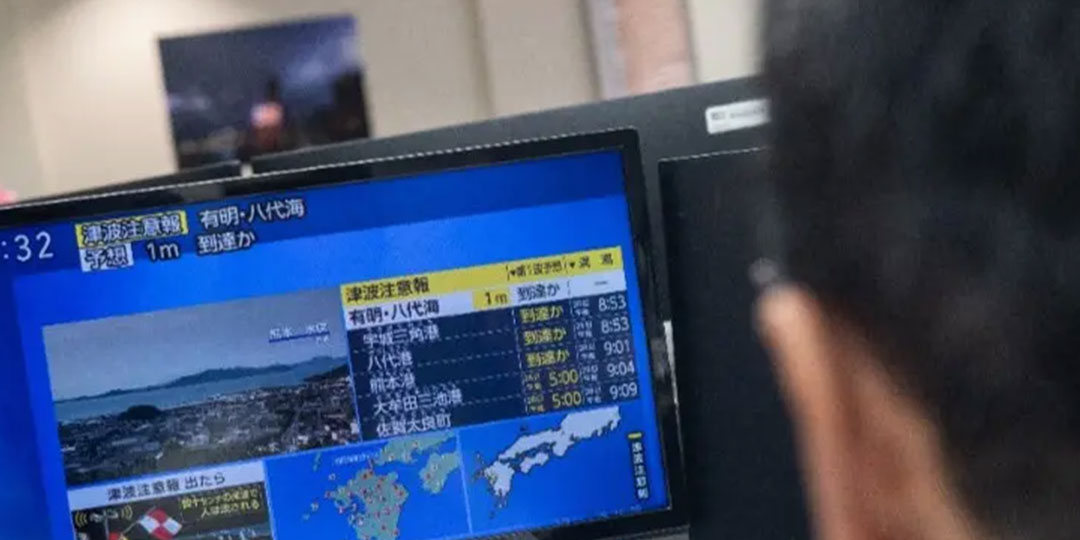

A powerful 7.1 magnitude earthquake struck southwestern Japan on Tuesday, prompting the Japan Meteorological Agency to issue a tsunami warning before lifting it later after reassessing the risk of dangerous waves.
The earthquake, which hit the island of Kyushu, caused injuries, building collapses and fires, while emergency teams continued search and rescue operations amid reports of people trapped under debris.
Strong Earthquake Hits Southwestern Japan, Triggering Tsunami Alert
The Japan Meteorological Agency confirmed that a 7.1 magnitude earthquake struck southern Japan, with the intensity reaching the highest level on Japan’s Shindo seismic scale.
Following the earthquake, authorities issued a tsunami warning as a precautionary measure, before canceling the alert less than two hours later after determining that the risk of significant waves had decreased.
Kyushu Island at the Center of the Earthquake
The earthquake struck the Kyushu region in southwestern Japan, an area known for seismic activity due to its location near active tectonic boundaries.
The strength of the tremor prompted authorities to activate emergency response measures and assess possible damage in nearby communities.
Injuries, Collapsed Buildings and Rescue Operations Continue
Japanese media reported that at least 50 people were taken to hospitals following the earthquake, while authorities confirmed the collapse of 12 homes.
Four of the collapsed buildings reportedly had people trapped beneath the rubble, prompting firefighters and rescue teams to intensify search efforts.
Initial reports also indicated that fires broke out in some affected areas, adding further challenges for emergency responders.
Commercial Building Collapse Raises Concerns
Concerns increased after reports emerged of the collapse of part of a commercial center in Kumamoto Prefecture.
Japanese broadcaster TBS reported that a “large number” of people were killed in the collapse, although local police said they could not immediately confirm casualty figures.
Firefighters continued efforts to reach people believed to be trapped inside the damaged facility.
Japan Lifts Tsunami Warning After Risk Assessment
The Japan Meteorological Agency later lifted the tsunami warning issued after the earthquake, following assessments that the likelihood of dangerous waves had declined.
Japan maintains one of the world’s most advanced earthquake monitoring and disaster response systems due to its long history of dealing with major earthquakes and tsunamis.
Emergency Preparedness Remains Critical
Japan is among the countries most vulnerable to seismic activity, relying on advanced warning systems, strict construction standards and emergency response plans to reduce the impact of natural disasters.
The latest earthquake highlights the importance of maintaining readiness as authorities continue monitoring aftershocks and potential risks.
Authorities Assess Damage as Rescue Efforts Continue
Japanese authorities are continuing to evaluate the full scale of damage caused by the earthquake while rescue operations remain underway in affected areas.
The initial reports indicate significant damage, injuries and infrastructure disruption, while the final impact is expected to become clearer after emergency teams complete their assessments.
Challenges Following the Earthquake
Authorities are focusing on locating trapped residents, inspecting damaged buildings and preventing additional risks such as fires, structural collapses and infrastructure failures.
Conclusion:
The 7.1 magnitude earthquake that struck southwestern Japan tested the country’s disaster response capabilities after causing injuries, building collapses and fires while triggering temporary tsunami concerns. Although the tsunami warning was later lifted, rescue teams continue operations to determine the full extent of damage and assist affected residents.