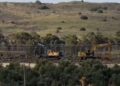
Israel Lebanon border tensions intensified on Tuesday after the Lebanese army said Israeli forces targeted the perimeter of a new observation post in the south. The incident came as Beirut expressed growing concern over potential Israeli strikes on strategic infrastructure if the regional confrontation with Iran escalates.
Lebanon is attempting to avoid being dragged into any widening conflict, yet continued cross border incidents and warnings from officials are fueling anxiety across the country.
Lebanese army reports Israeli fire near new border position
The Lebanese army announced that it was installing a new observation post along the southern border when Israeli gunfire struck the surrounding area. According to the military’s statement, troops were ordered to reinforce their position and return fire if necessary.
The brief confrontation added to an already volatile environment along the Lebanon Israel frontier where exchanges of fire and airstrikes have persisted despite previous ceasefire arrangements.
Army reinforcement measures
The military command, citing its limited but active deployment along the border, said personnel were instructed to:
• Strengthen the newly established observation post
• Hold their ground despite Israeli fire
• Respond to any further targeting from the Israeli side
Beirut fears potential Israeli strike on key infrastructure
At a separate event in Geneva, Lebanese Foreign Minister Youssef Raggi warned that Israel could hit strategic civilian infrastructure if fighting expands between Israel and Iran. His remarks followed a significant US military buildup in the region, signaling Washington’s readiness for a broader confrontation with Tehran.
Raggi stated that Lebanon is conducting diplomatic efforts to ensure its civilian infrastructure, including Beirut’s international airport, is not targeted under any circumstances. He emphasized that Lebanese officials have repeatedly affirmed that “this war does not concern us.”
Concerns over regional spillover
Lebanon fears an escalation for several reasons:
Any conflict involving Iran could quickly draw in Hezbollah and trigger Israeli retaliation on Lebanese territory.
Israel has already conducted recent deadly strikes on positions linked to Hezbollah and Hamas inside Lebanon.
The United States ordered non emergency staff to leave its embassy in Beirut, signaling heightened risk.
Eight Hezbollah fighters were killed in Israeli strikes last week, prompting the group to vow renewed “resistance.”
Government stance on Hezbollah and border security
Lebanon’s government, still grappling with the aftermath of its conflict with Israel, reaffirmed last year its decision to disarm Hezbollah as part of a broader security restructuring. The army has since been tasked with dismantling facilities, tunnels, and weapons storage linked to the group.
The first phase of this plan, covering areas south of the Litani river, was reportedly completed in January. Israel, however, continues to accuse Hezbollah of rebuilding its arsenal and has described the army’s efforts as insufficient. Despite the November 2024 ceasefire, Israeli strikes have continued across parts of Lebanon.
Israel’s view and continued operations
Israeli officials maintain that Hezbollah remains a threat and that military operations inside Lebanon are necessary to prevent the group from rearming. This stance has contributed to ongoing instability along the border.
Conclusion:
With political pressure, military friction, and regional uncertainty converging, Lebanon faces increasing risks as Israel Lebanon border tensions continue to build. Beirut insists it seeks neutrality, yet the evolving regional landscape leaves the country vulnerable to further escalation.