
Israeli military operations in southern Lebanon Saturday resulted in the deaths of three prominent journalists, including Ali Shoeib, the respected Al Manar correspondent who had covered Israeli operations on Lebanon for decades. The Israeli military confirmed responsibility for the strike but accused Shoeib of operating within Hezbollah “under the guise of a journalist,” an allegation that has sparked international debate over press freedom and civilian protection in conflict zones. Simultaneously, the conflict has created a catastrophic education crisis, with over 350 public schools converted to shelters for displaced families and approximately 500,000 students forced out of classrooms. Lebanese authorities, including President Joseph Aoun, have condemned the journalist killings as war crimes, while the education ministry documents cascading losses of infrastructure, personnel, and learning opportunities. The broader impact extends far beyond immediate casualties, threatening educational prospects for an entire generation of Lebanese youth.
The convergence of journalist targeting and education disruption reflects the war’s escalating toll on civilian institutions.
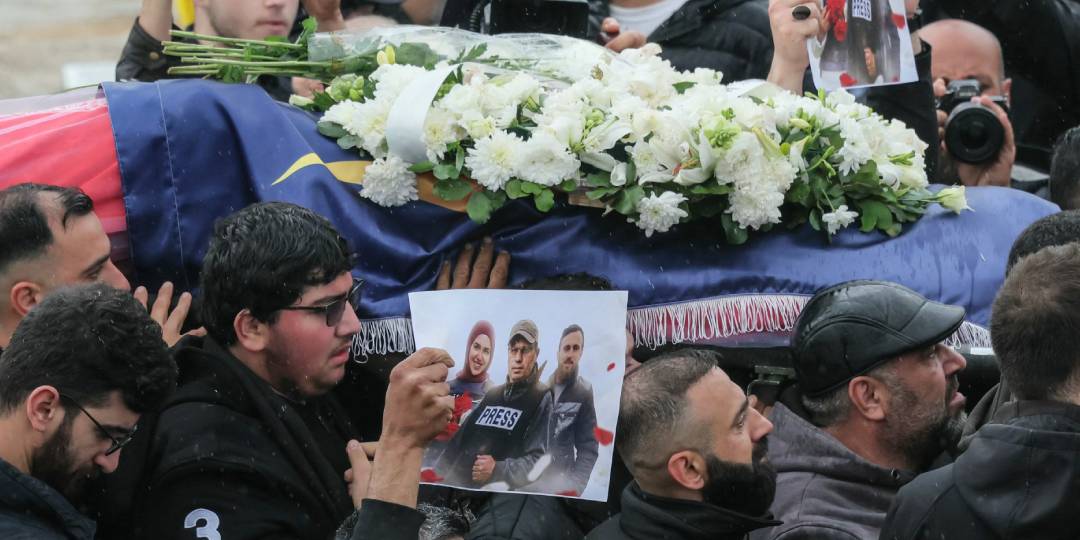
Three Journalists Killed in Controversial Israeli Strike
Israeli military operations Saturday killed three journalists in the Jezzine area of southern Lebanon, an incident that has generated intense international condemnation and legal scrutiny.
The victims were:
- Ali Shoeib – Prominent correspondent for Hezbollah’s Al Manar television network
- Fatima Ftouni – Reporter for Al Mayadeen, perceived as sympathetic to Iran-backed movements
- Ftouni’s brother – Camera operator accompanying his sister
Both news networks confirmed the deaths of their journalists.
Ali Shoeib’s Distinguished Career
Ali Shoeib was among Al Manar’s most prominent war correspondents, having covered Israeli military operations on Lebanon for multiple decades. He developed an international reputation for accessing sensitive conflict zones and delivering on-the-ground reporting. His death represents a significant loss to conflict journalism in the region and to direct media coverage of military operations.
Israeli Military Justification and Accusations
The Israeli military confirmed responsibility for the strike but characterized it as targeting a combatant rather than a journalist. A military statement claimed that Shoeib had “operated within the Hezbollah terrorist organisation under the guise of a journalist for the Al Manar network.”
The military later stated it had killed “over 800” Hezbollah members “from the air, sea, and on the ground” since the war’s beginning, suggesting Shoeib’s death was incidental to broader targeting of militant personnel.
Legal and Ethical Implications of the Israeli Position
The Israeli characterization of journalists working for Hezbollah-affiliated media as legitimate military targets challenges international humanitarian law protections for press personnel. International law stipulates that journalists retain civilian protections regardless of the political sympathies of media organizations they represent.
The classification raises significant questions about:
- Press freedom in conflict zones
- Protection standards for journalists covering militant organizations
- Distinction between journalists and combatants in asymmetrical conflicts
- Accountability for media personnel deaths
Lebanese Government Condemnation and War Crime Allegations
Lebanese President Joseph Aoun condemned the killings harshly, describing them as “a blatant crime that violates all the norms and treaties under which journalists enjoy international protection in wars.”
Prime Minister Nawaf Salam characterized the targeting as “a flagrant violation of international humanitarian law,” while Information Minister Paul Morcos explicitly labeled the actions “war crimes.”
Pattern of Journalist Targeting
This incident follows a broader pattern of journalist casualties in the current conflict. Earlier in March, Israeli strikes killed Mohammad Sherri, Al Manar’s political programmes director, in central Beirut.
Previous rounds of Israel-Hezbollah hostilities in 2023-2024 also resulted in journalist deaths. At least five journalists were killed in Israeli strikes in southern Lebanon during that conflict, including an Al-Mayadeen correspondent and an Al-Manar cameraman.
In October 2023, Reuters journalist Issam Abdallah was killed and six others wounded, including AFP journalists Dylan Collins and Christina Assi, while covering the conflict near the Israeli border. An independent AFP investigation concluded that two Israeli 120mm tank shells were fired from inside Israeli territory.
Israeli Warplanes Break Sound Barrier Over Beirut
Israeli warplanes broke the sound barrier over Beirut Saturday night, creating shock waves heard throughout the capital and surrounding regions.
Lebanon’s state-run National News Agency reported Israeli planes breaking the sound barrier “several times, including over Beirut and its suburbs, Metn and Keserwan, reaching as far as the Bekaa and Hermel.”
Residents throughout the country reported hearing the loud booms resulting from supersonic flight operations.
Israeli Soldier Deaths in Southern Lebanon
The Israeli military announced Sunday the death of another soldier in combat in southern Lebanon, identified as:
Sergeant Moshe Yitzchak Hacohen Katz, age 22, from New Haven, Connecticut, of the 890th Battalion, Paratroopers Brigade.
The military statement indicated the soldier “fell during combat in southern Lebanon.”
Escalating Ground Operation Casualties
Katz’s death marks the fifth Israeli soldier killed in fighting in southern Lebanon since Hezbollah began launching rocket attacks against Israel on March 2. The mounting Israeli casualty toll reflects sustained ground operations and determined resistance from Hezbollah forces despite overwhelming Israeli military advantages.
Strikes Kill Nine Paramedics in Single Day
Israeli strikes Saturday killed nine paramedics engaged in rescue and medical operations in southern Lebanon, according to Health Minister Rakan Nassereddine.
The paramedics comprised:
- Four members of the Hezbollah-affiliated Islamic Health Committee, targeted while conducting rescue missions
- Five members of the Amal movement’s Risala Scouts, also performing emergency duties
Cumulative Healthcare Worker Casualties
Since the war’s beginning, the Lebanese Health Ministry has documented deaths of:
- 46 paramedics
- 5 additional healthcare workers
The targeting has raised serious concerns about protection of medical personnel under international humanitarian law.
World Health Organisation chief Tedros Adhanom Ghebreyesus stated on X: “March has been the second most deadly month for health workers in Lebanon since the organisation started monitoring attacks in October 2023.”
He added: “Health workers are protected under international humanitarian law and should never be targeted.”
Education System Collapses Under War Pressure
The Lebanese education system faces catastrophic disruption as the conflict forces closure of hundreds of schools and displacement of approximately 500,000 students.
UNICEF reported that over 350 public schools have been converted to shelters for displaced families, removing them from educational service. Many schools in areas under Israeli bombardment remain closed for security reasons.
Scale of Educational Disruption
The education crisis encompasses:
- 350+ schools converted to shelters
- 500,000+ students displaced from classrooms
- Majority of public schools without distance learning capacity
- Severe digital divide preventing online education access
- Damaged infrastructure in southern Lebanon schools
Student Resilience Despite Wartime Challenges
Despite overwhelming challenges, many students attempt to continue their education through improvised means.
Seventeen-year-old Ahmad Melhem, whose family was displaced from Beirut’s southern suburbs, follows recorded lessons on a tablet while living in a classroom-turned-shelter. He expressed determination to continue studies despite difficult circumstances:
“I don’t want to regret not finishing my studies despite the difficult circumstances. We took a risk and went back to get schoolbooks. We’re trying with everything we have to continue our education so we can achieve our goals.”
Melhem aspires to study engineering after completing high school.
Distance Learning Challenges
Melhem’s private school resumed distance learning two weeks after the war began, but with reduced subjects and shortened lessons. He noted that in-person instruction was superior, expressing particular loss of collaborative projects and scientific work.
While an NGO provided internet access in the schoolyard, Melhem found concentration difficult due to surrounding noise, so he watches recorded classes later on his tablet.
Digital Divide Prevents Distance Learning for Majority
Hundreds of public schools lack resources for distance learning. UNICEF’s head of education in Lebanon, Atif Rafique, noted a “big digital divide” concerning internet access, with teachers also affected by connectivity limitations.
In Dekwaneh north of Beirut, a vocational institute converted to a shelter illustrates the challenges. Seventeen-year-old Aya Zahran, displaced from Beirut’s southern suburbs, has only one shared family phone for communication.
Aya reported: “The link the school sent us for online classes doesn’t work.”
UNICEF Mitigation Efforts
UNICEF has launched an online platform with recorded lessons and a hotline allowing students to access materials through phone calls without requiring internet access. However, these measures reach only a fraction of displaced students.
Economic Cost of Education Disruption
According to a 2023 World Bank report, each day of public school closures costs the Lebanese economy three million dollars.
With 350+ schools closed, daily economic losses approach one billion dollars, compounding Lebanon’s existing economic collapse.
Particular Concerns for Girls and Vulnerable Students
Rafique expressed particular concern about future consequences for university-preparation students and warned of dropout dangers, especially for “girls and adolescent young women” who face additional risks, including early marriage.
Students in southern Lebanon have been disproportionately affected by education interruptions since previous hostilities erupted in October 2023. UNICEF had reopened 30 damaged schools in the south just one week before the current war began.
Lack of Basic Educational Resources
At the vocational institute entrance, education ministry employees registered children to assess educational needs. One displaced mother from the northeast Bekaa region, Nasima Ismail, expressed desperation:
“The situation here is very difficult… there’s no internet here, and not even pens. My children are top students. I don’t want them to miss out on their education, as happened to us when we were kids.”
Ismail recalled Lebanon’s devastating 1975-1990 civil war and expressed determination despite hardship:
“I want them to complete their education, even if we are left with nothing. I wish them days better than ours.”
Multigenerational Educational Impact
The war threatens to create educational deficits affecting an entire generation. Students missing months of instruction during critical academic years face potential long-term academic disadvantages and reduced university preparation.
Additional Lebanese Military Casualties
The Lebanese military announced deaths of two soldiers killed in Israeli airstrikes in the towns of Deir Zahrani and Kfar Tibnit. Military sources indicated the soldiers were not on active duty.
Civilian Deaths in Multiple Locations
The health ministry reported additional civilian casualties from Saturday strikes:
- Henniyeh strike: Seven dead (six Syrians, one Lebanese), nine wounded Syrians
- Deir Zahrani strike: Seven killed, eight wounded
Regional Displacement and Refugee Considerations
The presence of Syrian casualties among those killed reflects the broader regional displacement crisis. Many Syrians have sought refuge in Lebanon, and the conflict affects them as severely as Lebanese nationals.
Hezbollah Military Operations Continue
Hezbollah announced separate statements claiming it had targeted Israeli force concentrations in several southern towns, including near Taybeh, just a few kilometers from the Israeli border.
The organization continues to engage Israeli forces pushing into areas near the border, with Israeli officials announcing plans to establish a buffer zone up to the Litani River, approximately 30 kilometers north of Israel.
Conclusion:
The Israeli military operations in southern Lebanon and broader conflict have created dual crises: immediate casualties among journalists and medical personnel, and a systemic destruction of educational infrastructure affecting half a million students. The targeting of prominent journalist Ali Shoeib raises profound questions about press freedom and civilian protection, challenging international humanitarian law interpretations in conflicts involving media organizations with political affiliations. The simultaneous closure of 350 schools and displacement of 500,000 students creates an educational crisis that will have long-term consequences for Lebanese economic development and social stability. Students attempting to continue studies through inadequate digital platforms and displaced family shelters reflect resilience amid systemic collapse. The convergence of journalist targeting, healthcare worker deaths, military casualties, and educational devastation paints a picture of total conflict affecting every dimension of Lebanese civilian life. Whether through intentional targeting or indiscriminate operations, the cumulative impact on civilian institutions threatens to reshape Lebanese society for years beyond conflict termination.